


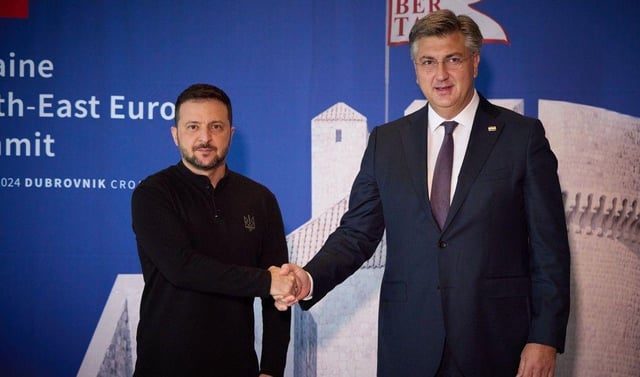
The Balkan region, comprising several Southeast European countries, has recently issued a unified statement expressing their robust support for Ukraine’s potential membership in NATO. This development marks a significant alignment of interests among these nations, reflecting a shared concern over regional security and a commitment to countering Russian aggression.
Regional Endorsement of NATO Aspirations
The joint statement from Balkan countries underscores a collective agreement on the importance of expanding NATO to include Ukraine, which has been seeking stronger ties with the West amidst ongoing tensions with Russia. Officials from Albania, North Macedonia, Montenegro, and others have declared their support, highlighting the geopolitical stakes at play in Eastern Europe.
By endorsing Ukraine’s bid for NATO membership, these countries signal their recognition of Ukraine’s crucial role in the regional security architecture. The support also serves as a message to Russia, indicating a unified front against potential expansions of its influence in the region. Ukraine has long been a focal point of East-West tensions, with its geopolitical position underscoring its importance to various stakeholders.
Shared Historical Context and Concerns
The historical experiences of the Balkan nations provide context for their current stance. Many of these countries have themselves transitioned from communist rule to embrace Western alliances such as the European Union and NATO. This shared journey underscores a mutual understanding of Ukraine’s aspirations.
Additionally, the Balkan region has been the site of various conflicts, ethnic tensions, and large-scale migrations, particularly in the 1990s. The remembrance of these volatile decades influences current political decisions, with leaders aiming to stabilize the region and prevent future conflicts.
The statement reflects a fear that unchecked Russian influence could destabilize the area once more, leading to unwanted instability so soon after the region has achieved relative peace and economic growth. By supporting Ukraine’s NATO membership, Balkan nations are looking to fortify collective security and ensure sustained regional stability.
Strategic Implications and Challenges
However, the path to NATO membership for Ukraine is fraught with challenges. The country must meet a series of rigorous requirements, including military reforms, democratic governance, and respect for the rule of law. Additionally, NATO operates on a consensus basis, meaning that all current member states must agree on the admission of new members.
The joint statement from Balkan countries serves to elevate Ukraine’s candidacy by building a coalition of supportive voices within NATO. Their backing enhances diplomatic efforts by adding regional clout and further legitimizes Ukraine’s ambitions within Western political and military spheres.
At the same time, this move risks exacerbating tensions with Russia. Historical precedence indicates that Moscow views NATO expansion as a direct threat to its sphere of influence, and has previously issued warnings against further enlargement. Nevertheless, Balkan leaders are betting on the collective strength of a NATO-inclusive Eastern Europe to deter any aggressive maneuvers.
As diplomatic discussions continue, the role of Balkan countries in backing Ukraine might prove crucial. Their insights and contributions could very well shape the path forward, reflecting an evolving geopolitics and conscious realignment of alliances in response to persistent regional threats.
The statement by the Balkan nations represents not only a move to safeguard their own interests but also a significant endorsement of Ukraine’s role in regional security. This unified position adds a notable dimension to European geopolitical dynamics and reiterates the importance of strong collective defense strategies in maintaining peace on the continent.