


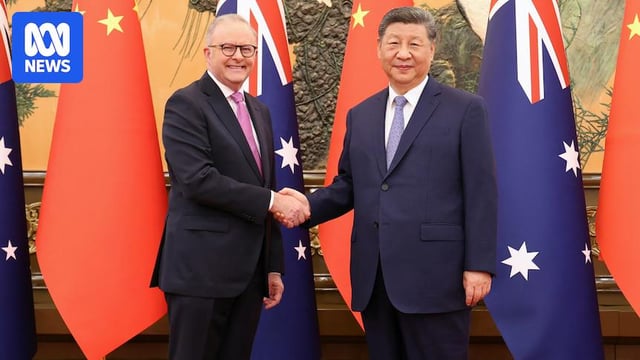
In an era of shifting geopolitical landscapes, China’s leadership under President Xi Jinping has marked another significant political maneuver, aligning Beijing’s stance with his broader vision regarding Anthony Albanese, the Prime Minister of Australia. This alignment is indicative of the wider trends within China’s foreign policy approach, where state strategies are harmonized with Xi’s overarching goals and diplomatic tactics.
Strengthening Bilateral Ties
The alignment of Beijing’s policies with President Xi’s vision comes as no surprise to those familiar with China’s centralized political structure. Under Xi’s leadership, foreign policy has become increasingly synchronized with the domestic and international objectives set by the president. The approach towards Australia, particularly under the leadership of Anthony Albanese, is a testament to this strategy.
Since assuming office, Prime Minister Albanese has navigated a complex relationship with China, balancing economic interests with diplomatic and strategic alliances. His pragmatic approach appears to resonate with Xi’s objectives of fostering stability and mutual benefit in bilateral relations. This diplomatic synergy could potentially lead to stronger economic ties between China and Australia, crucial for both nations amid global economic uncertainties.
Economic Implications
The economic implications of Beijing’s alignment with Xi’s vision must not be underestimated. Australia is a significant trading partner for China, providing key resources vital to the Asian powerhouse’s industrial and economic growth. Aligning Beijing’s policies with Xi’s vision on Albanese could promote more streamlined trade relations, minimizing friction and enhancing cooperative endeavors that benefit both economies.
From the perspective of trade negotiations, this alignment could facilitate smoother dialogue and faster resolutions to any discord. The synergy between Xinping’s vision and Albanese’s economic strategies could lead to new agreements and the strengthening of existing trade infrastructures, further incentivizing investment and collaboration.
Regional Stability and Strategic Interests
Beyond economic considerations, Beijing’s embrace of Xi’s vision in relation to Albanese plays a critical role in regional diplomacy. The Asia-Pacific region is a hotbed of strategic interests, with numerous international powers vying for influence. Within this context, establishing a stable relationship with Australia, one of the key players in the region, is of paramount importance to China’s broader geopolitical strategy.
Through this alignment, Beijing aims to ensure regional stability, a goal that aligns with Australia’s interests in maintaining peace and security in the Asia-Pacific. By fostering a cooperative relationship with Albanese’s administration, Xi can work towards reducing tensions and promoting initiatives that bolster regional security, potentially leading to more collaborative efforts on issues like environmental policies and global health.
In conclusion, Beijing’s strategic alignment with Xi Jinping’s vision concerning Anthony Albanese is illustrative of China’s modern diplomatic approach, characterized by aligning national and international strategies with the leadership’s overarching goals. It hints at a future where bilateral relationships are increasingly shaped by cooperative dialogues and shared interests. For Australia, such alignment could signify not just economic prosperity but also a more pronounced role in the broader geopolitical arena.