


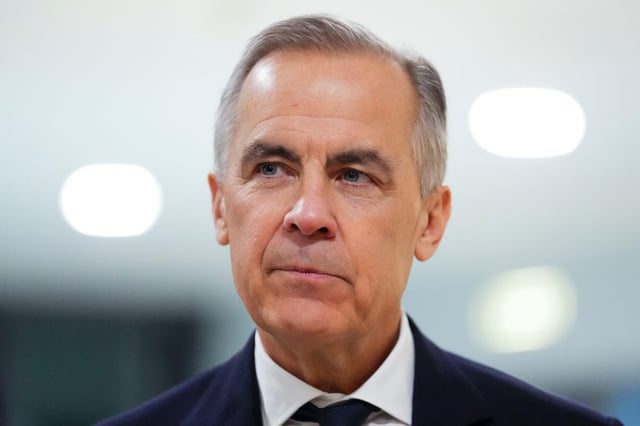
In a surprising turn of events at the World Economic Forum in Davos, Mark Carney, the former Governor of the Bank of England, left the summit without meeting with former U.S. President Donald Trump. This notable absence of dialogue follows Carney’s sharp critique of certain U.S. policies, spotlighting a potential widening rift in transatlantic relations.
Context and Background
Davos, renowned for its convergence of global leaders and economic policymakers, was set against a backdrop of geopolitical tensions and economic uncertainty this year. Carney, a prominent figure in the world’s financial landscape, used the platform to voice his concerns over the evolving economic policies of the Trump administration. His pointed criticism was particularly aimed at what he perceived as destabilizing economic policies that could have far-reaching global implications.
Carney has been an influential voice in international finance, known for his expertise and leadership during tumultuous economic times. His role at the helm of the Bank of England was marked by efforts to stabilize the UK economy amidst Brexit uncertainties. This history accentuates the significance of his statements, as they come from a place of deep engagement with both European and global economic issues.
Carney’s Critique of U.S. Policies
Carney’s critiques were primarily centered on the perceived unpredictability of U.S. trade policies and their implications for global supply chains. He argued that such policies could lead to economic volatility, impacting not only the U.S. but also its trading partners across the globe. The lack of a coherent trade strategy, according to Carney, threatens to weaken global economic growth and foster an environment of uncertainty.
Additionally, Carney pointed out concerns regarding climate policy. Under Trump’s administration, the U.S. had pulled out of the Paris Agreement, a move that Carney criticized as short-sighted and detrimental to global environmental efforts. As an advocate for sustainable economic practices, Carney’s criticisms drew attention to the need for countries to commit to environmentally responsible policies.
Implications for Global Economics
The absence of a dialogue between Carney and Trump at Davos underscores the potential strains in economic discourse between the U.S. and other global economic leaders. Carney’s public criticisms reflect wider concerns among economists and international leaders regarding the direction of U.S. policy and its impact on global markets.
Analysts suggest that these tensions could exacerbate bilateral relationships, further complicating international trade and cooperation. While Carney’s critiques are shared by many, they also highlight the challenges of aligning economic strategies across diverse political landscapes.
In conclusion, Carney’s departure from Davos without meeting Trump represents not just a missed opportunity for direct dialogue but also a symbolic moment of divergence in economic philosophies. The economic policies of major countries like the U.S. continue to be pivotal in shaping the global economic climate, and as such, ongoing dialogue and cooperation remain crucial for sustainable global development.