


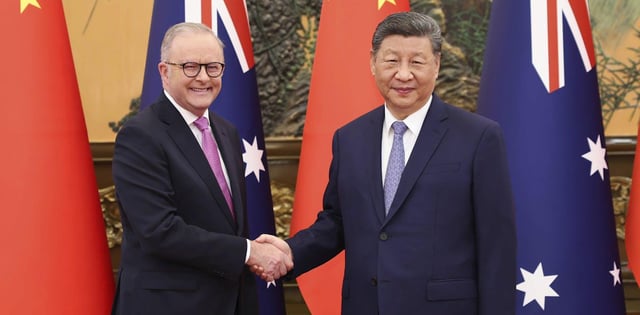
The relationship between China and Australia is a critical geopolitical dynamic, with both nations having experienced multiple fluctuations over recent years. As we look toward 2026, understanding the future of China-Australia relations involves exploring economic ties, political interactions, and the evolving landscape of regional security.
Economic Interdependence: The Backbone of Bilateral Ties
China and Australia share a robust economic relationship, characterized by China as Australia’s largest trading partner. The trade relationship is largely driven by Australia’s exports of minerals and energy resources, particularly iron ore, which remain in high demand for China’s industrial sector. As we project into 2026, experts suggest that this economic interdependence will continue to serve as a stabilizing factor in their bilateral relationship.
Australian businesses are also deeply invested in China across various sectors, including education, tourism, and agriculture. The number of Chinese tourists visiting Australia has grown significantly, bolstering the tourism industry despite recent disruptions. Meanwhile, Australian universities attract a substantial number of Chinese students, contributing to the education sector’s revenues. Looking ahead, fostering these economic connections will be crucial for maintaining mutual benefits and preventing potential discord.
Political Challenges and Diplomatic Efforts
Despite the strong economic ties, China-Australia relations have not been without political challenges. Diplomatic tensions have risen over issues such as human rights, cybersecurity, and territorial disputes in the South China Sea. Political analysts highlight that navigating these issues with a balanced approach will be vital in maintaining diplomatic harmony.
The fluctuating nature of political relations has been evident in recent years, with periods of cooperation sometimes giving way to disagreements and diplomatic standoffs. Both nations have engaged in efforts to mitigate these challenges through bilateral dialogues and diplomatic initiatives aimed at addressing common concerns and enhancing mutual understanding. As we move toward 2026, experts emphasize the importance of ongoing diplomatic engagement to resolve disputes amicably and strengthen political bonds.
Regional Security and Strategic Interests
China’s growing influence in the Asia-Pacific region has significant implications for Australian security policy. Concerns about China’s military expansion and strategic ambitions have prompted Australia to reinforce its defense capabilities and seek deeper alliances with other regional powers. The establishment of new defense agreements, such as the AUKUS pact with the United States and the United Kingdom, reflects Australia’s strategic positioning to counterbalance China’s regional presence.
However, experts argue that while strengthening military alliances is essential, efforts should also be made to explore collaborative security measures with China. Initiatives that promote transparency and peaceful conflict resolution could prove beneficial in maintaining regional stability. As we approach 2026, balancing these strategic interests will be crucial for fostering a secure environment conducive to positive China-Australia relations.
The outlook for China-Australia relations involves navigating a complex array of economic, political, and security challenges. By focusing on shared economic interests and ensuring open diplomatic channels, both nations can work toward a future where mutual benefits prevail over discord. As the global landscape continues to evolve, maintaining a steady and constructive bilateral relationship will be essential for regional and global stability.