


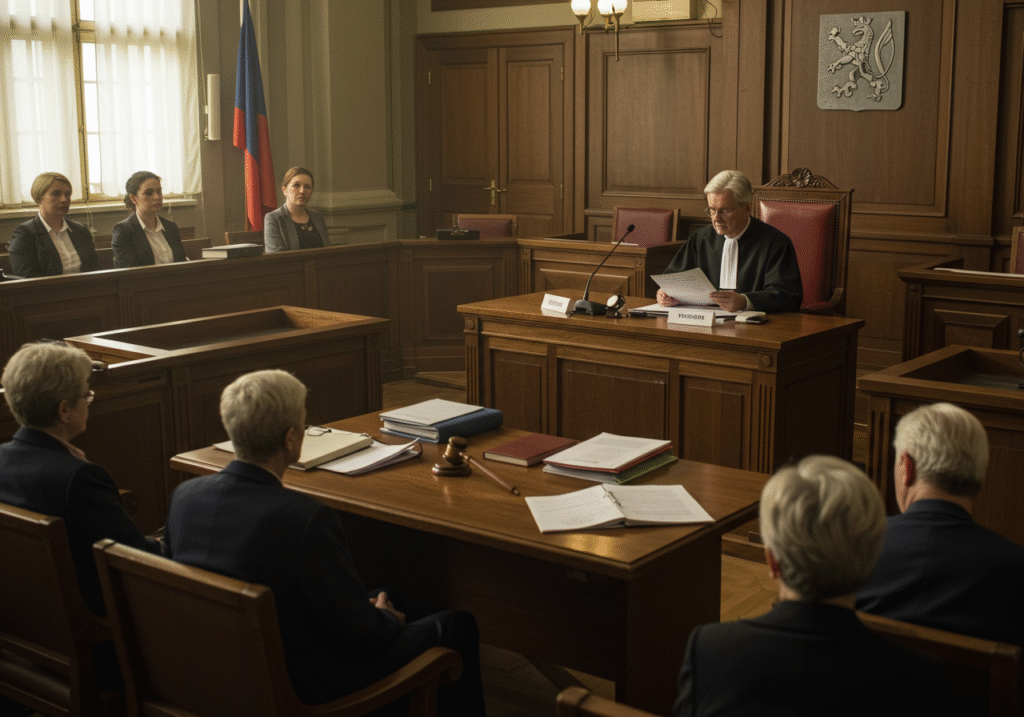
The Czech Constitutional Court has upheld the controversial pension reform law, a decision that has stirred a mix of reactions across the nation. The reform, initially proposed by the government, aims to address long-standing concerns about the sustainability of the Czech Republic’s pension system amid an aging population. Despite fierce resistance from opposition parties and various advocacy groups, the Court’s ruling signifies a critical step in the government’s effort to restructure how pensions are managed and distributed.
The legislative journey of the pension reform has been turbulent, marked by heated debates within the chamber and mounting public protests. The law introduces significant changes, most notably raising the retirement age and adjusting pension calculations, which the government argues are necessary adjustments to preserve the system for future generations. According to Finance Minister Jan Novak, “The reform addresses crucial demographic challenges and ensures that our pension system remains viable for decades to come.”
As expected, the opposition has not minced words in their criticism of the reform. Opposition leader Petra Svoboda stated, “This reform does little to solve the underlying issues plaguing our pension system and instead burdens the working class with an unfair increase in their working years.” Svoboda and her party have maintained that the government’s approach lacks compassion and fails to consider alternative solutions that could protect vulnerable populations.
Legal challenges against this reform began almost as soon as the legislative process was complete. Opposition parties filed a petition with the Constitutional Court, claiming that several provisions of the new law breached constitutional protections and did not properly consider the social welfare stare decisis. However, after an extensive review, the Court concluded that the reform aligns with constitutional requirements. In its decision, the Court acknowledged the social and economic complexities involved but emphasized the legislative authority in forming policies to address demographic shifts.
Despite this legal victory for the government, public opinion remains sharply divided. Public protests surged following the Court decision, with thousands taking to the streets in Prague and other major cities. Protestors have expressed concerns about increased inequality and the perceived inadequacy of the government’s engagement with social partners during the reform process. One protestor, Karla Havel, shared, “We’re not protesting just the changes, but the lack of transparency and dialogue from our leaders. We deserve a fair say in how our future is shaped.”
Within the ruling coalition, officials have expressed relief at the decision but are aware of the significant work required to implement the reform effectively. Labour Minister Tomas Dvorak remarked, “We recognize the challenges ahead. Our task is now to ensure a smooth transition, minimize the impact on citizens, and engage in genuine dialogue with those who feel disenfranchised by these changes.” The Ministry has also outlined initial steps to monitor the reform’s implementation and adjust policies as needed, promising regular reviews and feedback mechanisms.
The reform introduces a gradual increase in the retirement age over the next 30 years, aligning with similar moves seen across several European countries. It also aims to optimize the pension calculation formula to reflect more accurately the contributions and earning history of individuals. Critics argue that these changes could disproportionately affect certain groups, including low-income workers and those in physically demanding occupations. To address these concerns, the government has proposed complementary measures, such as incentives for voluntary pension savings and targeted financial support for vulnerable demographics.
Economic analysts are closely watching the unfolding situation, noting that the Czech Republic is not alone in confronting these challenges. As populations in Europe continue to age, governments must often choose between unpopular pension reforms or risking future financial stability. However, the speed and specifics of these reforms vary greatly depending on local political dynamics and economic conditions.
Politically, the ruling further emboldens Prime Minister Martin Horak’s administration, though maintaining public support could require adept political maneuvering moving forward. Observers suggest focusing on collaborative approaches with stakeholders, including regular public consultations, to rebuild trust and understanding among affected citizens.
Looking ahead, the coming months will test the government’s commitment to constructive engagement with civil society. Successful reforms will necessitate not only effective policy implementation but also active listening and adaption to feedback from citizens. The magnitude of public opposition suggests that the issue of pension reform will remain a hotly debated topic, potentially influencing upcoming electoral landscapes and shaping future reform strategies.
As the reform process unfolds, attention now turns to the government’s strategies for addressing short-term challenges and ensuring long-term economic security. Finding the equilibrium between financial sustainability and social justice remains a delicate task, demanding nuanced solutions and a willingness to adjust course based on real-world impacts and citizen input.
In summary, the Constitutional Court’s decision marks a pivotal point in Czech Republic’s efforts to overhaul its pension system. Only time will tell how these reforms will shape the national economic landscape and societal fabric, but the path is now clearer for a new chapter in the Czech pension narrative.