


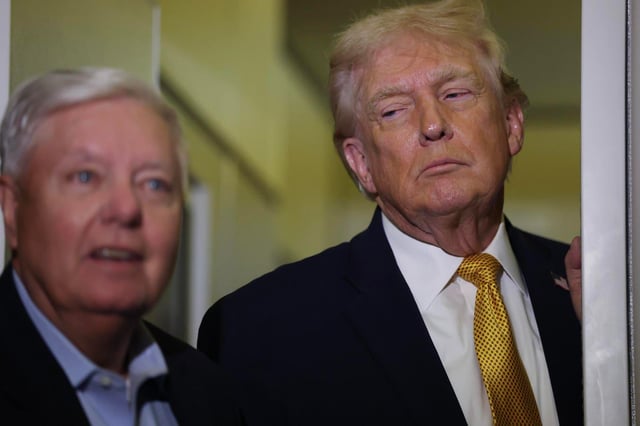
In a significant development, Denmark has expressed serious concerns over actions taken by former U.S. President Donald Trump regarding Greenland. The Danish government believes these actions could pose a threat to international stability. This situation emerged when Trump showed interest in purchasing Greenland, a move that was not only unexpected but also sparked intense geopolitical discussions.
Denmark’s Response to Trump’s Interest in Greenland
The Danish Prime Minister, at the time, conveyed surprise and frustration over Trump’s interest in acquiring Greenland, an autonomous territory under the Kingdom of Denmark. The idea, initially perceived as a joke, was taken seriously by the Trump administration, leading to a diplomatic fallout.
“Greenland is not for sale,” declared the Danish Prime Minister, emphasizing the territory’s importance to Denmark and its people. The notion of selling a landmass rich in natural resources and strategic military importance is both unprecedented and controversial.
Geopolitical Implications of a Potential Sale
Greenland, the world’s largest island, holds significant geopolitical importance. Its location in the Arctic makes it strategic for military and navigation purposes. In recent years, the Arctic has garnered increased global attention due to climate change, which is opening new shipping routes and uncovering untapped natural resources like oil and gas.
The potential sale of Greenland to the United States could shift the power dynamics in the region. Such a move might also influence the Arctic Council’s stability, an intergovernmental body that includes member states like Russia and Canada. This raised alarms in capitals worldwide, worried about the repercussions of altering territorial sovereignties in the region.
Strategic Military Interests
Beyond natural resources, the military significance of Greenland cannot be understated. The U.S. maintains a crucial airbase in Thule, located in northern Greenland, which serves as a vital component in the defense against North Atlantic threats. Control over Greenland would strengthen the U.S. military presence in the Arctic, a prospect that sparked broader geopolitical concerns among global powers.
International Reactions and Concerns
Other countries, particularly those with interests in the Arctic, expressed concern over Trump’s actions. European Union officials and NATO allies highlighted the need for a collaborative approach toward Arctic governance. They contended that unilateral actions could destabilize existing treaties and cooperative efforts in the region.
Environmental groups also voiced apprehension. The Arctic’s ecological balance is fragile, with any development potentially exacerbating climate challenges. The prospect of further exploitation of Greenland’s resources led to increased environmental activism, urging powers to consider sustainable practices.
Impact on U.S.-Denmark Relations
The situation strained U.S.-Denmark relations, which historically have been strong. Denmark’s rejection of the proposal was followed by a cancellation of Trump’s planned state visit, interpreted as a sign of diplomatic discord. However, both nations eventually sought to mend ties, focusing on shared interests and alliances.
Despite this, the incident left a notable impact on the perception of U.S. foreign policy dynamics, showcasing the unpredictability that could arise from seemingly unconventional proposals.
As nations continue to monitor the developments in Greenland and the Arctic at large, the situation underscores the importance of strategic diplomacy and collaborative environmental stewardship in preserving both international stability and the Arctic’s ecological sanctity.
With global attention fixed on the Arctic’s evolving landscape, Denmark’s warnings serve as a poignant reminder of the intricate balance required in an area of immense geopolitical significance. The implications of shifts in territorial sovereignty and control in such regions remain a critical topic for international discussion.