


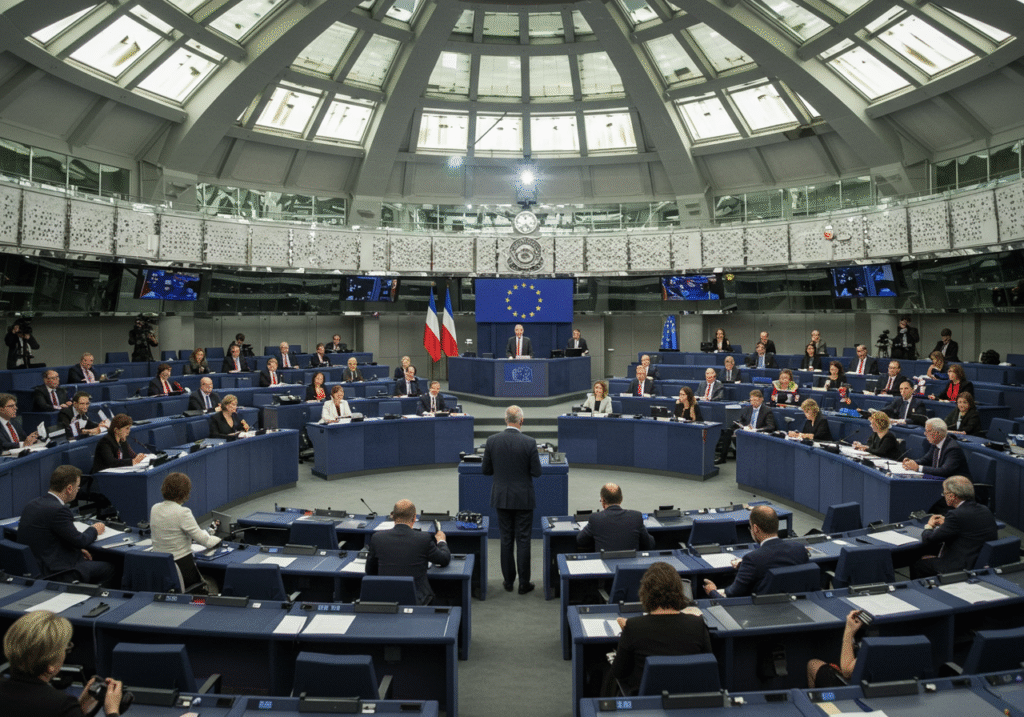
The European Commission, under the leadership of President Ursula von der Leyen, recently triumphed over a significant political hurdle as it survived a no-confidence vote in the European Parliament. This development signifies a crucial moment in the European Union’s political landscape, echoing the robustness of von der Leyen’s administration amidst a slew of challenges and mounting scrutiny from various quarters of the political spectrum.
The vote, which took place in Strasbourg, France, tested the endurance and ingenuity of the Commission, confronting issues ranging from policy effectiveness to accountability. The motion of no-confidence was primarily initiated by a group of MEPs who expressed dissatisfaction with the Commission’s handling of several pressing matters.
Background of the Confidence Vote
The no-confidence motion was largely propelled by contentious debates over the Commission’s strategic approach in key areas such as environmental policies, digital transformation, and economic recovery following the COVID-19 pandemic. Detractors argued that the Commission’s measures fell short of addressing the immediate and long-term needs of the EU citizens.
Moreover, the motion had gathered support from factions that were particularly critical of the Commission’s perceived inaction on rule-of-law issues in some member states and its stance on the enlargement policy regarding the Western Balkans. Critics argued that these areas reflected a diminishing commitment to the EU’s foundational principles and its broader political agenda.
Key Arguments and Political Dynamics
Leading up to the vote, members of the European Parliament engaged in vociferous debates, deliberating on the efficacy of von der Leyen’s leadership and the broader implications of the Commission’s policies. Proponents of the no-confidence motion accused the Commission of inadequate transparency and ineffective governance, asserting that more robust mechanisms were required to ensure accountability to EU citizens.
Despite these criticisms, a substantial coalition of MEPs rallied behind the Commission, emphasizing the necessity for stability and continuity, especially during a tumultuous era marked by geopolitical tensions and socio-economic upheaval. Supporters highlighted the Commission’s achievements in driving forward ambitious legislative agendas on climate change with the European Green Deal, digitalization, and steps towards economic stabilization in a post-pandemic context.
Outcome and Implications of the Vote
The vote concluded with the European Commission retaining its mandate, as the no-confidence motion failed to secure the requisite majority. This outcome was received with a mixture of relief and cautious optimism among the Commission’s allies, reaffirming their commitment to pushing through reforms and navigating the myriad challenges ahead.
President von der Leyen, responding to the vote, stressed the importance of collaboration and unity within the European Parliament and among member states to address the pressing issues facing the Union. She reiterated her administration’s dedication to fostering resilience within the EU’s socioeconomic fabric while ensuring adherence to the Union’s core principles of democracy and rule of law.
Looking forward, the survival of the von der Leyen Commission underscores a continued emphasis on strategic reforms, with a pivot towards enhancing digital infrastructure, sustaining economic growth, and amplifying efforts to combat climate change. This direction aligns with the broader objectives delineated in the Commission’s agenda for Europe’s transition into a greener and more digitally connected society.
Broader European Political Context
The recent vote represents a crucial juncture for the European Union, occurring amid broader discussions about its future trajectory and the need for reforms to address globalization, technological change, and internal cohesion. While the Commission has weathered the immediate storm, the call for enhanced accountability and tailored policy responses to diverse national contexts remains palpable among various member states and political groups.
The dynamics within the European Parliament reflect a complex interplay of political ideologies and national interests, with the need for innovation in governance models and methodologies to ensure alignment with citizens’ aspirations. The episode serves as a reminder for the European institutions to remain vigilant and adaptive in the face of emerging challenges.
Looking Ahead: Priorities and Strategic Initiatives
In the aftermath of the vote, the Commission’s focal points are expected to revolve around pivotal topics such as climate action, digital transformation, and socio-economic resilience. Each of these areas presents unique challenges and opportunities, requiring concerted efforts across national and European levels.
1. Climate Action: The European Green Deal remains central to the Commission’s strategic vision, targeting carbon neutrality by 2050. This ambitious objective necessitates comprehensive policy frameworks, investment in sustainable technologies, and collaboration with global partners to drive environmental progress.
2. Digital Transition: Accelerating the digital transformation across Europe involves investing in digital infrastructure, fostering digital literacy, and safeguarding cybersecurity. The Digital Services Act and Digital Markets Act are instrumental in shaping a fairer digital economy.
3. Economic Stability and Recovery: As Europe continues to recover from the pandemic’s economic fallout, targeted support for businesses and workers, alongside efforts to reinforce financial systems, are crucial. The Recovery and Resilience Facility offers a key mechanism in this regard, providing funding and support for member state initiatives.
4. Rule of Law and Social Cohesion: Ensuring adherence to democratic principles and promoting social cohesion are vital for the EU’s internal unity. The Commission is likely to pursue measures that address rule-of-law concerns, alongside strategies to enhance citizen engagement and reduce disparities within and among member states.
As the European Commission navigates the aftermath of this political test, the onus is on European leaders and institutions to work synergistically towards a sustainable and inclusive future. The resilience demonstrated in surviving the confidence vote serves as a testament to the European project’s evolving capabilities and enduring relevance in addressing 21st-century challenges.