


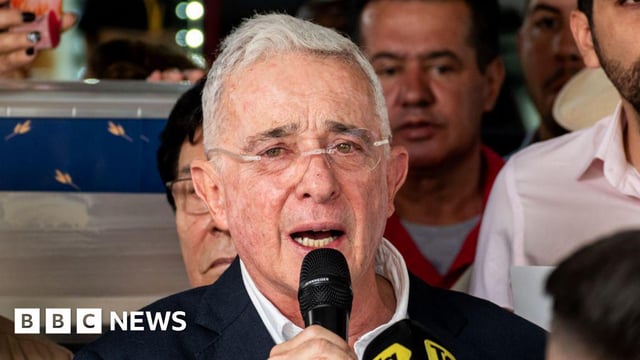
In a landmark legal decision, Álvaro Uribe, the former President of Colombia, has been convicted for witness interference, marking a significant moment in the nation’s judicial history. This development stems from an extensive investigation that has captivated both national and international audiences, highlighting ongoing concerns about political accountability in Colombia.
Background of the Case
Álvaro Uribe served as Colombia’s President from 2002 to 2010, a period marked by his hardline policies against illegal armed groups and his commitment to enhancing national security. However, his legacy has been marred by controversies and allegations surrounding human rights violations and connections with paramilitary groups during his tenure.
The case against Uribe began when he was accused of attempting to manipulate witnesses in a bid to undermine allegations linking him to paramilitary groups. These claims surfaced after a heated political and legal struggle with Senator Iván Cepeda, who had initially accused Uribe of collaborating with paramilitary forces. In a complex turn of events, Uribe accused Cepeda of fabricating testimony, leading to an investigation that eventually backfired against Uribe himself.
Details of the Conviction
The judicial inquiry revealed that Uribe allegedly orchestrated a network to influence and bribe witnesses, aiming to sway testimonies in his favor. Such activities, as uncovered during the investigation, included efforts to alter the narratives of former paramilitaries who could provide damaging evidence against him. The conviction by the Colombian Supreme Court underscores the seriousness of these charges, pointing to a breach of justice by a former head of state.
Legal experts and analysts have suggested that this conviction is pivotal in the country’s efforts to strengthen democratic institutions and uphold the rule of law. It signals a move towards greater judicial independence, where even the most influential political figures are not immune to prosecution.
Reactions and Implications
- Public Opinion: The verdict has polarized Colombian society, with supporters of Uribe rallying to his defense, while critics view the judgment as a necessary measure for justice and transparency.
- Political Impact: This conviction could potentially reshape the political landscape in Colombia, affecting the dynamics of Uribe’s political party, the Democratic Center, and altering its influence in forthcoming elections.
- International Perspective: On an international level, the decision has been observed with keen interest, as it reflects broader regional struggles with corruption and impunity among political elites.
The Road Ahead
Moving forward, the Uribe case presents several challenges and opportunities for Colombia. Experts emphasize the need for the judiciary to continue its work without undue political pressure, ensuring that justice is applied fairly across the board. Additionally, this situation might embolden efforts to revisit other unresolved cases of political corruption and human rights abuses, potentially opening the door for further legal scrutiny into past administrations.
For Uribe, the conviction represents a significant blow to a once-unassailable political career. Although he retains a base of loyal supporters, his influence in shaping Colombia’s future political discourse may become increasingly limited. His legal team has indicated plans to appeal the decision, vowing to fight the conviction through every available legal channel.
This case involves broader discussions about democratic governance in Colombia and Latin America. As the nation looks toward reconciliation and reform, the outcome of Uribe’s legal battles could serve as a benchmark for evaluating the effectiveness and impartiality of the justice system in addressing high-profile cases of alleged misconduct.
As this saga unfolds, both Colombians and the international community will be closely monitoring the developments, contemplating what this means for political accountability and the rule of law in Colombia. Such high-stakes legal proceedings not only test the resilience of democratic structures but also set the tone for how future incidents of political malpractice are handled within the region.