


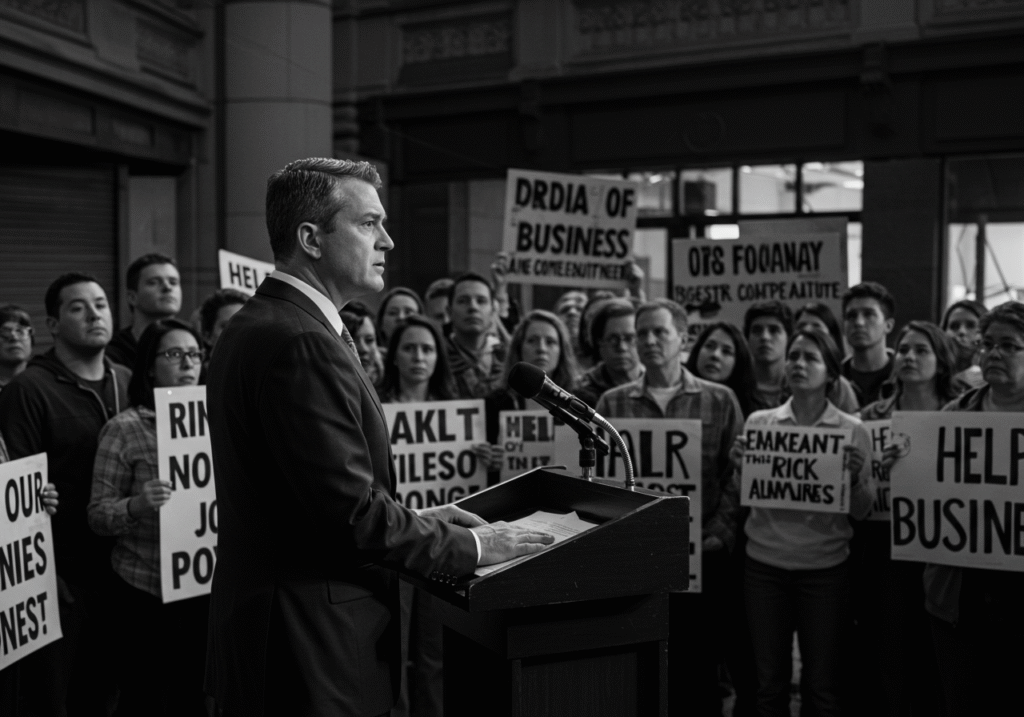
The recent decision by the Czech government to dismiss compensation plans for businesses affected by power outages has sparked significant debate among industry leaders and company owners. The economy, already grappling with multiple challenges, might face new hurdles as businesses try to navigate the possible implications of this ruling.
This controversy comes at a time when businesses are already under pressure due to rising energy costs and economic uncertainty. The question of how businesses will cope without financial support during unexpected blackouts remains unanswered, leaving many in the industry anxious about the future.
Government’s Stance on Compensation
The government’s stance, as outlined by Minister for Industry and Trade Jozef Síkela, is that compensation for businesses affected by blackouts is “not on the table.” The reasoning behind this decision stems from the belief that financial resources should be directed toward stabilizing the energy grid and investing in sustainable infrastructure to mitigate the risk of future blackouts.
Síkela emphasized the need to prioritize long-term solutions. “Our focus is on ensuring a stable and robust power supply for all,” he stated. “While we understand the impact of blackouts on businesses, our strategy is to focus on preventive measures.”
Impact on Businesses
For many businesses, the absence of compensation represents an additional financial burden. Blackouts can lead to significant operational disruptions, particularly for industries reliant on continuous power supply, such as manufacturing and technology. The costs associated with these disruptions include reduced productivity, damage to equipment, and potential loss of data.
Small to medium enterprises (SMEs), which often operate with tighter margins, might find it challenging to absorb these additional costs. For companies that have yet to fully recover from the impacts of the COVID-19 pandemic, this news is particularly concerning.
Business Leaders React
Business leaders and industry groups have voiced their dissatisfaction with the government’s decision, urging for a reevaluation of priorities. The decision has prompted calls for structured dialogue between the government and business representatives to find a middle ground.
The Czech Chamber of Commerce has expressed its concerns in a statement, highlighting the need for businesses to feel supported by the government during challenging times. “While infrastructure improvements are critical, businesses also require immediate support when disruptions occur,” it read.
Further Investments in Energy Infrastructure
Despite the absence of compensation plans, the government remains committed to investing in energy infrastructure. Plans include enhancing the national grid, exploring renewable energy sources, and increasing energy storage capacities. These steps are geared towards reducing the frequency and impact of blackouts in the future.
The government’s strategy aligns with the broader European Union agenda of transitioning towards sustainable and reliable energy sources. This long-term vision is aimed at reducing dependency on fossil fuels and increasing resilience to climate-induced energy disruptions.
Looking Towards the Future
As businesses await further clarity on how the government’s plans will be implemented, there is a palpable sense of urgency in finding interim solutions to support those affected by blackouts. The push for more robust contingency strategies within businesses is likely to intensify, with companies looking at enhancing their internal crisis management systems.
For now, the focus remains on dialogue between the relevant stakeholders to ensure that businesses can continue operating effectively without the security of compensation during power outages. Partnerships between the private sector and government could potentially pave the way for innovative solutions that address both the immediate and long-term challenges posed by energy disruptions.
In conclusion, while the government’s decision to not offer compensation for businesses affected by blackouts is a point of contention, it does shine a light on the urgency and importance of developing a resilient and sustainable energy framework. The interplay between government objectives and business needs will be critical in shaping an economically stable future amidst the challenges posed by an ever-evolving energy landscape.