


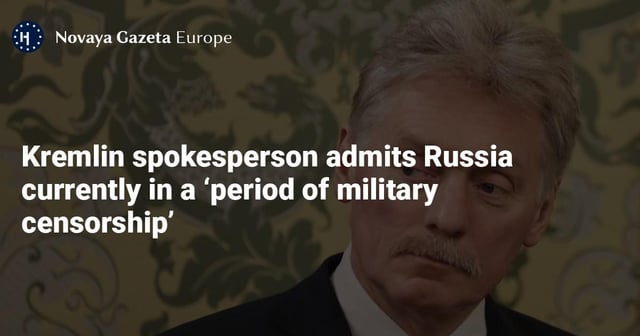
In a rare and candid moment, a Kremlin spokesperson has acknowledged the ramped-up control over military media operations in Russia. This revelation comes amid an intensifying backdrop of military activities and geopolitical tensions, notably involving the conflict in Ukraine. The transparency from the Kremlin signals a strategic shift in its communication approach, where its control over information is increasingly visible to the global audience.
Stricter Media Oversight in Military Affairs
The spokesperson admitted that the Russian government has tightened its grip on media reports concerning military affairs. This move is seen as a response to ensure consistent messaging in a time of heightened military action. Media outlets in Russia have reportedly been operating under more stringent guidelines, tasked with maintaining a narrative that aligns closely with state interests and security concerns.
This development follows a series of reports highlighting discrepancies between official military communications and independent media narratives. By streamlining media outputs through stricter oversight, authorities are aiming to present a unified and compelling front both domestically and internationally.
Impact on Independent Journalism
Independent journalists in Russia have faced increasing challenges as they navigate these new restrictions. With tighter control over military-related information, the space for independent reporting has narrowed significantly. Many journalists report facing obstacles such as restricted access to official military sources, increased scrutiny, and pressures to conform to the official line.
Despite the challenges, independent media outlets continue to strive for truth-telling, relying on creative strategies to investigate and report stories that might otherwise be suppressed. The resilience of these journalists underscores a broader struggle for media freedom within the country, reflecting ongoing tensions between state controls and journalistic independence.
International Reactions and Implications
Globally, Russia’s increased media control over military matters has raised eyebrows. The international community is closely observing these developments, particularly in relation to how they might influence Russia’s foreign diplomacy and military engagements. The enhanced media control strategy is perceived as part of a broader tactical approach, potentially aimed at managing Russia’s image on the world stage during conflict.
Several nations have voiced concerns, suggesting that such control could obscure the transparency needed in geopolitical discourse. The balance between national security interests and transparent communication remains a contentious issue, especially as global powers seek to navigate complex international relations.
In conclusion, the admission of heightened media control marks a significant point in Russia’s approach to managing its domestic and international narratives. It highlights the ongoing tension between the need for state security and the imperative of media freedom, a discourse that continues to evolve in the face of shifting geopolitical dynamics.