

Escalating Conflict in Lebanon
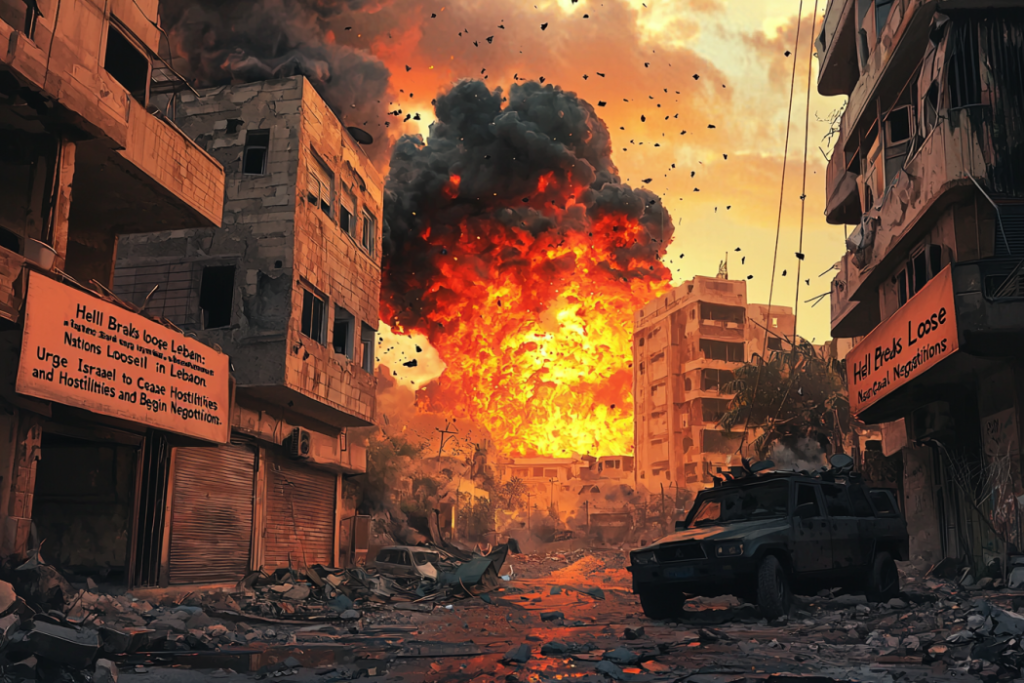
The situation in Lebanon has reached a critical point as intense battles continue to rage across the region. The international community is sounding the alarm, urging Israel to halt the ongoing hostilities and initiate diplomatic negotiations. The violence, which has spread rapidly, has resulted in a significant number of casualties and widespread destruction, creating a humanitarian crisis that requires immediate intervention.

Urgent International Calls for Ceasefire
Several nations have jointly called on Israel to cease its military actions in Lebanon and begin dialogue to resolve the conflict. The United Nations, along with various humanitarian organizations and governments worldwide, have emphasized the urgency of stopping the bloodshed.
“Immediate cessation of violence and start of negotiations,” has been the recurrent plea from global leaders.
The international community’s response reflects a growing concern for the stability of the region, as well as the safety and well-being of innocent civilians caught in the crossfire.
“The world cannot stand by and watch Lebanon descend into chaos,” stated one diplomatic envoy, capturing the sense of global urgency and responsibility.
Humanitarian Crisis Worsens
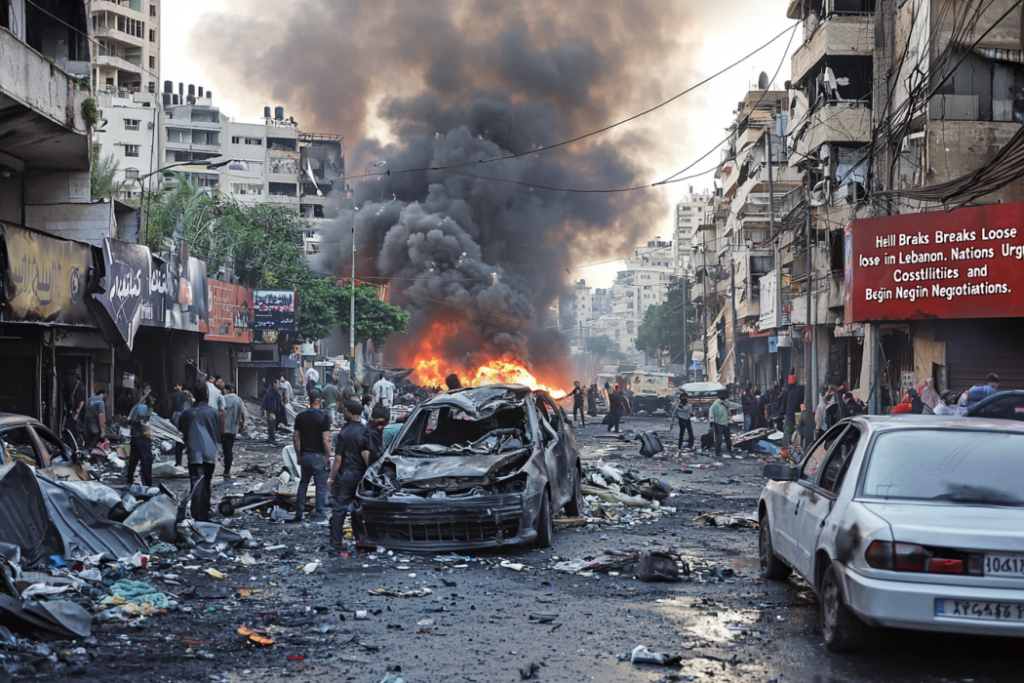
The escalation of violence has led to a dire humanitarian situation in Lebanon. Cities and towns have been devastated by the ongoing skirmishes, with thousands of families being displaced from their homes. Humanitarian aid is struggling to reach those in need due to continuous fighting and blockades.
“People are in desperate need of food, water, and medical supplies,” reported a local NGO worker.
The infrastructure in many parts of Lebanon has been severely damaged, further complicating relief efforts. Hospitals are overwhelmed with the injured, and there is a pressing need for emergency medical assistance.
International Efforts for Peace
Several countries have stepped forward to mediate and facilitate peace talks between the conflicting parties. Diplomatic channels are being employed intensively to bring an end to the hostilities. France, Germany, and Russia have all offered to host peace negotiations, provided that both sides agree to come to the table.
In a joint statement, the United States and European Union have pledged support for any diplomatic efforts aimed at resolving the conflict.
“We are committed to supporting Lebanon through this crisis and are ready to assist in brokering a peaceful resolution,” the statement read.
Impact on Regional Stability
The ongoing conflict in Lebanon poses a significant threat to the broader Middle East region’s stability. Neighboring countries are watching the situation with growing concern, fearing a spillover of violence. Jordan and Egypt have increased their border security, preparing for a possible influx of refugees.
Moreover, the conflict has the potential to disrupt the delicate balance of power within the region. International analysts warn that prolonged hostilities could embolden militant groups and lead to increased instability.
“It’s crucial to address this conflict promptly to prevent a larger conflagration,” said a Middle East policy expert.
The Path Forward
As the situation in Lebanon continues to deteriorate, the importance of a ceasefire and negotiation becomes ever more apparent. Diplomatic efforts need to be expedited to prevent further loss of life and destruction. The international community must maintain pressure on all parties to come to the discussion table and work towards a sustainable solution.
The suffering of the Lebanese people underscores the human cost of conflict and the urgent need for peace. As nations around the world call for an end to hostilities, the hope remains that diplomacy will prevail over violence, and Lebanon can begin the process of rebuilding and healing.
Conclusion
The escalating conflict in Lebanon is a stark reminder of the fragility of peace in volatile regions. The international community’s call for an immediate ceasefire and negotiations highlights the urgency of the situation. The devastating impact on civilians, combined with the potential for broader regional instability, makes it imperative for diplomatic efforts to succeed. Only through dialogue and cooperation can the cycle of violence be broken and a pathway to peace established.