


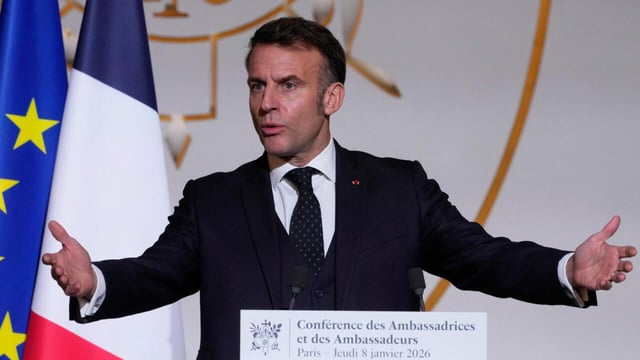
In a recent address, French President Emmanuel Macron took a strong stance against escalating global tensions and the divisive strategies employed by major powers. Speaking at an international summit, Macron emphasized the dangers of perpetuating power struggles that threaten to fragment international relations further, advocating instead for unity and collaborative efforts to address pressing global challenges.
The Call for Unity
Macron’s remarks came at a crucial time as global geopolitical tensions continue to rise. With various countries pursuing their own interests aggressively, the French leader warned that such behavior only exacerbates global divisions. He urged nations to resist the temptation to break up the international community into rival blocs, stressing the importance of cooperation in the face of global crises.
“The lure of dividing up the world into spheres of influence must be resisted,” Macron declared. “This temptation leads to a form of global anarchy, where alliances are transient and conflicts are exacerbated rather than resolved.”
Global Challenges Demand Unified Action
Macron’s call for unity is particularly significant given the array of challenges facing the world today, from climate change and economic instability to emerging technologies and health crises. He pointed out that no single nation can effectively tackle these issues alone, highlighting the need for a collective approach.
To underscore his point, Macron referenced ongoing efforts to combat climate change. “Climate change knows no borders. It affects us all indiscriminately, demanding a global strategy that transcends national interests,” Macron stated. He urged nations to reinforce their commitments to international environmental accords and work towards sustainable solutions.
Reaffirming Multilateralism
Multilateralism, according to Macron, is the key to maintaining global stability and addressing shared challenges. His speech stressed the relevance of international institutions in facilitating dialogue and fostering cooperation among nations.
Despite criticism from some quarters that multilateral organizations are ineffective or obsolete, Macron defended their continued importance. “They may not be perfect, but they are indispensable platforms for negotiation and conflict resolution,” he argued. “It is through these institutions that we can build a more equitable and just global order.”
Macron’s address also touched on the role of technology in bridging divides. While acknowledging the potential for digital innovations to enhance connectivity and collaboration, he cautioned against their misuse for surveillance and control.
“Technology should be a force for good, not a tool for division,” he concluded. “We must harness its power to bring people together, fostering understanding and respect across cultures.”
Macron’s statements resonated with many summit participants, drawing attention to the urgent need for renewed commitments to multilateral cooperation. As global leaders grapple with the complexities of international relations, Macron’s vision of a unified and collaborative world appears more necessary than ever.
In an era marked by fragmentation and discord, Macron’s speech serves as a powerful reminder of the virtues of unity and the shared responsibilities of nations on the global stage.