


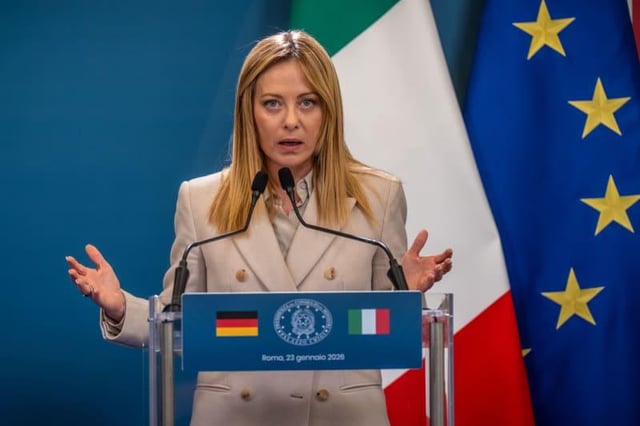
In a pointed response to recent comments by former U.S. President Donald Trump, Italian Prime Minister Giorgia Meloni expressed her criticism over his remarks regarding NATO’s strategy in Afghanistan. Trump’s observations, which questioned the alliance’s motives and execution of military actions in the region, have sparked a flurry of political debate and international discussion.
A Candid Critique from Italy
Meloni, known for her formidable presence on the international political stage, did not mince words in her assessment of Trump’s statements. Her critique centers on the importance of global cooperation and the vital role NATO plays in maintaining international security, particularly in volatile regions like Afghanistan.
“In a world marked by complex threats, solidarity among allies is not optional; it’s imperative,” Meloni emphasized during a recent press briefing. Her statement underscores the continued relevance of NATO’s strategic decisions, despite criticisms from external bodies and figures such as Trump.
NATO’s Strategic Importance in Afghanistan
The discourse around NATO’s involvement in Afghanistan has been a longstanding topic, especially following the withdrawal of U.S. troops from the region. Critics like Trump argue that the alliance’s strategies have been ineffective, pointing to ongoing instability and insurgency activities in Afghanistan.
However, proponents of NATO, including Meloni, argue that the presence and actions of the alliance have been critical in containing and managing these threats. NATO’s mission, they claim, has been pivotal in attempting to bring peace and stability to a region riddled with conflict.
Global Reaction to Trump’s Comments
Trump’s remarks have not only drawn criticism from Meloni but have also elicited mixed reactions globally. Some leaders and analysts support his view, arguing for a reassessment of military strategies and calling for a more localized approach to Afghan crises.
Conversely, many others, particularly those within European governments, align with Meloni’s position, advocating for continued multinational cooperation and coordinated efforts through established alliances. This support stems from a belief that collective international efforts are more effective in addressing complex geopolitical challenges than unilateral actions.
The Broader Implications of the Debate
The exchange between Meloni and Trump contributes to a broader dialogue about the future of international military alliances and their evolving roles in global geopolitics. As the world faces a myriad of challenges, from terrorism to cyber threats, the need for robust, cooperative frameworks becomes ever more critical.
Meloni’s comments reflect a vision of unity and shared responsibility, emphasizing that countries cannot afford to adopt isolationist stances in dealing with global threats. This debate continues to highlight differing perspectives on how best to approach international security, peacekeeping, and coalition-building in volatile regions.
As discussions evolve, the international community watches closely, understanding that the outcomes of such debates have far-reaching consequences for global peace and security strategies.
In the end, whether through criticism or support, the ongoing dialogue among world leaders about NATO’s strategy in Afghanistan reveals the complexities of navigating international alliances and the pressing need for cohesive, strategic partnerships in today’s interconnected world.