


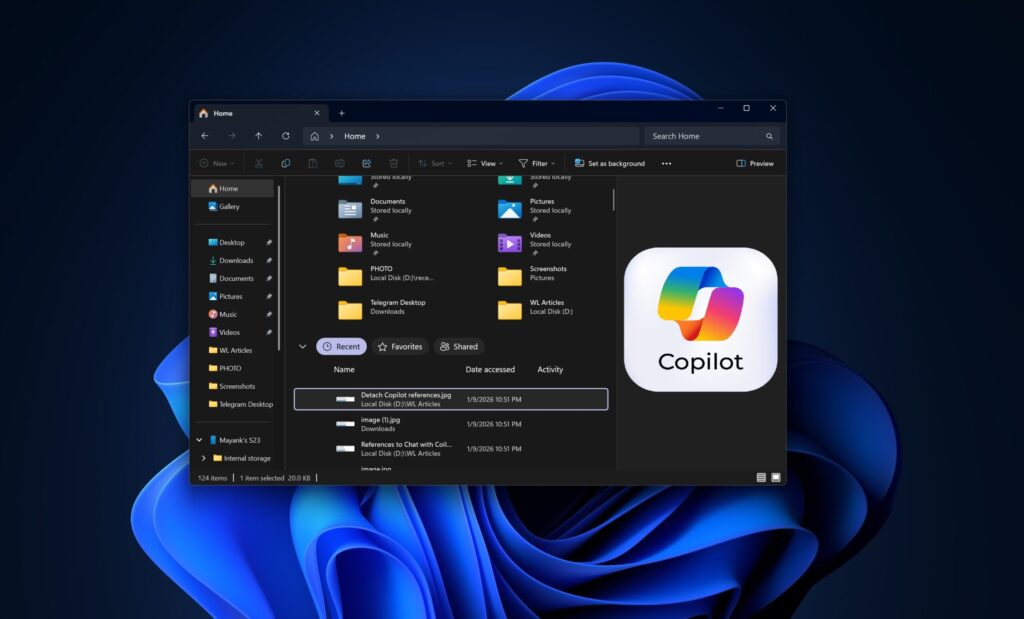
In a significant move towards enhancing user convenience and productivity, Microsoft is testing the integration of its AI-powered assistant, Copilot, directly into the Windows 11 File Explorer. This development marks a shift from using Copilot as a standalone application to embedding it within essential Windows components, offering users a streamlined experience.
A New Era for File Management
This experimental feature aims to revolutionize how users interact with File Explorer by offering real-time, AI-driven insights and assistance. The integration seeks to empower users to navigate their files more efficiently, with Copilot providing instant responses and file management suggestions. Microsoft’s ambition is to elevate File Explorer from a simple file navigator to a comprehensive tool that adapts to users’ needs.
Historically, File Explorer has served as the primary interface for managing files on Windows, but it has largely been a static experience. By embedding Copilot, Microsoft hopes to transform it into a dynamic environment that can learn from and evolve with user patterns.
How Copilot Integration Works
Rather than existing as a separate entity, Copilot will be accessible directly within File Explorer, presenting itself through a chat interface. Users can interact with Copilot using natural language, asking questions or requesting file operations. This integration reflects Microsoft’s ongoing investment in conversational AI technologies, aiming to make everyday computing tasks more intuitive.
The potential applications are vast. From asking Copilot to locate specific files, to querying it for information about file contents, the AI’s capabilities promise to save time for both novice and experienced users. Copilot’s understanding of user preferences and history will enable it to offer personalized suggestions and automate repetitive tasks, creating a more efficient workflow.
Implications for Windows 11 Users
For Windows 11 users, this integration could significantly impact productivity and ease of use. The ability to converse with File Explorer seamlessly may change the way individuals and businesses manage digital information. This innovation aligns with Windows 11’s overall strategy to introduce more intelligent, user-centric features.
Microsoft’s broader vision includes leveraging AI to make technology more accessible and natural to navigate. By embedding AI directly into core applications like File Explorer, Microsoft is promoting a more cohesive interaction model across its ecosystem. This change could influence how other software developers approach AI in everyday applications, potentially setting a new standard in user interface design.
As Microsoft continues to test and refine this feature, users can expect iterative improvements based on feedback and usage data. This iterative approach ensures that the Copilot integration not only meets but exceeds user expectations, adapting to varied and growing demands.
The rollout of Copilot into File Explorer comes amid a broader push by Microsoft to redefine how users interact with their devices. With AI at its core, this initiative is poised to influence not only Windows 11 but also future iterations of the operating system. The potential for customization and user-specific enhancements highlights the flexibility and depth of AI integration within day-to-day digital tasks.
As the technology matures, Copilot’s capabilities in File Explorer could become a hallmark feature of Windows 11, marking a step forward in the evolution of the operating system. Microsoft’s efforts suggest a long-term commitment to embedding AI deeply into its software architecture, offering vast potential for innovation and improved user experiences.
, image: https://www.windowslatest.com/2026/01/09/copilot-could-soon-live-inside-windows-11s-file-explorer-as-microsoft-tests-chat-with-copilot-in-explorer-not-just-in-a-separate-app/