


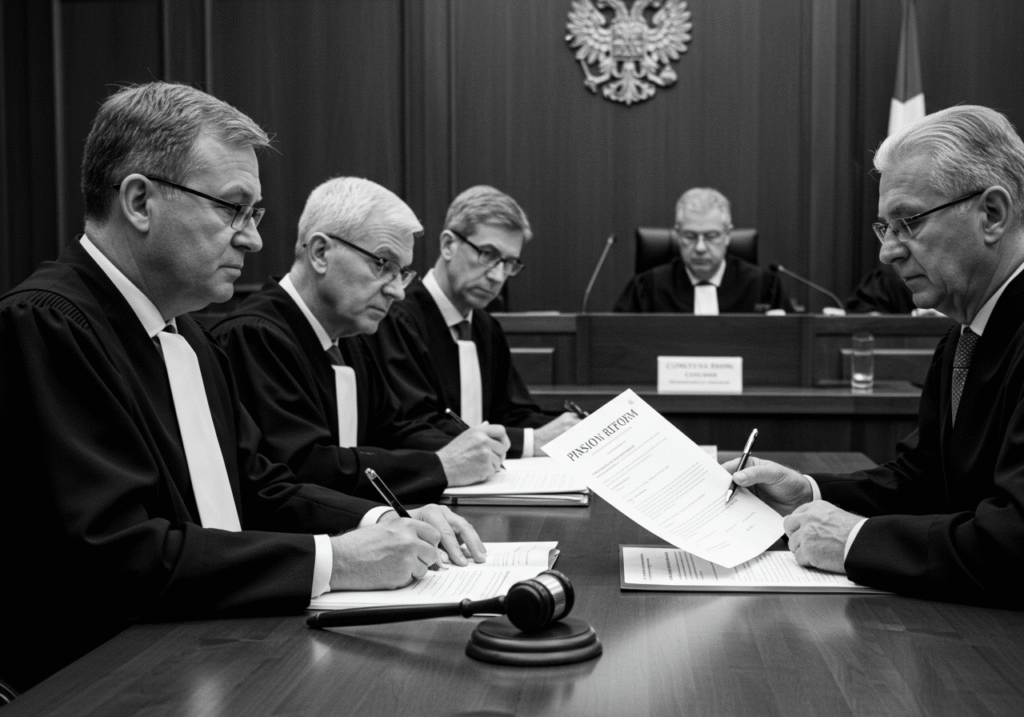
In a pivotal legal decision, the Czech Republic’s Constitutional Court has upheld the contested pension reform, marking a significant triumph for the current government. The decision comes after prolonged debates and challenges put forth by opposition parties, most notably ANO, which has been a vocal critic of the reform. The verdict solidifies the government’s stance on one of its most prominent legislative changes, ensuring the continuation of its pension agenda.
The pension reform has been a critical focal point of political discourse, with its implications poised to influence the lives of millions of Czech citizens. Amid contentious debates and significant media attention, the ruling provides clarity on the government’s capacity to implement its ambitious restructuring of the pension system.
The Context of the Pension Reform
The pension reform, introduced as part of the government’s broader economic strategy, aims to address the aging population and ensure the sustainability of the pension system. It is designed to adjust pension benefits, modify retirement age stipulations, and introduce measures to improve the financial sustainability of the pension fund.
Critics, including the ANO party, argued that the reform disproportionately affected certain demographics and called for its repeal, leading to the legal challenge at the Constitutional Court. The crux of the opposition’s argument was based on claims that the reform violated principles of fairness and equity, impacting long-standing contributors to the pension system adversely.
Details of the Constitutional Court’s Ruling
The Constitutional Court examined the reform’s compliance with the Czech Constitution, focusing particularly on its adherence to principles of social justice and equality. In a comprehensive verdict, the court declared that the government’s reform does not contravene constitutional mandates, thereby dismissing the objections raised by ANO and other opposing parties.
The court’s decision was underscored by a thorough evaluation of the reform’s implications, aligning with broader constitutional safeguards. The ruling emphasized that the reform seeks to attain essential economic viability while also considering long-term demographic trends and fiscal constraints.
Reactions from Political Entities
The decision was met with approval from government officials, who have asserted that the reform is crucial for economic stability and demographic adaptation. The Prime Minister praised the court’s decision, stating it empowers the government to continue pursuing necessary changes without impediments from opposition challenges.
Conversely, the ANO party expressed disappointment, maintaining their stance that the reform could be detrimental to several societal sectors. In their post-ruling statement, ANO representatives emphasized the need for more inclusive policymaking, advocating for alternative strategies that they believe could achieve economic goals without compromising social welfare.
Implications for the Public
For the Czech populace, the court’s decision ensures that the proposed changes to the pension system will proceed as planned. Citizens nearing retirement and current pensioners have been especially attentive to developments, given the potential effects on their financial futures. The upheld reform entails modifications to pension calculations, which the government contends will enhance long-term sustainability.
The government’s approach includes gradual transitions to the new system, aiming to mitigate any abrupt impacts on retirees and older workers. By doing so, the administration intends to reassure citizens and reduce the uncertainty that often accompanies significant systemic changes.
Economists and Experts Weigh In
Economic experts have weighed in on the ruling, highlighting its significance for the Czech Republic’s fiscal landscape. Many economists underscore the need for pension reform in light of demographic shifts, with the age structure of the population increasingly skewed towards older age groups. The court’s endorsement of the reform solidifies confidence in the government’s economic policies and its ability to implement necessary adjustments.
Some experts have, however, echoed concerns similar to those voiced by opposition parties, indicating that the reform process should remain flexible and responsive to unforeseen socioeconomic changes. They advocate for monitoring mechanisms to assess the reform’s real-world impacts and for adjusting policies accordingly.
The Path Forward
Moving forward, the government is expected to expedite the implementation of the reform, capitalizing on the court’s decision to fortify the pension system. Monitoring and evaluation processes will likely be integral to ensuring that the reform’s goals are met efficiently and equitably.
The ongoing discourse surrounding the pension reform reflects larger themes of governance and policy-making in fluctuating economic climates. As the Czech government proceeds with its plans, it remains imperative for it to engage with various stakeholders, including civil society and economic experts, to ensure that the reform serves the public interest effectively.
As the dust settles following the court’s decision, the political landscape remains poised for further discussions and potential re-evaluations, ensuring that the nation’s pension framework can withstand the tests of time and circumstance. The ruling acts as a testament to the democratic processes at play, highlighting the role of judicial oversight in upholding constitutional fidelity in legislative endeavors.