


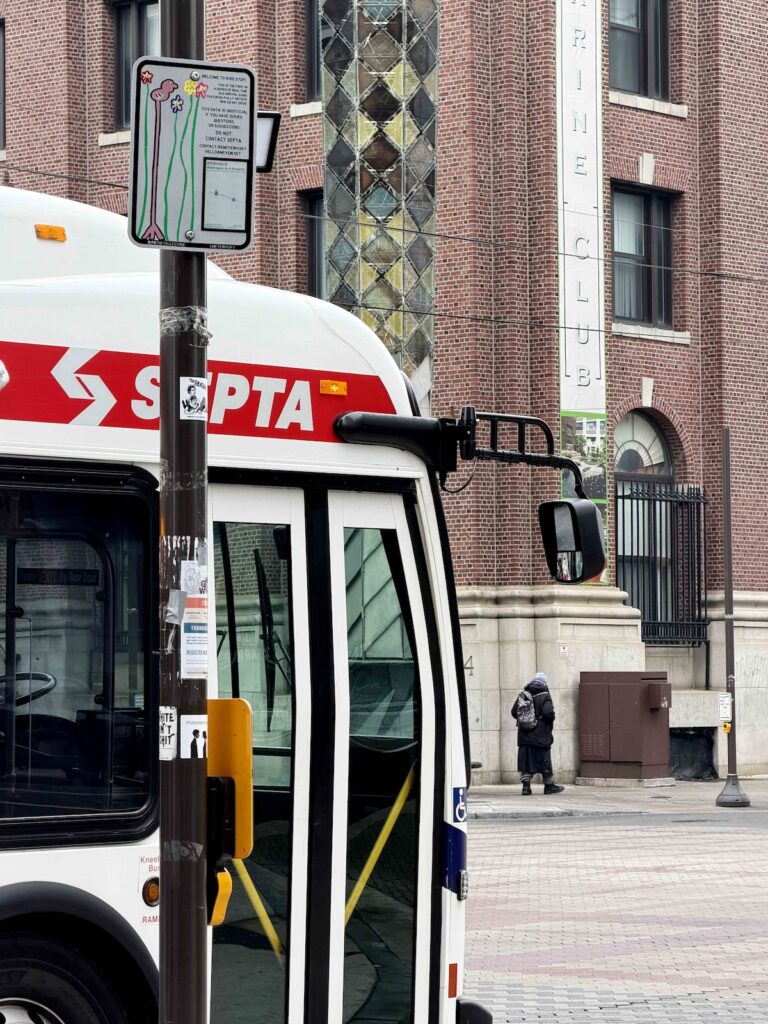
In a bustling part of Philadelphia, an unassuming but transformative street artist has found a novel way to tackle the absence of official bus-tracking signs. This urban intervention not only addresses a pressing need for public transit users but also offers a creative lens through which to view the city’s infrastructure challenges. The initiative is led by the enigmatic artist, who prefers to remain anonymous, known locally as “Bus Optimist.”
An Artistic Solution to Practical Problems
Philadelphia’s public transportation system plays a crucial role in the daily lives of its residents, yet it frequently suffers from outdated infrastructure and lackluster services. One glaring issue has been the absence of real-time bus-tracking signs at many stops, leaving commuters guessing and frustrated. This gap became an opportunity for Bus Optimist, who began quietly installing handmade signs across key bus routes in the city.
These DIY displays, crafted from easily accessible materials and equipped with QR codes, direct commuters to online bus-tracking resources. What started as a simple solution has grown into a citywide initiative, offering what many see as a necessary service, all while sparking conversations about urban resilience and the role of art in public spaces.
The Impact of Guerrilla Urbanism
Bus Optimist’s efforts exemplify a broader movement known as guerrilla urbanism, where individuals take it upon themselves to make tangible improvements in their environment. In Philadelphia, an ever-evolving urban landscape, such interventions become a catalyst for change, urging both city officials and residents to rethink how public spaces are utilized and maintained.
Community Responses
- Commuters’ Voices: Many bus riders have expressed gratitude for these signs, noting how they help alleviate the stress of unpredictable wait times. For those who rely heavily on public transportation to get to work or school, knowing when the next bus is arriving can significantly impact their daily schedules.
- Civic Engagement: The buzz around these signs has even engaged local community groups. Some have started organizing workshops to create additional signs, while others lobby for the city to adopt more creative approaches in addressing infrastructure issues.
Amidst these developments, city officials have taken notice. Some openly commend the initiative, viewing it as a boost to public resources amidst tight budgets. Others, however, reiterate the need for more formal solutions that align with city regulations and safety standards.
Challenges and Future Prospects
Despite the positive feedback, challenges persist. The informal nature of Bus Optimist’s project raises questions about maintenance, liability, and the potential for vandalism. Moreover, the city faces the complex task of integrating such grassroots solutions into existing frameworks without stifling their creative spirit or community-driven roots.
Looking ahead, the potential for collaboration between artists, urban planners, and city officials presents an exciting frontier. Bus Optimist’s initiative could inspire new policies that encourage community engagement and streamline support for complementary and sustainable urban solutions.
The Broader Implications of Creativity in Urban Spaces
Bus Optimist’s impact extends beyond filling informational gaps for commuters. It highlights the power of creativity to enact social change and underscores a broader commentary on how cities prioritize resources. As urban areas face increasing financial constraints, innovative grassroots solutions offer not only stopgap measures but also a vision for more inclusive and responsive urban planning.
The artist behind these signs remains distanced from media spotlight, but their work speaks volumes. The ongoing project symbolizes hope and resilience, reminding Philadelphians of the potential that lies at the intersection of art, utility, and community.
Ultimately, the initiative serves as a testament to the idea that ordinary citizens, fueled by creativity and civic responsibility, can step in to address shortcomings in urban infrastructure. It is a call to action for cities like Philadelphia to embrace such ingenuity, perhaps transforming the way public spaces function and evolve in response to community needs.
, image: https://www.washingtonpost.com/nation/interactive/2025/philadelphia-street-artist-bus-signs/