


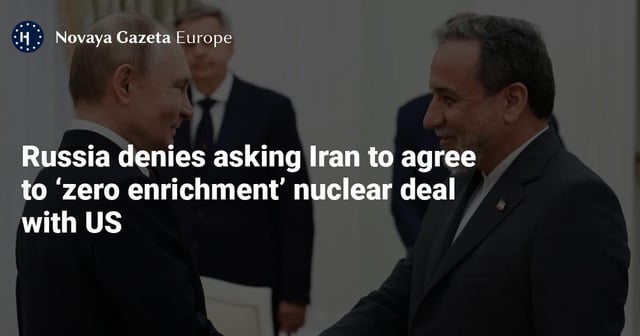
In a move that has captured global attention, Russia has firmly denied reports suggesting it influenced Iran to agree to a nuclear enrichment arrangement with the United States. This statement comes amidst persistent international scrutiny over Iran’s nuclear ambitions and the broader geopolitical ramifications it entails. The allegation, initially reported by various media outlets, highlights the complex diplomatic dance between powerful nations involved in the protracted discussions surrounding Iran’s nuclear capabilities.
The Allegation and Moscow’s Response
The allegation in question involves claims that Russia had instigated conversations with Iranian officials to consent to a U.S-led proposal aimed at halting nuclear enrichment. Such a development would resonate through international corridors, given the ongoing concerns regarding Iran’s nuclear intentions. Moscow swiftly addressed the rumor, stating there was no truth to these accusations.
A spokesperson from the Russian Foreign Ministry emphasized their commitment to diplomatic transparency and reiterated the country’s stance on Iran’s nuclear program. “Russia maintains a neutral and constructive approach, encouraging dialogue and solutions that ensure regional stability,” the spokesperson stated. This articulation seeks to distance Moscow from any unilateral actions that could complicate its relations with either Tehran or Washington.
The Geopolitical Context
Iran’s nuclear program has long been a point of contention on the world stage. The 2015 Joint Comprehensive Plan of Action (JCPOA), a pivotal agreement brokered by major world powers including Russia, aimed to curb Iran’s nuclear capabilities in exchange for the lifting of economic sanctions. However, the U.S.’s withdrawal from the agreement under the Trump administration in 2018 led to escalating tensions and brought discussions back to the forefront.
As diplomatic efforts continue under President Joe Biden’s administration, the recent rumors involving Russia, Iran, and the U.S. underscore the intricate web of alliances and adversarial relations. Any perceived collusion or strategic maneuvering could have significant implications for the delicate balance of power in this region.
Worldwide Reactions and Potential Outcomes
While Moscow’s denial seeks to dampen the narrative of its involvement, the international community continues to watch developments closely. The alleged influence on Iran marks a critical juncture in ongoing nuclear talks, and stakeholders are evaluating potential outcomes that could emerge from such allegations.
Various countries involved in the original 2015 agreement have expressed hope for a revitalized pact that includes more stringent regulations on nuclear enrichment while providing economic incentives for Iran. A durable and verifiable agreement would assist in alleviating regional insecurity and positively impact global nonproliferation efforts.
In light of these tensions, experts and analysts caution against oversimplifying the dynamics at play. The intricate political, economic, and historical factors intertwined in this scenario demand comprehensive resolution diplomacy from all parties involved.
As the situation evolves, international observers and policymakers are poised to navigate the complex narratives and pressing realities surrounding Iran’s nuclear program. The unfolding developments underscore the significance of multilateral engagement and dialogue in addressing global security challenges.
Russia’s denial offers no formal resolution to the broader issue; however, it reiterates the importance of transparent and consistent communication between nations engaged in negotiations of global significance. For now, the world waits, watches, and hopes for a peaceful resolution that can pave the way for a more secure future.