


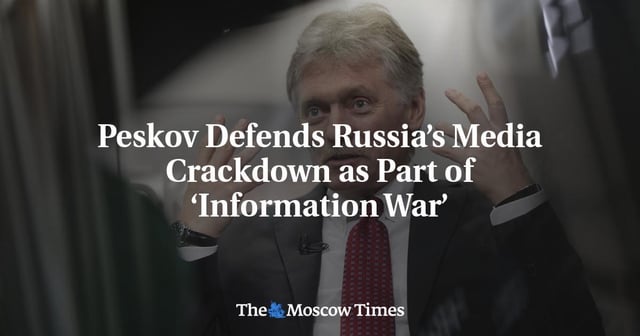
In a rapidly evolving global discourse on media freedoms, the Kremlin has recently come under scrutiny for its stringent media regulations. Justifying what many international observers view as a media crackdown, Russian officials assert these measures are a necessary response to the heightened “information warfare” they claim the nation faces.
The Kremlin’s Stance on Media Control
Russian authorities have defended their actions by arguing that their country’s media landscape requires a robust regulatory framework to counteract the perceived onslaught of misinformation and foreign influence. The Kremlin’s perspective is that these measures are essential for maintaining national security in a world where information can be just as potent as traditional warfare methods.
The argument put forth by Russian officials hinges on the belief that external forces are actively seeking to manipulate public opinion within Russia. Consequently, these restrictions are seen as protective measures to safeguard the country’s sovereignty and stability against hostile narratives infiltrating the information ecosystem.
Impact on Journalists and Media Outlets
This regulatory tightening has significant implications for journalists and media outlets operating within Russia. Many independent journalists express concern over the chilling effects these actions have on free speech and the press. The growing influence of state-controlled media outlets further exacerbates these concerns, as space for dissenting voices shrinks.
One notable impact of these policies has been an increase in self-censorship among journalists who fear potential repercussions. The boundaries of acceptable reporting are increasingly dictated by government-aligned entities, raising questions about the future of journalistic independence in the country.
International Reactions and Consequences
The international community has responded with criticism and calls for Russia to uphold its obligations under various international conventions safeguarding press freedom. Notably, organizations dedicated to monitoring media freedom have reported an uptick in alerts signaling violations of journalists’ rights. Despite this, the Kremlin remains steadfast in its narrative, emphasizing the protective nature of its policies.
Global response also includes discussions around possible sanctions or other diplomatic actions aimed at pressuring Russia to relax its grip on media operations. These diplomatic conversations reflect the broader geopolitical tensions surrounding information control and the divergence of perspectives on media regulation between Russia and Western countries.
In this context, the dialogue between Russia and the rest of the world continues to highlight the complexities of balancing national security with human rights and freedom of expression. As the situation develops, the global gaze remains fixed on how these media policies will influence not only Russia’s domestic reporting landscape but also its international relations.