


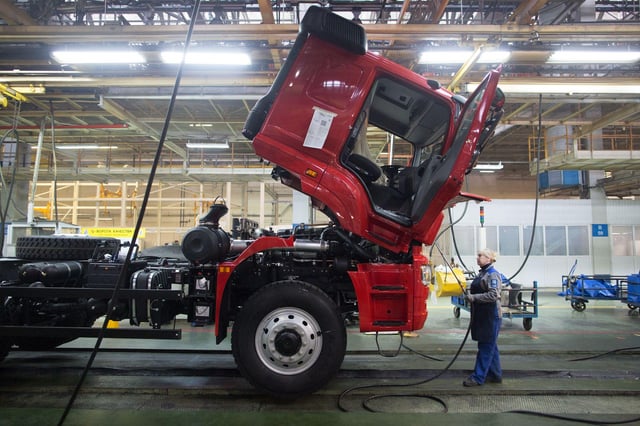
In a significant reflection of the economic challenges facing Russia, the renowned truck manufacturer Kamaz has announced a reduction in its work week. As one of the country’s largest vehicle producers, Kamaz’s decision is symptomatic of broader economic strains that have been affecting industries across Russia.
This development is indicative of a number of issues that are currently pressuring the Russian market, including fluctuating oil prices, international sanctions, and internal economic policies. These factors have combined to create a complex landscape where businesses must adapt to survive and maintain their workforce.
Adapting to Economic Pressures
Kamaz, known for its heavy-duty trucks and significant contributions to the Russian automotive industry, has faced dwindling demand domestically and internationally. The company’s decision to cut its work week from five days to four is a direct response to these challenges. It reflects the necessity to balance operational costs while striving to retain its workforce during a period of reduced production needs.
This adaptation strategy is not unique to Kamaz. Companies across Russia are grappling with similar issues, attempting to navigate a market that has become increasingly unpredictable due to external economic pressures. The pivot to a shorter work week is seen as a strategic measure to minimize layoffs and maintain financial viability.
Implications for the Workforce
The workforce in Russia, already facing significant challenges due to economic instability, is likely to feel the impact of such changes acutely. For Kamaz employees, the move to a four-day work week could result in reduced income, adding to the financial strain on households. This change poses questions about employee morale and the long-term sustainability of this approach.
Despite these concerns, Kamaz’s management has indicated that this decision was made with the intention of avoiding more drastic measures such as mass layoffs. By keeping its workforce intact, even with reduced hours, the company aims to preserve jobs and prevent a further spike in unemployment, which would exacerbate the nation’s economic troubles.
Navigating a Complex Market Environment
The broader economic context in Russia remains challenging. The combination of Western sanctions, partly due to geopolitical tensions, and a volatile oil market, has put the Russian economy under sustained pressure. These factors have significantly affected consumer purchasing power and industrial output, leading to cautious optimism about future prospects.
Kamaz’s decision can also be viewed within the framework of a larger conversation about economic resilience and sustainability. As industries in Russia pivot to new operational models, they are forced to innovate and explore alternative markets. This shift requires strategic planning and potential investments in technology and training to enhance productivity and competitiveness.
While the current situation presents hurdles, it also offers opportunities for transformation. As companies like Kamaz navigate these trying times, they might emerge with more robust, adaptable business models capable of weathering future economic storms.
The coming months will be critical as Kamaz and similar enterprises gauge the success of their adapted strategies. The outcomes of these decisions will not only influence their immediate survival but also provide insights into the resilience of the Russian economy amidst continuing global uncertainties.
The decision by Kamaz to reduce its work week underscores the volatility within the Russian market and the far-reaching impacts of global economic trends. It highlights the significant challenges faced by industries that are closely tied to both domestic policy shifts and international economic dynamics.