


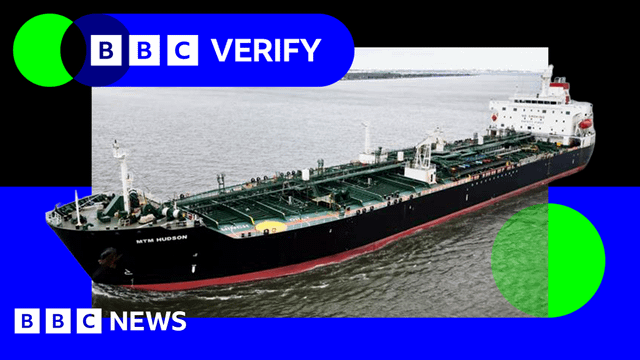
As concerns about global security are heightened due to geopolitical tensions, the issue of Russian tankers navigating international waters under sanctions becomes increasingly crucial. Recently, dozens of Russian tanker ships have managed to continue their operations despite being under international sanctions, causing alarm and debate among political leaders and experts on maritime security. This comes in light of the United Kingdom’s pledge to take more stringent actions against these sanctioned vessels as part of their wider strategy to enforce maritime sanctions against Russia.
Background on the Sanctions
Sanctions against Russia have been part of an international effort to pressure the country over various geopolitical issues. These sanctions are designed to limit the financial and logistical capabilities of Russian enterprises, including its crucial oil and gas sectors. Oil tankers, integral to transporting energy resources, have become pawns in this high-stakes geopolitical chess game.
The main objective of these sanctions is to cripple Russia’s economy by restricting its ability to export and sell oil. Sanctioned tankers, by continuing their operations, undermine these efforts and highlight weaknesses in international enforcement mechanisms. As these tankers are vital for transporting Russian oil, they have increasingly found ways to circumvent sanctions through various means.
UK’s Response and Global Implications
The United Kingdom has vowed to crack down on these vessels navigating its waters. This pledge forms part of a broader commitment by the UK government to work alongside international partners in ensuring the effectiveness of sanctions against Russia. However, the practical implementation of these measures faces substantial challenges. The complexity of maritime law, coupled with the vastness of international waters, offers multiple loopholes for sanctioned tankers to exploit.
Global shipping dynamics are such that many sanctioned Russian tankers reflag under different nations to avoid detection. This practice makes it difficult for authorities to monitor and control their movements effectively. Moreover, shipping routes are designed to maximize efficiency, and rerouting them entirely to enforce sanctions can disrupt global trade flows, affecting economies worldwide.
The Challenges of Enforcement
Enforcing maritime sanctions is fraught with challenges. One major obstacle is the identification and tracking of sanctioned ships. With numerous ships reflagging to circumvent the sanctions, maintaining an updated database requires substantial resources and international cooperation. These ships often engage in what is known as “ship-to-ship” transfer operations, where oil or goods are transferred at sea, further complicating enforcement efforts.
Additionally, monitoring and policing such activities require sophisticated technology and strategic intelligence sharing among countries. The manpower and resources necessary to embed robust enforcement mechanisms can be extensive, and not all countries have the capabilities to contribute effectively.
Technological Solutions and International Cooperation
Emerging technologies offer some hope for improved enforcement of maritime sanctions. Advanced tracking systems using satellite data can monitor the movement of ships more accurately and in real-time. Many experts advocate for a collaborative international approach, where countries with advanced tracking capabilities work hand-in-hand with those lacking resources.
By pooling resources and sharing intelligence, nations can strengthen their grasp on monitoring sanctioned vessels. Additionally, employing artificial intelligence to analyze shipping data and predict clandestine activities can significantly bolster enforcement efforts and preempt unlawful navigation.
- Data Sharing: Countries sharing intelligence on ship movements can be more agile in identifying and intercepting sanctioned vessels.
- Technological Investments: Investing in satellite monitoring systems and AI technology can provide real-time insights into maritime activities.
- Legislative Framework: A uniform international legal framework could streamline the process for identifying and penalizing non-compliant ships.
However, while technology plays a pivotal role, the cooperation, and commitment from international stakeholders remain key. Consistent dialogue and agreements on enforcement standards and practices can greatly enhance the efficacy of these sanctions.
As countries like the UK continue to pledge action against sanctioned Russian tankers, the world watches closely. The effectiveness of these efforts not only impacts Russia’s economic position but also sets precedents for how international sanctions may be navigated or enforced in the future. Ensuring the transparency and integrity of such maritime operations remains a global challenge, yet one essential for maintaining international order and security.