


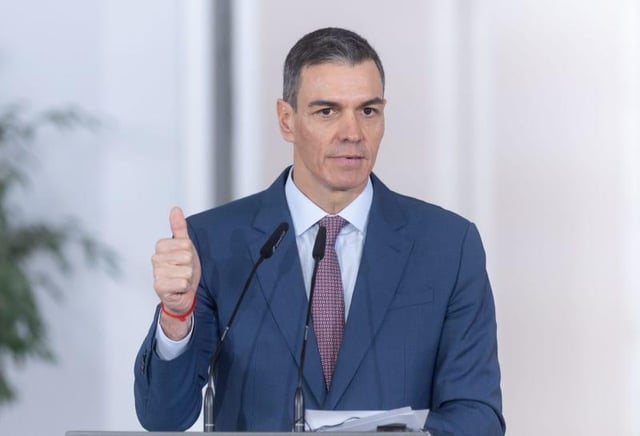
In a notable diplomatic move, Spain has announced that it will not be joining former U.S. President Donald Trump’s newly proposed International Peace Initiative. The decision was made public following Prime Minister Pedro Sánchez’s formal statement, wherein he expressed reservations about the initiative’s alignment with Spain’s foreign policy objectives.
Context of the Initiative
The International Peace Initiative, introduced by Trump, aims to bring together nations worldwide in a common effort to foster global peace and stability. Its framework includes a series of dialogues and cooperative measures designed to address ongoing global tensions and conflicts. Despite its ambitious goals, the initiative has received a mixed response on the international stage, with some countries showing interest, while others, like Spain, have chosen a different path.
Spain’s Position and Reasoning
Spanish officials have indicated that their decision was driven by a need to maintain strategic autonomy in their foreign policy approaches. Prime Minister Sánchez emphasized that while Spain values international cooperation for peace, it prefers to operate within the frameworks of well-established alliances and organizations, such as the European Union and the United Nations.
There is also an implied concern about the potential implications of aligning too closely with initiatives spearheaded by former U.S. leadership, especially in light of Trump’s contentious international policies during his presidency. The Spanish government underlined its commitment to multilateralism and expressed a wish to avoid any perceptions of partisanship in its international engagements.
Reactions and Implications
The announcement has elicited varied reactions both domestically and abroad. While opposition parties in Spain have criticized the government for possibly missing an opportunity to play a role in global peace efforts, supporters of the decision argue that Spain’s cautious approach is prudent given the current complex geopolitical environment.
On the international front, Trump’s allies expressed disappointment at Spain’s decision, pointing out that the initiative requires the support and engagement of European nations to gain momentum and legitimacy. However, analysts suggest that Spain’s choice might reflect a broader hesitation among European countries that are still navigating post-Trump transatlantic relations.
European Perspectives
Within the European Union, reactions have been more nuanced. Some member states share Spain’s cautious stance, advocating for a stronger European-centric approach to international affairs. The divergence in responses highlights ongoing debates within the EU regarding how best to assert influence on the global stage independently of the U.S., especially under new American leadership.
As the initiative unfolds, EU policy experts will be closely monitoring how collaborative efforts are received, both on a European and a wider international level. The outcome could shape future EU strategies regarding global peace initiatives.
For now, Spain remains committed to participating in dialogues and efforts that align closely with its values and strategic interests, while maintaining open communication channels with all global actors, including those involved in Trump’s peace initiative.