


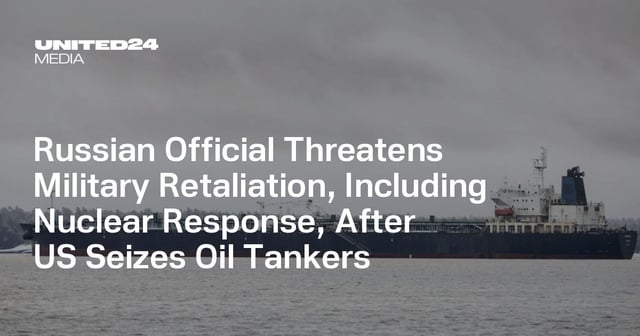
Tensions between Washington and Moscow have reached a new level of intensity following the United States’ recent seizure of Russian oil tankers. In an alarming escalation, a top Russian official has issued a stark warning of potential military retaliation, heightening global concerns over the volatility of international relations. This latest development underscores the complexities of geopolitical dynamics and the fraught relationship between the two powers.
Background of the Seizure
The incident at the heart of this escalating tension involves the capture of Russian oil tankers by U.S. forces. Although specifics around the seizure remain somewhat opaque, it appears to be linked to ongoing sanctions and a broader strategy of economic pressure applied by the U.S. against Russia. This move has been perceived by Moscow as not only an economic threat but also a symbolic affront that challenges its sovereign rights.
Previous instances of similar actions have already set the stage for diplomatic confrontations, but the latest seizure could potentially provoke a more severe response due to its timing and the heightened stakes involved.
Russia’s Strong Warning
The reaction from Moscow has been swift and robust. Russian officials have condemned the seizure, deeming it an act that could destabilize the already delicate international order. A prominent Russian official issued a statement indicating that military retaliation is not off the table, a declaration that has caught the attention of international observers.
This saber-rattling reflects a strategic posture by Russia to deter what it views as encroachments on its national interests. The official emphasized that such actions by the U.S. threaten not just Russian economic stability but also its national security, forcing Moscow to consider all options on the table, including military action.
Regional and Global Implications
The Russian warning of potential military action is not just a matter of bilateral concern. It carries significant implications for regional stability in Europe and beyond. Countries in the European Union, particularly those in Eastern Europe, have expressed heightened anxiety over the specter of military conflict involving NATO forces and Russia.
- For geopolitical strategists, the situation signals potential shifts in alliance dynamics and defense strategies across Europe.
- The possibility of military engagement could influence global energy markets, given Europe’s reliance on Russian oil and gas.
Beyond Europe, global markets are on alert as tensions between two of the world’s major powers threaten broader economic stability. Sector analysts are particularly attentive to shifts in commodity prices and currencies as uncertainty prevails.
Calls for Diplomacy
Amidst mounting tensions, there have been growing calls from the international community for diplomatic mediation. Several nations and international bodies have urged both the United States and Russia to engage in constructive dialogue to mitigate the risk of escalation. The need for diplomacy is seen as crucial to prevent a potential military confrontation that could have drastic consequences for global peace and security.
Organizations such as the United Nations and neutral countries like Switzerland have offered to mediate discussions, advocating for peaceful solutions to the conflict. However, skepticism remains about the willingness of both parties to compromise given the historical context and entrenched positions.
Experts suggest that exploratory talks could focus on reducing military deployments in sensitive areas and establishing clear lines of communication to prevent misunderstandings from spiraling into conflict. The future trajectory of U.S.-Russia relations will likely depend on the ability of both sides to find mutually acceptable solutions to points of contention.
The escalating situation highlights the critical importance of diplomacy in resolving international disputes. As the world watches closely, the ability of Washington and Moscow to navigate this complex geopolitical landscape will be pivotal in determining whether peace or conflict prevails.
While the details of the ongoing negotiations are still unfolding, the potential fallout from a failure to reach a peaceful resolution remains a significant concern for global stability.