

A Brief Historical Background: Unveiling the Origins of Czech Sausages and Smoked Meats
Czech sausages and smoked meats have a rich history that dates back centuries. The origins of these traditional delicacies can be traced to the rural areas of the Czech Republic, where farmers used smoking as a method of preserving meats. In the past, before the advent of refrigeration, smoking was one of the most effective ways to prevent spoilage and extend the shelf-life of meat.


The techniques and recipes for Czech sausages and smoked meats have been passed down through generations, with each region developing its own unique variations. The use of local ingredients such as pork, beef, and game meat, combined with a blend of herbs and spices, gives Czech sausages and smoked meats their distinct flavors. Today, these traditional products continue to be an integral part of , enjoyed by locals and visitors alike.


Traditional Czech Ingredients: Uncovering the Key Elements that Make Czech Sausages and Smoked Meats Unique
Czech sausages and smoked meats have earned worldwide recognition for their unique flavors and superior quality. The key to their distinction lies in the careful selection of traditional Czech ingredients, which not only contribute to their distinct taste but also reflect the rich culinary heritage of the Czech Republic.
Key Ingredients:
- High-Quality Meat: Czech butchers take pride in sourcing the best cuts of pork, beef, or poultry. These meats are chosen for their tenderness and rich flavor, ensuring every bite is a delight to the palate.
- Traditional Spice Blend: Czech recipes often call for a unique combination of: • Garlic • Caraway seeds • Marjoram • Black pepper This blend creates a distinctive taste that is both flavorful and satisfying.
Cultural Significance: Sausage recipes play a crucial role in preserving traditional Czech flavors, showcasing various methods and ingredients that highlight the cultural importance of these dishes.
By carefully balancing and harmonizing these ingredients, Czech butchers create products that are truly one-of-a-kind, offering a taste of Czech culinary tradition in every bite.

Popular Varieties: A Journey through the Diverse World of Czech Sausages and Smoked Meats
The diverse world of Czech sausages and smoked meats offers a variety of popular options that tempt the taste buds of both locals and visitors. Here are two standout varieties:
1. Klobása
- Description: A type of smoked sausage that holds a special place in Czech cuisine
- Ingredients: Blend of pork, beef, and traditional Czech spices
- Flavor Profile: Rich and savory
- Typical Serving: Often enjoyed grilled and served with mustard
2. Jitrnice
- Description: A hearty blood sausage, not for the faint of heart
- Ingredients: Pork, offal, spices, and fresh blood
- Flavor Profile: Dark, robust, and unique in taste and texture
- Cultural Significance: A key component of traditional Czech feasts

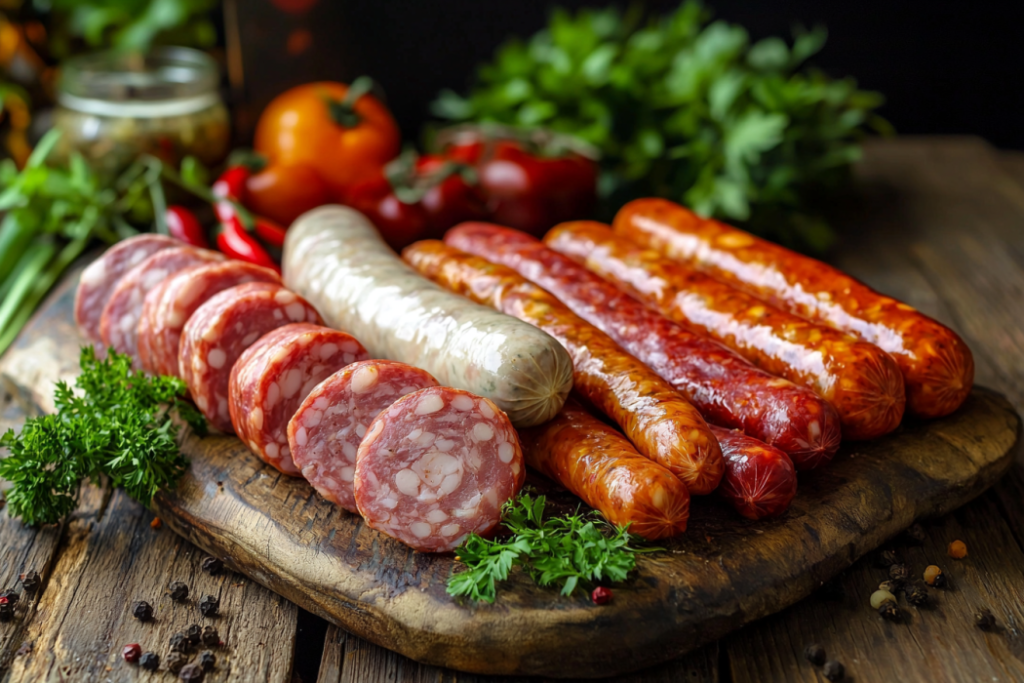
Moving on, the utopenec is another popular variety worth exploring. Translated as “the drowned man,” this pickled sausage gets its peculiar name from the appearance of the submerged sausage in a jar filled with vinegar, onions, and chili peppers. Despite its rather macabre name, the utopenec offers a delightful burst of flavors, combining the tanginess of the vinegar with the spiciness of the peppers. It is often enjoyed as a bar snack, complementing a refreshing pint of Czech beer. Traditional Czech sausages share similarities with cajun boudin, as both often include a variety of ingredients like pork offal and starchy fillers, reflecting a cultural practice of using all parts of an animal. These are just a few examples of the diverse range of sausages and smoked meats that can be found in Czech cuisine, each with its own distinct taste and story to tell. Polish kielbasa, often found in markets and dining establishments, differs from Czech sausages, highlighting the regional variations and authentic recipes unique to each tradition.
The Art of Smoking: Understanding the Traditional Smoking Techniques Used in Czech Smoked Sausages
Smoking is an integral part of Czech cuisine, adding a distinct flavor and enhancing the preservation of various meats. Traditional smoking techniques have been passed down through generations, ensuring that the rich culinary heritage is preserved. One of the most commonly used smoking methods in Czech cuisine is cold smoking. This technique involves the use of low heat and smoldering wood chips, allowing the meat to absorb the smoky flavor gradually over a long period of time. Another popular method is hot smoking, which uses higher temperatures and shorter cooking times to effectively cook the meat while still infusing it with delicious smoky undertones. Both of these techniques contribute to the unique taste and aroma that is characteristic of Czech sausages and smoked meats.
In addition to the method of smoking, the choice of wood chips is crucial in achieving the desired flavors. Traditionally, Czech chefs use beech, oak, or fruitwood chips, such as apple or cherry, for smoking meats. Each type of wood imparts its own distinct nuances to the meat, enhancing the overall flavor profile. The smoking process can take several hours to days, depending on the size and type of meat being smoked. By carefully selecting the right wood chips and meticulously monitoring the smoking process, Czech artisans are able to create sausages and smoked meats that are bursting with rich flavors and a tantalizing smoky aroma.

Regional Specialties: Delving into the Distinctive Flavors of Czech Sausages and Smoked Meats Across Different Regions
In the vast and diverse culinary landscape of the Czech Republic, regional specialties play a significant role in showcasing the distinctive flavors of Czech sausages and smoked meats. From the mountainous regions in the North to the fertile plains in the South, each area has its own unique traditions and techniques when it comes to these beloved delicacies. Additionally, the Czech Tex sausage, characterized by a coarser grind and a blend of beef and pork seasoned with garlic, salt, and black pepper, reflects the historical context of Czech immigration to Texas. Local sausage makers often share family recipes and are willing to tweak traditional recipes while maintaining essential elements that define Czech sausage.
Starting in the Bohemian region, one cannot ignore the renowned “klobása” sausage. Made from a blend of pork, beef and a careful selection of spices, this sausage is often smoked over beechwood and known for its rich and smoky flavor. The Moravian region, on the other hand, is famous for its “jitrnice.” Made from pork offal, rice, and seasonings such as garlic and marjoram, this sausage is steamed rather than smoked, resulting in a tender and succulent texture. Meanwhile, in the Kralovehradecky region, the “krkonošský špekáček” sausage takes center stage. This regional specialty is made from a mixture of pork and beef, seasoned with mustard seeds and coriander, giving it a subtly spicy kick.
Beyond Sausages: Exploring Other Delightful Czech Meat Products
Czech cuisine is known for its rich and diverse meat products, beyond just sausages. When exploring the culinary delights of the Czech Republic, it is imperative to delve into the wide array of other delightful meat offerings that this European country has to offer.
One such meat product that warrants attention is the renowned Czech ham, often referred to as “Pražská šunka.” This succulent delicacy is traditionally made from carefully selected cuts of pork, which are then cured and lightly smoked to achieve the perfect balance of flavor and texture. Pražská šunka boasts a distinctively tender and juicy consistency, making it a delectable addition to any charcuterie board or sandwich.
In addition to ham, another meat product that cannot be overlooked is the Czech pâté. This smooth and velvety spread is created by finely grinding cooked and seasoned meat, often including pork liver, along with a blend of herbs and spices. The resulting pâté is a robust and savory treat that pairs wonderfully with hearty bread or crackers. Whether enjoyed as an appetizer or incorporated into a main course, Czech pâté showcases the country’s gastronomic prowess.

Pairing Czech Sausages and Smoked Meats: Discovering the Perfect Accompaniments to Enhance the Flavors
When it comes to pairing Czech sausages and smoked meats, it is essential to consider the flavors and textures of these traditional delicacies. One popular accompaniment that complements these savory meats is sauerkraut. The tanginess of the sauerkraut provides a refreshing contrast to the rich and smoky flavors of the sausages and smoked meats. Additionally, the slight crunch of the sauerkraut adds a delightful texture to each bite, creating a well-balanced culinary experience.
Another excellent choice for pairing with Czech sausages and smoked meats is mustard. The mild spiciness and tanginess of mustard serve as the perfect condiment to enhance the flavors of these meaty delights. Whether it is a smooth and creamy Dijon mustard or a grainy and wholegrain mustard, the sharpness of this condiment adds a zesty kick that elevates the taste of the sausages and smoked meats. The combination of the savory meats and the tangy mustard creates a harmonious balance of flavors that is sure to satisfy even the most discerning palates.
Czech Sausages and Smoked Meats in Modern Cuisine: How Chefs are Incorporating Traditional Delicacies into Contemporary Dishes
The culinary world is constantly evolving, and chefs are always looking for innovative ways to incorporate traditional delicacies into contemporary dishes. Czech sausages and smoked meats have long been a staple in Czech cuisine, loved for their rich flavors and distinct textures. In recent years, these traditional meats have found their way onto the menus of modern restaurants, where chefs are finding creative ways to showcase their unique qualities. Homemade Czech-style sausage, with its traditional family recipes and coarsely ground mix of pork and beef seasoned with garlic, salt, and pepper, highlights the cultural heritage and regional significance of Czech sausage-making.
Chefs are experimenting with different cooking techniques and flavor combinations to create dishes that pay homage to Czech sausages and smoked meats while offering a modern twist. From using them as a filling in gourmet sandwiches to incorporating them into savory and even as a topping for pizzas, chefs are embracing the versatility of these meats and exploring new avenues of culinary exploration.
One of the reasons why Czech sausages and smoked meats have become popular in modern cuisine is their ability to add depth and complexity to a dish. The smoky, savory flavors of these meats can elevate the taste of a simple pasta dish or bring a unique twist to a traditional salad. Chefs are also experimenting with different combinations of ingredients, such as pairing Czech sausages with pickled vegetables or using smoked meats as a base for hearty stews, to create dishes that are both familiar and exciting. Czech sausages and smoked meats have truly become a go-to ingredient for modern chefs looking to add a touch of authenticity and bold flavors to their creations.
Health Considerations: Unveiling the Nutritional Aspects and Benefits of Czech Sausages and Smoked Meats
Czech sausages and smoked meats have long been treasured for their rich flavors and unique culinary heritage. While these traditional delicacies may not always be associated with healthy eating, they do offer some nutritional benefits. First and foremost, Czech sausages and smoked meats are an excellent source of protein, which is essential for building and repairing tissues, as well as for supporting a healthy immune system. They also provide important vitamins and minerals, including vitamin B12, iron, and zinc. However, it is worth noting that these meats are typically high in saturated fat and sodium, which can be detrimental to cardiovascular health when consumed in excessive amounts. Therefore, it’s important to enjoy Czech sausages and smoked meats in moderation as part of a balanced diet.
In addition to their nutritional value, Czech sausages and smoked meats also have cultural and social significance in the Czech Republic. These traditional dishes are often enjoyed during festive occasions and family gatherings, bringing people together and fostering a sense of community. Furthermore, the art of smoking meats has been passed down through generations, preserving traditional techniques and ensuring that the flavors remain authentic. While it is important to be mindful of the health considerations associated with these meats, it is also important to appreciate their cultural heritage and the role they play in Czech cuisine.
Exploring Czech Markets:
Czech markets offer a captivating and vibrant experience for food enthusiasts and travelers alike. These bustling hubs are a treasure trove of delicious Czech sausages and smoked meats, showcasing the culinary heritage of the country. With an array of stalls and vendors, visitors can immerse themselves in the sights, sounds, and aromas of traditional Czech cuisine.
Czech Markets: A Culinary Adventure
Czech markets offer a captivating and vibrant experience for food enthusiasts and travelers alike. These bustling hubs are a treasure trove of delicious Czech sausages and smoked meats, showcasing the culinary heritage of the country.
Havelské tržiště: The Heart of Prague’s Market Scene
One of the most famous markets in Prague is the Havelské tržiště, located in the heart of the city. Here, visitors can find an assortment of Czech sausages and smoked meats, freshly prepared and ready to be savored.
Mouthwatering options include:
- Juicy klobása (sausage)
- Jitrnice (blood sausage)
- Delectable živánská (smoked pork)
- Uzené špekáčky (smoked sausages)
Additionally, one can find stalls offering local condiments and accompaniments, perfect for creating a delightful Czech meal:
- Pickled vegetables
- Sauerkraut
- Freshly baked bread
The Market Experience
With an array of stalls and vendors, visitors can immerse themselves in the sights, sounds, and aromas of traditional Czech cuisine. Exploring the lively atmosphere of Czech markets promises an unforgettable culinary adventure.