

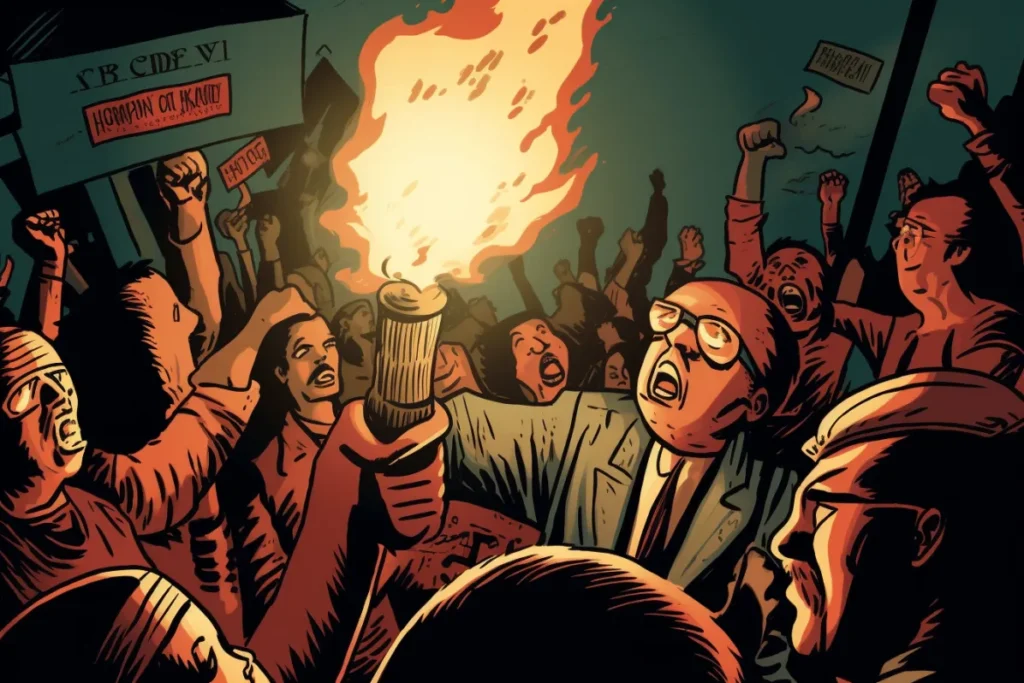
In the Czech Republic, a significant confrontation is unfolding between labor unions and the government. This clash is not just a routine dispute but a complex scenario involving economic crises, political aspirations, and societal impacts. The unions, representing various sectors including teachers, healthcare workers, and industrial laborers, have voiced their discontent and are pushing for substantial changes. However, the government, led by Prime Minister Petr Fiala, stands firm, labeling the strike as unjustified and irresponsible.

Background of the Crisis
The Czech Republic has been grappling with multiple crises over the past few years. The COVID-19 pandemic, followed by the war in Ukraine and the ensuing energy crisis, has put immense pressure on the nation’s economy. Amidst these challenges, the demands of the unions have surfaced, seeking better economic conditions and criticizing the government’s handling of the situation.
Union’s Perspective
The unions have consolidated their efforts, planning a massive strike to express their dissatisfaction. Their demands include increased funding for education and healthcare, better wages, and opposition to the proposed increase in the retirement age. They argue that these changes are essential for the welfare of the workforce and the overall health of the nation’s economy.
Government’s Response
The government, however, views these demands as unrealistic and detached from the current economic reality. Despite the tight budget and the need for austerity measures, the government has made some concessions, such as increasing funding for education and promising additional funds for healthcare. Yet, they remain steadfast in their stance against further concessions, fearing that yielding to the unions’ demands would exacerbate the economic situation.
Economic and Social Implications
The standoff between the unions and the government has broader implications. Economically, it highlights the challenges of balancing fiscal responsibility with social welfare in times of crisis. Socially, it raises questions about the role of unions in modern society and the effectiveness of strikes as a tool for change.
Political Undercurrents
There’s a political dimension to this standoff as well. Some critics argue that the unions’ actions are partly driven by political motives, particularly with the involvement of Josef Středula, the leader of the Czech-Moravian Confederation of Trade Unions, who previously showed political ambitions. This aspect adds complexity to the situation, blurring the lines between genuine labor concerns and political maneuvering.
Public Perception and Historical Context
The public’s reaction to the strike is mixed. While there is sympathy for some of the unions’ demands, there’s also criticism over the timing and the manner of the protest, especially its coincidence with the anniversary of the 1989 general strike, a pivotal moment in Czech history. This has led to accusations of the unions exploiting a significant historical event for their agenda.
The Role of Leadership
Leadership plays a crucial role in such scenarios. The government’s approach, perceived as hesitant and weak by some, has arguably contributed to the current situation. A more decisive and proactive stance might have prevented the escalation of the dispute. Conversely, the leadership within the unions is also under scrutiny, with debates over their strategies and objectives.
Looking Ahead
As the standoff continues, the future remains uncertain. The government faces the challenge of navigating through economic turmoil while addressing the concerns of its workforce. The unions, on the other hand, must consider the broader impact of their actions and whether their approach will yield the desired results.
The situation in the Czech Republic is a microcosm of the challenges faced by many governments worldwide. Balancing economic constraints with social demands is a delicate task, especially in times of crisis. The outcome of this standoff will not only shape the immediate future of the Czech Republic but also offer insights into the dynamics of labor relations, government responses, and societal resilience in the face of adversity.