


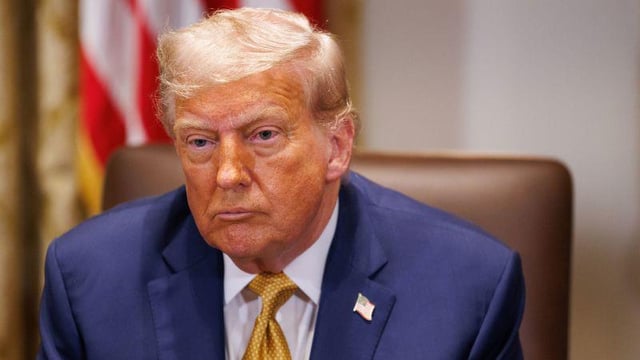
In a revelation that has stirred international interest, former U.S. President Donald Trump reportedly stated that during his tenure, he warned Moscow of severe repercussions if Russian forces advanced into Ukrainian territory. This latest assertion from the former president comes amidst the backdrop of ongoing geopolitical tensions between the West and Russia.
Trump’s Claims Amidst Rising Tensions
Trump, known for his outspoken statements, has suggested that his aggressive stance and direct warnings towards Moscow played a crucial role in keeping aggressive postures at bay. His remarks were aimed at shedding light on his administration’s foreign policy tactics, highlighting a tougher approach towards Russian President Vladimir Putin and Moscow’s geopolitical ambitions.
During an interview, Trump claimed that he directly communicated to Russian officials that any military move into Ukraine would provoke a significant military response from the United States. According to Trump, this stern warning was a strategic deterrent to Russian aggression in the region.
Context of U.S.-Russia Relations
The relationship between the United States and Russia has been fraught with tension for years, particularly over Ukraine. Russia’s annexation of Crimea in 2014 and its continued support of separatists in Eastern Ukraine have been major points of contention with the West. These actions have resulted in economic sanctions and political isolation for Russia by various Western governments.
Under Trump’s administration, U.S.-Russia relations appeared complex. While Trump often spoke fondly of his rapport with Putin, his administration still implemented sanctions against Russia and took steps to support Ukraine with military aid. This nuanced approach sought to balance direct engagement with Moscow while reinforcing America’s commitment to NATO allies and supporting Ukrainian sovereignty.
The Alleged Threat to Moscow
Trump’s claim that he threatened to bomb Moscow if Russian troops moved into Ukraine has not been corroborated by independent sources or former administration officials. His statement adds another layer to the intricate nature of his foreign policy legacy and the ongoing discussion about his governance style.
While the validity of Trump’s assertions remains in question, they have sparked debates among political analysts and foreign policy experts. Some view his remarks as part of a broader narrative to portray himself as a decisive and strong leader capable of dealing with global adversaries.
Response from the Global Community
The international response to Trump’s comments has been mixed. Some European nations have reiterated the importance of a united stance against Russian aggression, emphasizing diplomatic resolutions over military threats. Others have raised concerns about the potential destabilizing effects of such rhetoric in already tense international relations.
In Russia, officials have dismissed Trump’s comments as mere bluster, arguing that Moscow remains committed to its strategic objectives regardless of external pressure. The Kremlin’s response underscores the persistent stalemate between Russia and Western nations over security and territorial matters in Eastern Europe.
Meanwhile, political opponents in the United States have criticized Trump’s latest statements, labeling them as reckless and potentially harmful to U.S. diplomatic initiatives. They argue that robust diplomatic engagement, rather than threats of military action, is essential to navigate the intricate dynamics in Ukraine and surrounding areas.
Looking Ahead
As geopolitical tensions continue to simmer, the spotlight remains on how current and former U.S. leaders address international conflicts and the narratives they create. Trump’s remarks serve as a reminder of the complicated interplay between rhetoric and policy in international relations.
The situation in Ukraine remains a pivotal issue on the global stage. Ensuring stability and preventing further conflict engage not only leaders but also multilateral organizations seeking comprehensive resolutions. As the dialogue around Trump’s comments evolves, they add another dimension to the ongoing discourse on global security and diplomatic strategy.
Regardless of differing opinions, the importance of strategic communication and the careful balance between deterrence and diplomacy is evident. As history has shown, the tone and approach taken by global leaders can have far-reaching implications for international peace and security.