


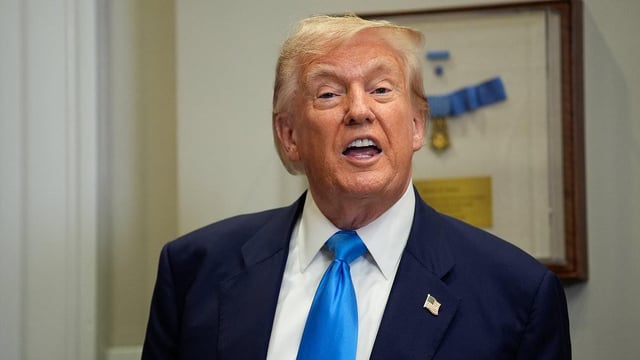
In a recent move that has stirred the diplomatic waters, former U.S. President Donald Trump has openly criticized Canada over its proposal to acknowledge Palestinian statehood. The potential policy shift by Canada has become a contentious issue, as Trump warns allies against actions he deems detrimental to U.S. interests in the Middle East. His comment underscores the complex layer of international relations where U.S. influence and diplomacy are perceived to sway foreign policies.
U.S.-Canada Relations Under the Microscope
The decades-long amicable relationship between the United States and Canada has seen its share of trials and triumphs. However, Trump’s recent remarks highlight a challenging phase, spotlighting divergent foreign policy approaches between the neighboring countries. While both nations generally enjoy robust diplomatic ties, differences in Middle Eastern policy such as Canada’s consideration of Palestinian recognition have sparked debates on the crossing points of national policy agendas.
Trump’s statement is seen by many as a call to maintain alignment with U.S. strategies concerning Iran and Israel, regions where American diplomacy is intricately involved. The former president’s critique brings to fore how major political shifts can strain even the most stable alliances, particularly when it involves the sensitive topic of Middle Eastern geopolitics.
The Implications of Canadian Acknowledgement
The proposed change in Canada’s stance is driven by a desire to strengthen diplomatic ties in the Middle East, advocating for a two-state solution by recognizing Palestinian sovereignty. According to Canadian officials, this move aims at contributing to a peaceful dialogue in the long-running conflict, aligning with numerous countries that have already extended recognition.
Ottawa’s intentions are seen as a reflection of Canada’s independently nurtured foreign policy, yet it has not escaped scrutiny from close allies. The acknowledgment of Palestinian statehood is likely to reverberate across Canada-U.S.-Israel trialogues, potentially recalibrating its diplomatic engagement strategies.
For Trump, whose administration had enacted pro-Israel policies, such a move by Canada is not only contentious but is perceived as a departure from a shared strategic goal. The reactions illustrate the varied perspectives on how best to secure a stable Middle East, a region characterized by its complex political tapestry.
Global Reactions and Potential Outcomes
The reverberations of Canada’s deliberation could extend beyond North America. Globally, countries are watching closely, aware that any formal recognition of Palestine might shift the balance of international diplomacy in the region. While Canada’s allies in Europe and elsewhere might welcome this as progressive, others aligned with U.S. Middle Eastern policies could view it unfavorably.
Domestically, the discourse has sparked debates among Canadian political circles, with varying opinions on the timing and implications of such a policy shift. Economic ties, military collaboration, and political alliances are all intrinsic to this multifaceted dialogue.
The potential alignment with the European Union’s stance on the matter showcases Canada’s intentions to pursue a broader international cooperation framework, fostering dialogue and peace efforts in the volatile region. This decision, whether it comes to fruition or not, will undoubtedly play a significant role in shaping the future of Canadian foreign policy under current global dynamics.
As the world watches closely, the ongoing development of Canada’s policy plans and the reactions from the international community will be pivotal in defining not just bilateral relations but broader geopolitical strategies. Whether Canada will indeed proceed with this acknowledgment or cautiously navigate through diplomatic dialogues remains an unfolding narrative in international politics.