


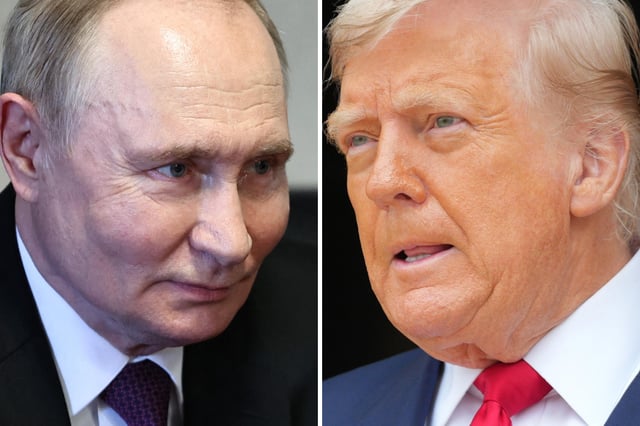
In a recent and surprising development, former U.S. President Donald Trump announced his commitment to hastening the new timeline set by Russian leader Vladimir Putin. This announcement has generated considerable intrigue and conversation in international political circles, given the complex relationship dynamics between the U.S. and Russia.
Context of Trump’s Commitment
The announcement came amidst heightened global tensions and increasing geopolitical challenges. The timing suggests a strategic maneuver by Trump, potentially aimed at influencing international diplomatic relations or asserting his stance on global issues. However, the specific details of Trump’s plan to expedite Putin’s timeline remain undisclosed, leaving many speculating about the motives and implications.
Trump’s relationship with Putin has been a topic of extensive debate and scrutiny in the past. During his presidency, Trump often expressed a desire to foster better relations with Russia, a stance that drew both criticism and praise. His latest statement could be seen as a continuation of this approach, possibly signaling a bid to reinforce his influence on international affairs.
Reactions from the International Community
The international response to Trump’s pledge has been mixed. Some view it as a positive step towards collaboration and resolving longstanding issues between the two nations. Others express concern over what they perceive as potential concessions or an imbalance in international power dynamics.
Prominent political analysts suggest that Trump’s announcement could have far-reaching consequences. “This move could either pave the way for improved diplomatic relations or exacerbate existing tensions,” commented a foreign policy expert. The uncertainty surrounding the specifics of the accelerated timeline adds to the complexity, leaving global leaders and experts alike questioning the potential outcomes.
Potential Implications for U.S. Foreign Policy
Trump’s statement may also influence current U.S. foreign policy debates. As tension continues to rise over various international issues, including the situation in Eastern Europe and cyber threats, any shift in U.S.-Russia relations could have significant implications.
The Biden administration has maintained a cautious approach towards Russia, emphasizing the importance of addressing security concerns while seeking areas of mutual interest. Trump’s promise to accelerate Putin’s timeline might challenge this strategy, prompting a reevaluation of diplomatic efforts and policy decisions.
A Closer Look at the Timeline
While the exact nature of Putin’s new timeline has not been disclosed, it is believed to involve key strategic initiatives that could affect international relations. Trump’s pledge to expedite these initiatives poses questions about feasibility and the possible impact on geopolitical stability.
Experts highlight that such an acceleration could require a coordinated effort involving multiple stakeholders. It may also demand navigating complex diplomatic channels and addressing potential obstacles. The lack of clarity about the practical implementation of this promise fuels further speculation on its viability and implications.
As the global community watches closely, the unfolding developments are likely to spark intense discussions on international platforms. Analysts and diplomatic figures will undoubtedly examine the potential strategies and outcomes, seeking to understand the broader context and future repercussions of this unexpected announcement.
In an unpredictable political landscape, Trump’s pledge to expedite Putin’s new timeline stands as a bold move that could influence the course of international relations. The coming days and weeks are likely to hold key insights into the direction and impact of this significant development.