 Jan Nettig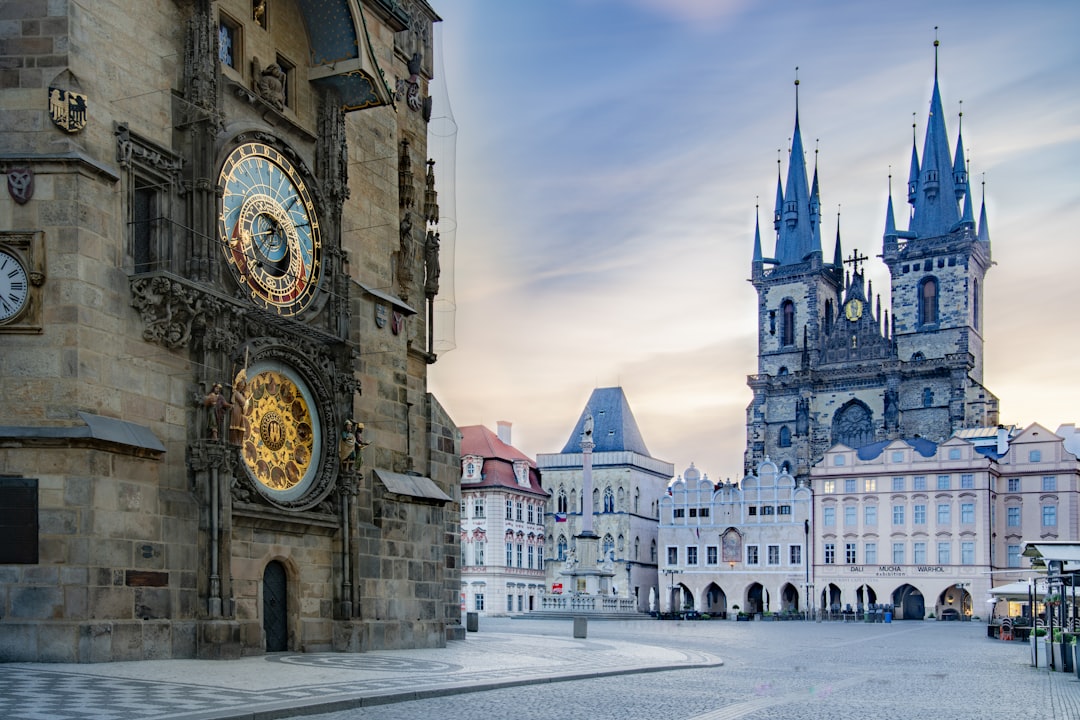
The Prague Astronomical Clock (Orloj) on the Old Town Hall is the third-oldest astronomical clock in the world — and the oldest still operating. Six hundred years of history are attached to a machine that shows the sun’s position, the moon’s phase, the current zodiac sign, the position of the twelve apostles, and (obviously) the time. This is the full visitor guide.
Quick facts
- Built: 1410 by clockmaker Mikuláš of Kadaň and mathematician Jan Šindel.
- Location: South wall of the Old Town Hall on Old Town Square (Staroměstské náměstí).
- Hourly parade: Every hour on the hour, from 09:00 to 23:00. Two ~45-second shows: the twelve apostles move past two windows above the clock; the Death (skeleton) rings a bell.
- Best viewing: Stand 15-20 meters back to see the full clock and the two windows above.
- Cost to watch: Free.
- Best time to visit: 09:00 hourly (fewer crowds) or after 20:00 (evening light).
What you’re actually looking at
The clock face is more complex than the “hourly parade” tourist story suggests. It shows three things at once:
1. The astronomical dial (the big blue circle)
- Golden hand with sun: current time in Old Bohemian (24 hours starting at sunset) and modern time.
- Silver hand with star: sidereal time (astronomical time).
- Zodiac ring (inner circle): the sun’s position through the year, showing the current zodiac sign.
- Moon: a rotating ball, half black/half silver, showing the moon’s current phase.
2. The calendar dial (the lower circular painting)
Added in 1490 by Master Hanuš. Shows the days of the year with saints’ name days, seasonal activities (each month), and the twelve zodiac signs. The one you see today is a 19th-century painting by Josef Mánes; the original is preserved in the Prague City Museum.
3. The apostle parade (upper windows)
Every hour, two small windows above the clock face open and the twelve wooden apostles pass through. Peter and Paul lead; the others follow. This mechanism was added in 1490 but the current figures are 20th-century replacements (the originals were burned in the WWII bombing of the Old Town Hall).
The characters beside the clock
Four allegorical figures stand beside the clock face; each moves during the hourly show:
- Death (skeleton, right) — rings a small bell to signal that time passes for everyone.
- Vanity (looking in a mirror, left) — shakes his head.
- Greed (holding a purse, next to vanity) — shakes his purse.
- The Turk (pagan/infidel, next to death) — shakes his head. Represents 15th-century Ottoman threat.
The legend of Master Hanuš (probably not true)
Popular Prague lore says that after Master Hanuš completed the clock in 1490, city officials feared he would build another one elsewhere, so they blinded him. The blind Hanuš then dragged himself back to the clock and jammed the mechanism, and no one could repair it for a century.
The historical record contradicts this: Hanuš died naturally in 1497, the clock kept working, and the “blinded genius” story appears to have been invented in the 19th century by Alois Jirásek as a folk tale.
Best time to visit
- Fewest crowds: 09:00 on any weekday. The Old Town is not yet packed with day-trippers.
- Best light for photos: late afternoon (16:00-18:00 depending on season) when the sun hits the south-facing wall.
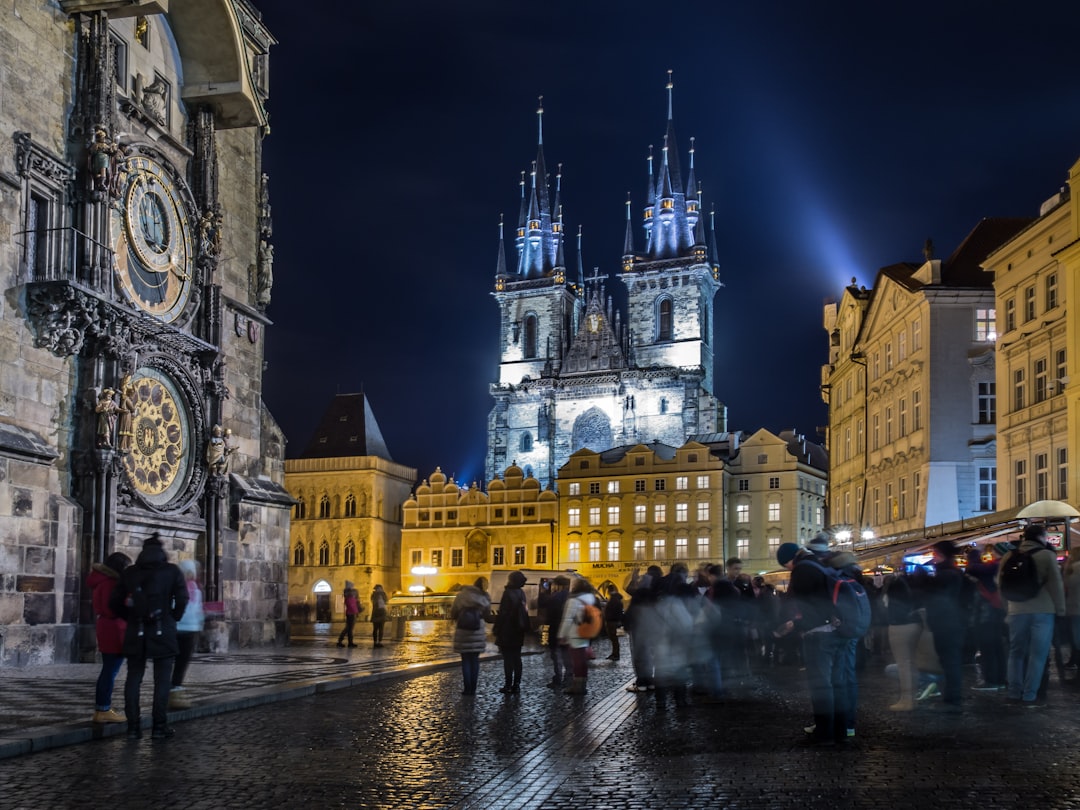
- Most atmospheric: 20:00 or 21:00 in summer — golden hour light + illuminated clock + smaller crowds.
- Worst time: 12:00-14:00 midweek in summer, and all day on weekends between May-September. Expect to be a head or two back from the front row.
Should you climb the tower?
Yes. The Old Town Hall tower is climbable (elevator or stairs, ~250 CZK). You get:
- The best panoramic view of Old Town Square from directly above.
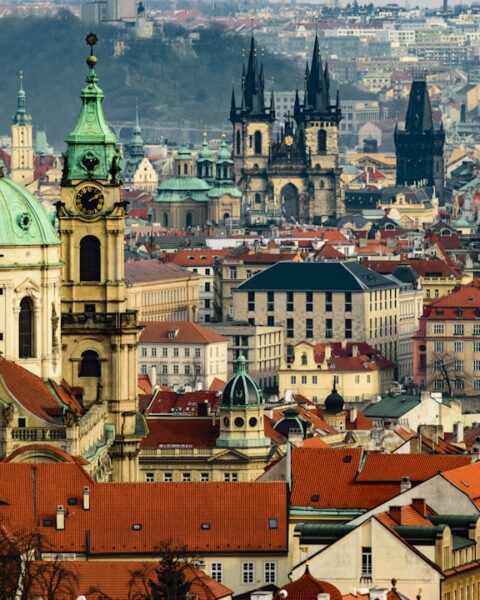
- The rooftop view over Týn Church, the whole Old Town, and Prague Castle in the distance.
- A close look at the tower mechanism itself.
Go up at least 30 minutes before an hourly parade to enjoy the view without rushing.
Photography tips
- Full-clock shot: 15-25mm equivalent lens (or your phone’s ultra-wide), standing 15m back.
- Apostle windows: 50-85mm equivalent to isolate the two window rectangles.
- Best backdrop: the clock at blue hour (30 min after sunset) with lights on but sky still color.
- Avoid: midday hard shadows across the clock face.
Gear for the visit
- Merrell Moab 3 hiking shoes — you’ll stand a long time on cobblestones.
- Anker Prime 20,000mAh power bank — hourly parade means multiple filming sessions.
- Rick Steves Prague guidebook — has an audio tour that walks you through the clock’s history.
Combining with nearby sights
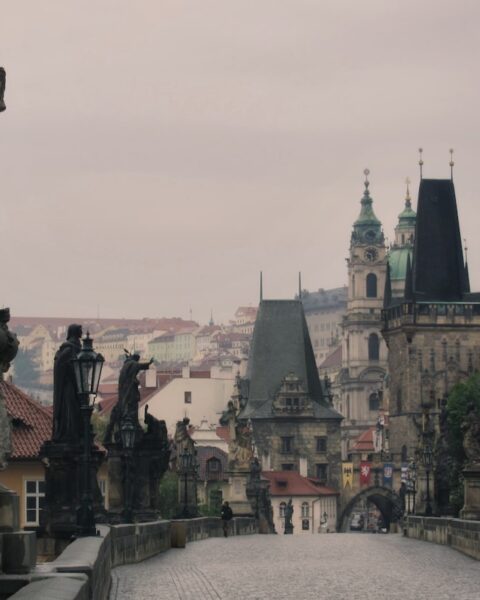
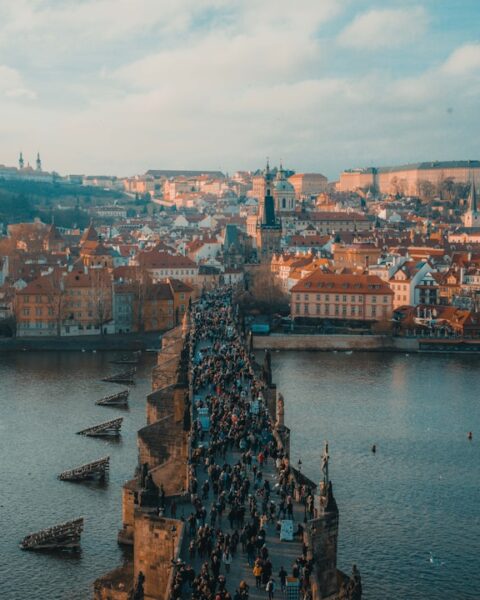
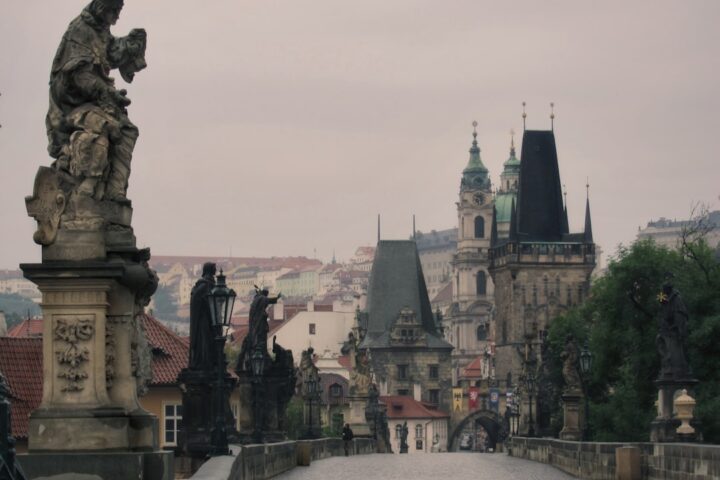
The Old Town Hall + clock is 10 minutes from Charles Bridge, 5 minutes from the Jewish Quarter, and directly on the tourist walking loop. Combine with the 3-day itinerary in our Prague in 3 Days guide.
FAQ
What time is the Prague Astronomical Clock show?
Every hour on the hour, 09:00-23:00.
Is the Prague Astronomical Clock worth seeing?
The clock face itself yes; the hourly parade is short (~45 seconds) and mostly a good excuse to be in the Old Town Square. Real value is the surrounding context — combining with tower climb and square exploration.
Can you go inside the Astronomical Clock?
Sort of — you can enter the Old Town Hall and climb the tower, which includes a room housing part of the mechanism.
How old is the Prague Astronomical Clock?
Built in 1410 — over 615 years old, though most components have been replaced or restored over the centuries.