Karolina Sedlackova
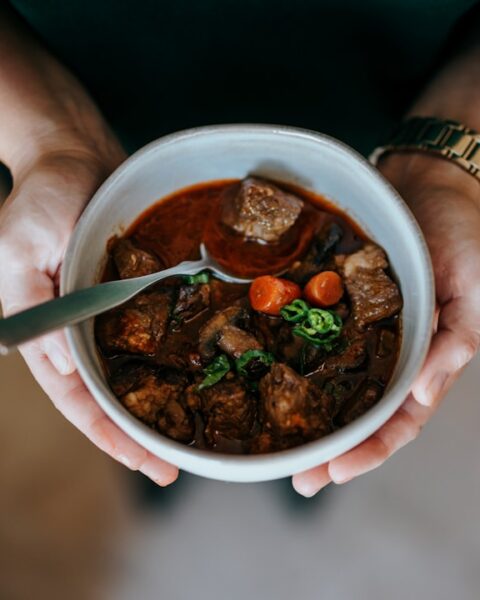
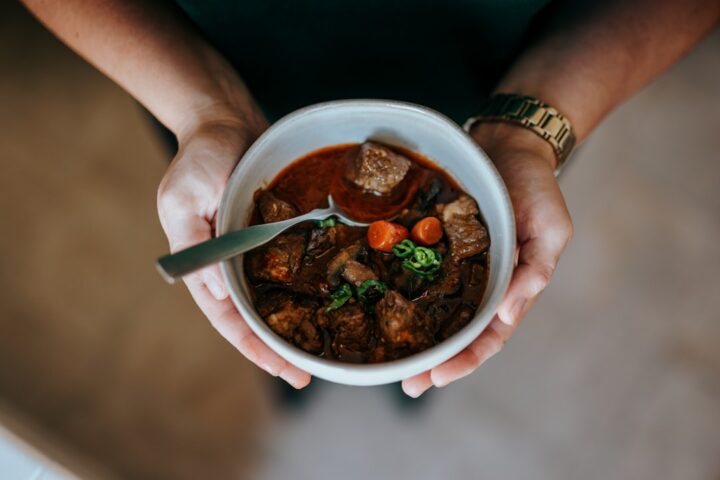
Authentic Czech guláš is a slow-cooked beef stew of onions, dark beer, sweet paprika, marjoram, and caraway — thicker and less paprika-forward than Hungarian gulyás. It’s the archetypal Czech pub food, served with soft bread dumplings (houskový knedlík) to soak up the sauce, and a glass of Pilsner Urquell alongside. This is the tested recipe, with detailed technique and every substitution question answered.
Recipe at a glance
- Serves: 4-6 people
- Active time: 30 minutes
- Total time: 3.5 hours (mostly hands-off)
- Difficulty: Easy — technique is simple, patience matters
- Best with: Houskový knedlík (bread dumplings), a green salad, cold pilsner
Ingredients
For the guláš
- 1 kg (2.2 lb) beef chuck or shin, cubed 3 cm
- 1 kg onions (equal weight to the meat — this is not a typo)
- 4 tbsp lard or vegetable oil
- 3 tbsp sweet Hungarian paprika (must be fresh; stale paprika kills the dish)
- 1 tsp caraway seeds, lightly crushed
- 1 tsp dried marjoram
- 6 cloves garlic, crushed
- 2 tbsp tomato paste
- 500 ml (17 fl oz) Czech dark beer (Kozel Černý, U Medvídků X-33, or any dunkel)
- 500 ml beef stock or water
- 1 tbsp red wine vinegar
- Salt to taste (roughly 1.5 tsp)
- 1 tbsp flour + 100 ml cold water (for optional thickening at the end)
Method
Step 1 — Cook the onions (25 minutes)
This is the most important step. Melt the lard in a heavy Dutch oven or wide pot over medium-low heat. Add the sliced onions with a generous pinch of salt. Cook, stirring occasionally, until deeply golden brown and reduced to a jammy consistency — 20-25 minutes. Do not rush this step. The onions provide the guláš’s body and sweetness.
Step 2 — Add spices (30 seconds)
Remove the pot from heat. Add paprika, caraway, and crushed garlic. Stir vigorously for 30 seconds — the residual heat blooms the paprika without burning it. Burned paprika turns bitter and ruins the guláš.
Step 3 — Sear the meat
Return the pot to medium-high heat. Add the beef cubes and tomato paste. Stir for 3-4 minutes, letting the meat brown lightly.
Step 4 — Liquid + slow braise (2.5-3 hours)
Pour in the dark beer, stock, and vinegar. Add the marjoram. Stir to combine. Bring to a bare simmer, then cover and reduce heat to the lowest setting your stove allows (or transfer to a 150°C / 300°F oven). Cook 2.5-3 hours, stirring every 30 minutes, until the beef is fork-tender and the sauce has reduced to a thick, glossy consistency.
Step 5 — Adjust and thicken (optional)
Taste for salt. If the sauce is too thin, whisk 1 tbsp flour into 100 ml cold water and stir this slurry into the guláš. Simmer 5 more minutes to thicken.
Step 6 — Rest
Guláš improves dramatically after resting. Ideal timing: cook a day ahead, refrigerate overnight, reheat gently. Even a 30-minute rest at room temperature helps.
Serving
Serve in shallow bowls with 3-4 slices of houskový knedlík (bread dumplings) alongside. Garnish with fresh chopped marjoram or a small dollop of sour cream if you like.
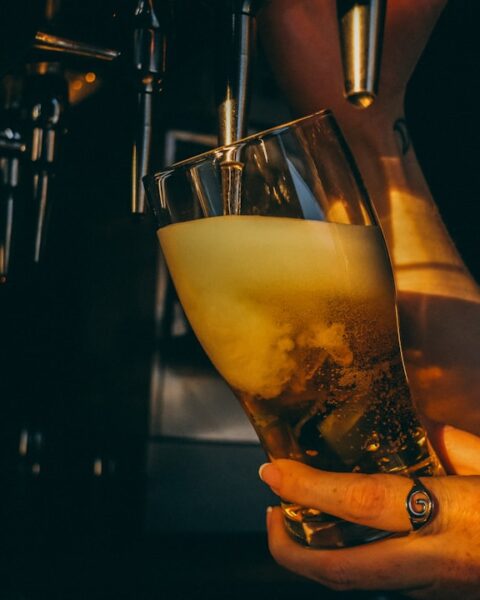
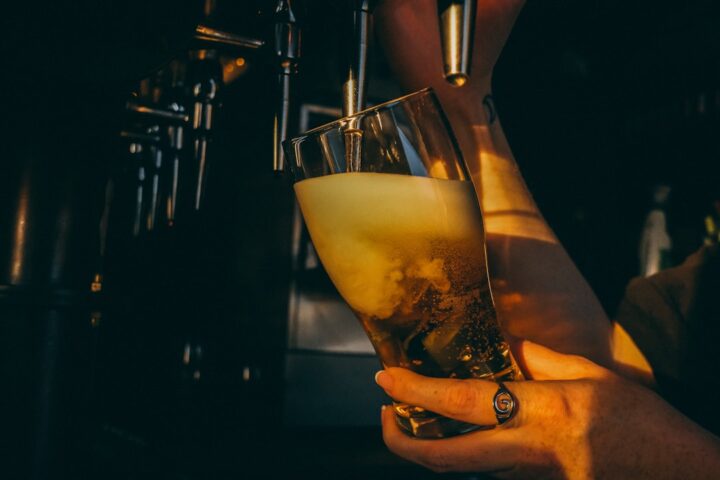
Traditional accompaniment: cold light Pilsner Urquell — see our Prague beer guide.
Common substitutions
- No lard: Use butter + neutral oil (50/50).
- No dark beer: Use a Guinness-style stout or Belgian dubbel; NOT a hoppy IPA.
- No fresh paprika: The dish depends on this — buy a fresh jar.
- Substitute for beef chuck: Beef shin, oxtail, or short rib all work.
What NOT to do
- Do not use pre-ground caraway. Whole seeds lightly crushed just before adding.
- Do not skip the onion browning. Rushed onions = flat guláš.
- Do not add wine. Czech guláš uses beer, not wine. Save the Hungarian version for another day.
- Do not add potatoes. Czech guláš is served with dumplings. Potatoes are for the Hungarian gulyás.
- Do not add peppers. Same reason — this is Czech, not Hungarian.
How to make houskový knedlík (bread dumplings)
The dumpling recipe is separate but essential. Basic idea:
- Mix 500g plain flour + 250ml warm milk + 15g fresh yeast + 1 egg + 1 tsp salt into a smooth dough.
- Fold in 100g stale bread cubes.
- Rise 1 hour.
- Shape into two cylindrical loaves, 6cm diameter × 20cm long.
- Boil in salted water for 25 minutes, turning halfway.
- Rest 5 minutes, then slice into 1.5cm rounds with dental floss or a wet knife.
Equipment you need
- Lodge 6-quart cast iron Dutch oven — the ideal vessel for slow-braising guláš.
- Escali Primo digital kitchen scale (0.1g) — dumplings depend on weighed flour.
- Hungarian sweet paprika — must be fresh.
- Whole caraway seeds
- Slotted skimmer / spider — for lifting dumplings out of boiling water.
- “Recipes from an Old Town Bohemian Kitchen” — has excellent Czech traditional recipes.
Where to eat authentic guláš in Prague
- Lokál Dlouhááá — see our Prague restaurants guide.
- U Medvídků — historic brewery + pub.
- U Zlatého Tygra — Havel’s local; only Pilsner Urquell.
- Havelská Koruna — self-service, ~180 CZK per bowl.
FAQ
What’s the difference between Czech guláš and Hungarian gulyás?
Czech guláš is a thick stew (served with dumplings) using dark beer, less paprika, and no vegetables beyond onions. Hungarian gulyás is a soup with paprika, peppers, carrots, and potatoes.
Can I make Czech guláš in a slow cooker?
Yes — cook the onions and add spices on the stovetop first, then transfer to a slow cooker on LOW for 6-8 hours.
How long does Czech guláš keep?
3-4 days refrigerated; 3 months frozen. Improves overnight.
Is there vegetarian Czech guláš?
Yes — mushroom guláš (houbový guláš) uses king oyster or porcini mushrooms in place of beef. Same technique.