

The Czech Republic recently witnessed a significant teachers’ strike, which extended beyond the educational sector, drawing in professionals from various fields. This event has ignited a political debate, with members of the ruling coalition and the opposition expressing starkly different views.

The Strike and Political Reactions
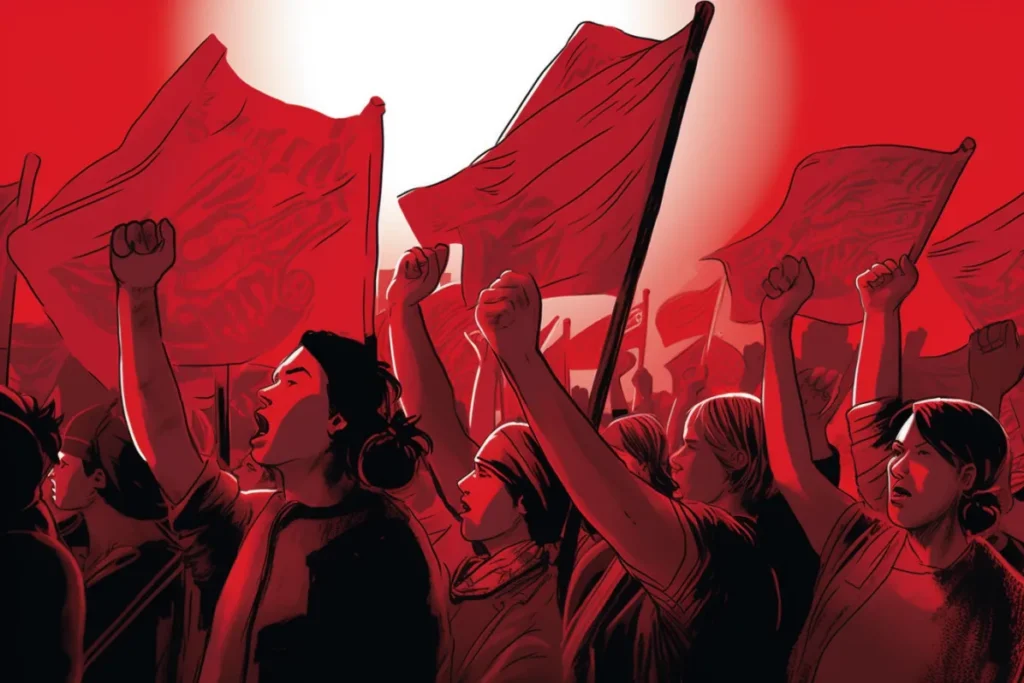
The Strike’s Extent: The strike involved numerous schools across the country. It was not just limited to teachers but also saw participation from other professional sectors. This widespread involvement indicates a deep-seated dissatisfaction with current policies affecting the education sector and beyond.
Government’s Stance: The ruling coalition members have expressed opposition to the strike. They argue that the strike is counterproductive and that there are better ways to address the concerns raised by the teachers and other professionals.
Opposition’s Support: In contrast, the opposition parties have shown support for the strike. They criticize the government’s handling of the issues and express solidarity with the striking workers. This support is seen as a way to highlight the failures of the current government and to push for more significant changes in policy.
Public Opinion: The strike has garnered mixed reactions from the public. Some support the teachers and other professionals, seeing the strike as a necessary step to bring attention to critical issues. Others criticize the strike, viewing it as an inconvenience and questioning its effectiveness.
Key Figures and Statements
Miroslav Kalousek’s Critique: Former Finance Minister Miroslav Kalousek (TOP 09) sharply criticized the protests. He lamented the decline in the quality of protests, indicating a broader dissatisfaction with the current state of political discourse.
Marian Jurečka’s Response: Minister of Labor and Social Affairs, Marian Jurečka (KDU-ČSL), expressed his willingness to negotiate with the unions. However, he criticized the unions for canceling a planned meeting and for what he perceived as a lack of constructive approach.
František Dobšík’s Position: František Dobšík, the head of the school unions, emphasized the unions’ continued willingness to negotiate. He indicated that the unions are not interested in escalating the situation but rather in reaching an agreement.
Petr Fiala’s Government Perspective: Prime Minister Petr Fiala (ODS) refuted claims that the government is not willing to engage in dialogue with the unions. He stated that the government is open to discussions but not under the pressure of ongoing or threatened strikes.
Andrej Babiš’s Criticism: Opposition leader Andrej Babiš (ANO) criticized Prime Minister Fiala for being out of touch with the situation, highlighting his absence during the strike.
Mikuláš Bek’s Apology: Minister of Education Mikuláš Bek (STAN) apologized for the complications caused by the strike. He expressed his readiness to continue discussions with the unions and other stakeholders to address the issues in the education system.
The teachers’ strike in the Czech Republic has become a focal point for broader political and social debates. It reflects the tensions between the government and various professional sectors, particularly in education. The differing responses from political figures underscore the complexity of the issues at hand and the challenges in finding a resolution that satisfies all parties involved. As the situation unfolds, it will be crucial to see how these discussions progress and what solutions emerge to address the concerns of the striking professionals.