 Kristina Vankova
In a groundbreaking discovery that has captured the attention of the global archaeological community, researchers have unearthed ancient hand stencils in a remote cave on the Indonesian island of Sulawesi. These remarkable findings are shedding new light on the early timeline of human art, suggesting that the tradition of creating symbolic expressions predates what was previously thought.
Significant Findings in Sulawesi
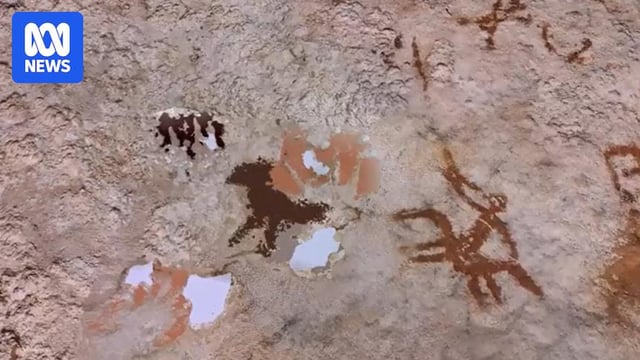
The site of this discovery, located in the Maros-Pangkep limestone karst region, is an area already renowned for its cave art. The newly uncovered hand stencils are considered to be at least 40,000 years old, which challenges existing narratives about the origins of human artistic expression. This revelation pushes back the timeline of the earliest forms of visual art in the region by several millennia.
The stencils were created using a method common among ancient people: placing their hands on the cave wall and using red ochre, a type of natural pigment, to create an outline. This technique highlights the simplicity yet profound nature of these early artistic endeavors, providing tangible connections to the lives and cognitive development of ancient human populations.
Comparisons to Other Ancient Art
Prior to this discovery, the earliest known cave art was primarily associated with sites in Europe, particularly the caves of Spain and France. The Sulawesi stencils are contemporaneous with, or even older than, some of the most famous European artworks such as the hand stencils and depictions of animals found in the Chauvet Cave, which date back around 37,000 years. This indicates a simultaneous emergence of symbolic art across different continents, suggesting that early humans shared a common drive for self-expression.
The Implications for Human History
- The hand stencils discovered in Indonesia suggest a wider geographical spread of early art practices than previously recognized.
- The findings contribute to the understanding of cognitive and cultural evolution in Homo sapiens, showcasing complex thought processes.
- The presence of such artworks aligns with genetic evidence indicating a dispersal of modern humans throughout Asia at least 60,000 years ago.
Understanding Prehistoric Societies
Besides extending the timeline of human artistic endeavor, these hand stencils also offer insights into the lifestyles of prehistoric Indonesian communities. The choice of location, deep within a secluded cave network, suggests intentionality in preserving these expressions for spiritual or communal purposes. Artifacts like these allow anthropologists to formulate new theories on the social structures and belief systems of early humans.
Furthermore, the condition and techniques used in creating the stencils provide clues about the environmental conditions and resources available to Sulawesi’s ancient inhabitants. The use of mineral-based ochre points to the resourcefulness of these early societies in utilizing natural materials for creative and communicative purposes.
Future Prospects for Archaeological Exploration
- Continued exploration in Sulawesi may reveal more about the breadth of artistic expressions in the region.
- Interdisciplinary collaborations could enhance understanding through advanced dating techniques and material analyses.
- Discoveries like these underscore the potential for finding even older sites, prompting global interest in exploring less-studied regions.
The discovery of ancient hand stencils in an Indonesian cave not only reshapes our understanding of early art but also enriches the narrative of human history by highlighting the sophisticated symbolic behavior of ancient peoples across the globe. As researchers delve deeper into these prehistoric footprints, the echoes of our ancestors’ creativity continue to resonate in the modern era, offering a moving testament to the universality and enduring nature of human expression.