 Jan Nettig
The word “defenestration” — throwing someone out of a window — exists in English almost entirely because of Prague. Twice in Czech history, groups of angry citizens have hurled political opponents from upper-floor windows, and each time it triggered wars that reshaped Europe. This is the full history.
The two Prague defenestrations
- First (1419): Seven Catholic town councilors thrown from the New Town Hall window. Triggered the Hussite Wars (1419–1434) — 15 years of religious civil war across Bohemia.
- Second (1618): Two Habsburg regents and their secretary thrown from a Prague Castle window. Triggered the Thirty Years’ War (1618–1648) — one of the deadliest wars in European history.
The First Defenestration — 30 July 1419
The context: Jan Hus, a Czech religious reformer, had been burned at the stake in Konstanz in 1415. His teachings — that religious authority derived from Scripture rather than the Pope — had massive support among Czechs. By 1419, Prague was a Hussite city surrounded by Catholic political leadership installed by King Wenceslaus IV.
On 30 July 1419, a Hussite procession led by the priest Jan Želivský marched to the New Town Hall demanding the release of Hussite prisoners. Someone in the town hall threw a stone from a window at the crowd. In response, Želivský’s followers stormed the building. Seven town councilors — three judges, the mayor, and three aldermen — were seized and thrown from upper windows onto the spears and pikes of the mob below.
Where it happened: The New Town Hall (Novoměstská radnice) still stands at Karlovo náměstí. You can visit; the tower is climbable.
The Second Defenestration — 23 May 1618
The context: Bohemia had a Protestant majority under a Catholic Habsburg emperor (Rudolf II, later Matthias). A 1609 agreement (Letter of Majesty) guaranteed religious freedom. But in 1617-1618, new emperor Ferdinand II — a devout Catholic — began violating it, ordering the demolition of Protestant chapels.
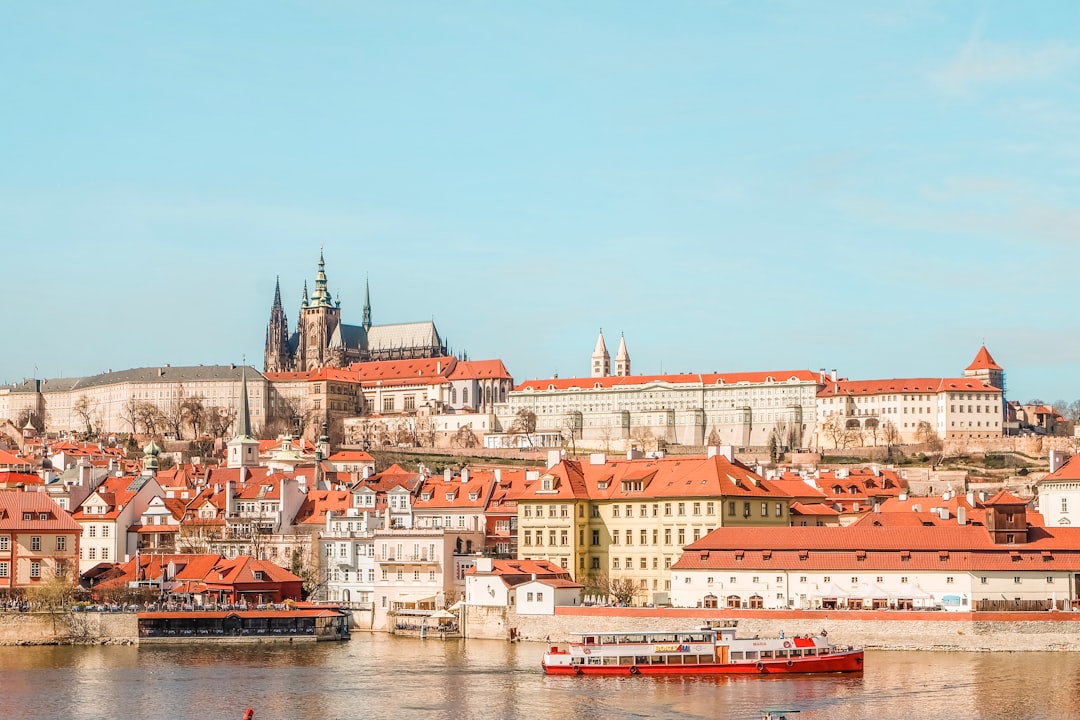
Bohemian Protestant nobles convened at Prague Castle on 23 May 1618. Led by Count Jindřich Matyáš Thurn, they burst into a meeting of the imperial regents — Vilém Slavata, Jaroslav Bořita of Martinice, and their secretary Filip Fabricius. After a heated argument, all three were thrown from a window of Prague Castle’s Ludwig Wing, dropping about 21 meters into the moat.
All three survived. Catholic accounts credited angels catching them mid-fall; Protestant accounts credited the pile of manure at the bottom of the moat.
Whether angels or manure, the political consequences were catastrophic: within weeks, Bohemia was in open revolt. Within two years, the revolt had crystallized into the Thirty Years’ War, which would kill an estimated 8 million people across Central Europe by 1648.
Where it happened: The Ludwig Wing of Prague Castle. The Old Royal Palace is on the standard Circuit B ticket (~250 CZK). Look for the window on the castle tour.
Was there a Third Defenestration?
Historians occasionally count the death of foreign minister Jan Masaryk in March 1948 as the “Third Defenestration of Prague”. Masaryk — son of Czechoslovakia’s founding president T.G. Masaryk — was found dead below his bathroom window at the Foreign Ministry two weeks after the Communist coup. Officially ruled suicide at the time; police investigations in 1968 and 2004 concluded he was murdered, thrown from the window by Communist secret police.
The Ministry of Foreign Affairs where he died is the Černínský palác in Prague’s Hradčany district.
Why Prague, twice?
Historians have noted that the defenestration ritual seems specifically Czech. Possible explanations:
- Symbolic act — throwing an enemy from a window in a hilltop castle or town hall is a visible, public gesture of authority reversal.
- Practical crowd action — a mob that has forced entry to a building can dispose of officials this way faster than through any formal process.
- Precedent — after 1419, the act became part of Czech political vocabulary.
Where to visit today
- Prague Castle Ludwig Wing — site of the 1618 defenestration. Standard castle Circuit B ticket. Look up at the window from the castle courtyard.
- Novoměstská radnice (New Town Hall) — site of the 1419 defenestration. Karlovo náměstí. Tower open to visitors.
- Černínský palác — site of Jan Masaryk’s 1948 death. Not open to the public but the exterior is visible.
- The Bethlehem Chapel — where Jan Hus preached (the sermons that led to the whole Hussite movement). Rebuilt in 1948 on the original site.
To read more
- “The Thirty Years War” by C.V. Wedgwood — the classic history.
- “Europe’s Tragedy” by Peter H. Wilson — modern definitive account of the Thirty Years’ War.
- Rick Steves Prague & the Czech Republic — includes castle tours and history walks.
FAQ
How many defenestrations happened in Prague?
Two universally accepted (1419 and 1618) plus a third disputed one (Jan Masaryk 1948).
Did anyone survive being defenestrated?
All three victims of the 1618 Second Defenestration survived — they landed in a manure heap below the window. None of the 1419 victims survived.
What war did the Defenestration of Prague start?
The 1618 defenestration triggered the Thirty Years’ War (1618–1648). The 1419 defenestration triggered the Hussite Wars (1419–1434).
Can I visit the defenestration site at Prague Castle?
Yes — the Ludwig Wing is part of Circuit B on the standard Prague Castle ticket.