 Jan Nettig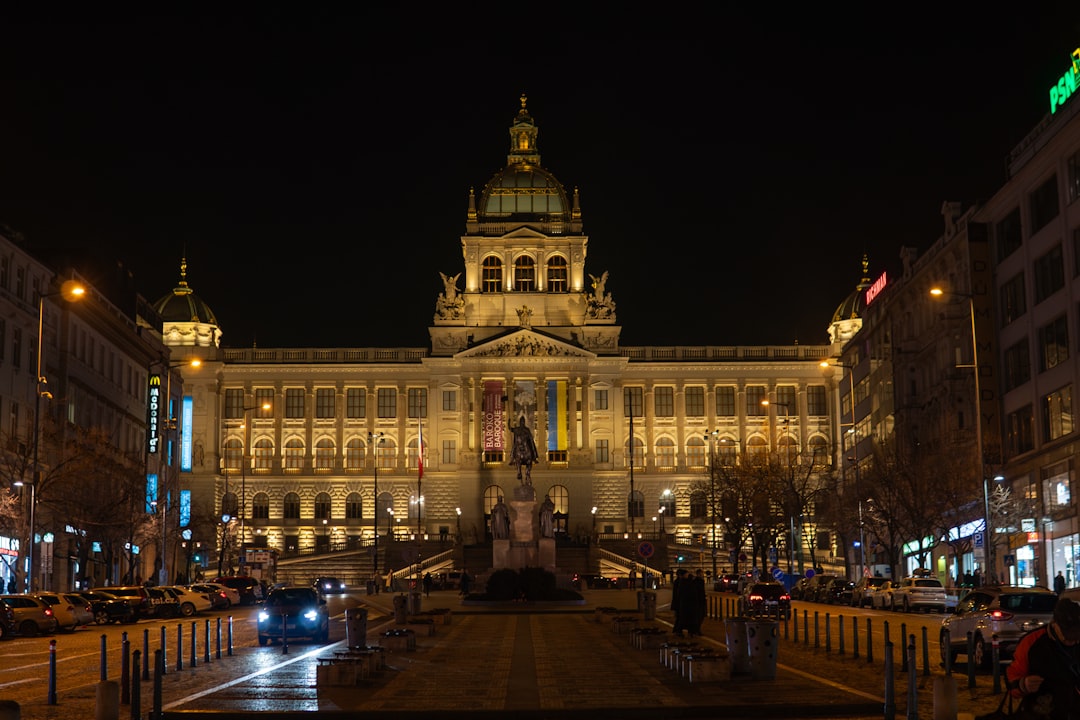
Why November 17 matters
November 17 is not just a day off in the Czech Republic. It is the only public holiday in the world dedicated to two separate student uprisings, fifty years apart, at the same address in Prague. On this day the country closes its schools and government offices, students light candles at a small memorial on Národní třída, and — depending on which government is in power — leaders give speeches that are sometimes triumphant and sometimes deeply divisive.
The formal name of the holiday is Den boje za svobodu a demokracii — Struggle for Freedom and Democracy Day. But most Czechs just call it Sedmnáctého — the seventeenth.
This is the definitive guide for visitors and expats who want to understand what actually happened on those two dates, who the key figures were, and — practically — where to go if you want to see the memorials, museums, and locations for yourself.
The first November 17 — 1939
By November 1939, the Czech lands had been under Nazi occupation for eight months, formally as the Protektorát Böhmen und Mähren. Charles University in Prague remained open but was tense; students had protested during the funeral of the medical student Jan Opletal, who was shot by German soldiers on 28 October during a nationalist demonstration.
On the night of 16–17 November, the Nazi occupiers responded. All Czech universities were closed indefinitely. Nine student leaders were executed without trial in the Ruzyně barracks. Over 1,200 students were arrested and sent to Sachsenhausen concentration camp; roughly 20% did not survive.
The United Nations later chose 17 November as International Students’ Day in memory of these events. It is one of the few Czech-originated holidays observed globally.
The second November 17 — 1989
Fifty years later, on 17 November 1989, Czech and Slovak students organized what was formally a commemorative march honoring Jan Opletal and the 1939 victims. The march was approved by the communist authorities. It was expected to be a quiet, respectful event walking from Albertov (Charles University’s Faculty of Science campus) to Vyšehrad cemetery.
It didn’t stay that way.
At Vyšehrad, students began chanting anti-regime slogans. A large group broke away from the approved route and headed north toward Wenceslas Square. When they reached Národní třída (National Avenue) in the center of Prague, they were blocked by riot police. What followed was a police charge that beat several hundred students and — critically — was widely photographed and filmed.
One student, Martin Šmíd, was reported dead. This turned out to be false, but the story spread across Prague overnight and out to the West on Voice of America and Radio Free Europe. The next morning students called a strike. Actors joined them. By 19 November, Občanské fórum — Civic Forum — had been founded in the Činoherní klub theater with Václav Havel at its head.
Six weeks later, on 29 December 1989, Václav Havel — playwright, dissident, three-time political prisoner — was elected President of Czechoslovakia by unanimous vote of the Federal Assembly.
The key figures
Václav Havel (1936–2011). The face of the Velvet Revolution abroad and its intellectual conscience at home. A playwright whose absurdist plays (The Garden Party, The Memorandum) were banned in Czechoslovakia after 1968; a co-founder of Charter 77 in 1977; a prisoner from 1979 to 1983 and again briefly in early 1989. President of Czechoslovakia 1989–1992, then of the Czech Republic 1993–2003. His essays — especially The Power of the Powerless — remain required reading for anyone trying to understand how citizens resist authoritarianism from within.
Alexander Dubček (1921–1992). The Slovak communist reformer who led the Prague Spring of 1968 and was crushed by Warsaw Pact tanks that August. Rehabilitated in November 1989; addressed the massive Wenceslas Square rallies alongside Havel. Elected Speaker of the Federal Assembly in December 1989.
Marta Kubišová (b. 1942). Singer whose 1968 song Modlitba pro Martu (“Prayer for Marta”) became the unofficial anthem of resistance during the Prague Spring and again in 1989. She was banned from performing for twenty years and worked as a filing clerk. In November 1989 she sang from the balcony of the Melantrich publishing house on Wenceslas Square to a crowd of 200,000.
Jan Palach (1948–1969). Not directly a figure of November 1989, but the memory that hung over it. In January 1969 Palach set himself on fire on Wenceslas Square to protest the Soviet invasion; his funeral drew hundreds of thousands. Palach Week — the January 1989 protests marking twenty years since his death — was one of the events that made the Velvet Revolution possible.
Charter 77 signatories. The 1977 human-rights manifesto had 242 initial signatories; by 1989 the number had grown to nearly 2,000. Not all became public figures, but the network they built — including future president Havel and future foreign minister Jiří Dienstbier — was the organizational spine of the transition.
The controversial figures. No Czech historical event has clean heroes. Several key transitional figures — including the November 1989 student leader Šimon Pánek and dozens of former dissidents — have later been criticized for their post-1989 political choices. Some 1989 protesters became prominent politicians whose records are now debated. This is normal for any revolution; readers wanting the fuller picture should read Timothy Garton Ash’s The Magic Lantern or Michael Žantovský’s biography Havel: A Life for the human complexity.
Where to visit in Prague today
Národní třída memorial. A modest bronze plaque of hands reaching up through a stylized barred window, set into the wall of the arcade at Národní 20 (about 100m from Národní třída metro station). This is where riot police blocked the students on 17 November 1989. Every year on the anniversary the entire arcade is covered in candles and photographs; on other days it’s easy to walk past without noticing.
Museum of Communism (Muzeum komunismu). Currently at V Celnici 4, close to náměstí Republiky. Small, well-curated museum covering the 1948–1989 period with original artifacts, propaganda posters, and a reconstruction of an interrogation room. English audio guide available. About 90 minutes for a full visit.
Wenceslas Square (Václavské náměstí). The site of the November 1989 rallies. Walk from the statue of St. Wenceslas at the top down to Můstek at the bottom; imagine 300,000 people packed into the space, jingling keys in unison — a symbol of the Velvet Revolution meaning “your time is up”.
Nová scéna of the National Theatre. The glass-fronted building where Civic Forum first met on the evening of 19 November 1989. Not a monument as such but a working theatre; check its program if you like contemporary Czech drama.
Letná Park. The vast park across the river above Malá Strana, where a million people gathered on 25 November 1989 — the largest demonstration in Czech history. Also the site of the Stalin monument that was blown up in 1962, now marked by a metronome.
Vyšehrad cemetery. Where the November 1989 march was intended to end. Havel is buried here, along with Dvořák, Smetana, Mucha, and much of the Czech cultural pantheon.
How November 17 is marked today
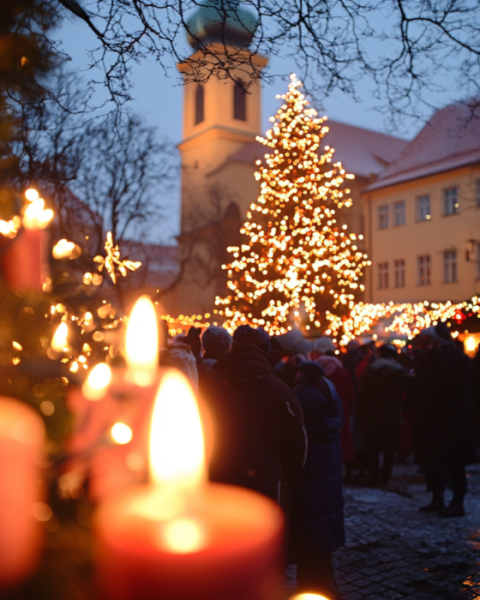
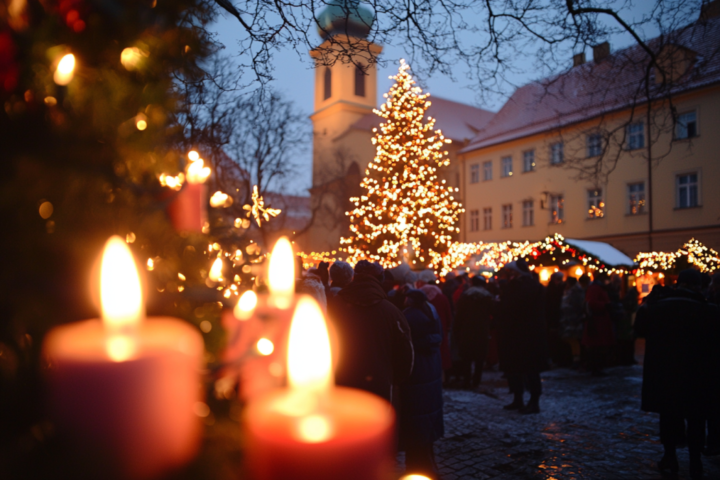
The holiday itself is quiet — most shops close, museums often have free entry, and the main gathering is spontaneous. In the late afternoon and evening people bring candles to Národní třída and light them at the memorial; the arcade fills with hundreds of people leaving flowers, photographs, and handwritten messages. In recent years these gatherings have also become sites for political speech — sometimes celebratory, sometimes protest against sitting governments perceived to have betrayed the revolution’s values.
The Korzo Národní street festival (organized since 2014) turns Národní třída into a pedestrian zone for the day with live music, exhibitions, and speeches from writers, musicians, and former dissidents.
If you’re in Prague around November 17, plan to be at Národní třída between 17:00 and 20:00. Bring a candle if you like, or just watch.
To learn more
- Havel: A Life by Michael Žantovský — the definitive English-language biography by Havel’s long-time press secretary.
- The Unbearable Lightness of Being by Milan Kundera — set during and after the 1968 Prague Spring. Read before and after visiting.
- Prague Winter by Madeleine Albright — the future US Secretary of State’s memoir of a wartime Czech childhood.
- The Magic Lantern by Timothy Garton Ash — a British historian who was in Prague during November 1989.
- Rick Steves Prague & the Czech Republic guidebook — sober and practical; includes a good Velvet Revolution walking tour.
FAQ
Is November 17 a public holiday? Are shops open?
Yes, it is a full public holiday. Most shops, banks, and government offices close. Some larger supermarkets stay open with reduced hours. Restaurants, cafés, and museums are typically open.
Is it safe to be at Národní třída on November 17?
Yes. The gatherings are peaceful and heavily attended. Occasionally there are small political counter-demonstrations elsewhere in the city center — these are policed and non-violent.
What’s the connection between November 17 and the Velvet Revolution?
The 17 November 1989 student march was the immediate trigger for the revolution. The riot police beating on Národní třída that evening turned public opinion decisively; six weeks later the communist regime had fallen.
Why is Slovakia’s public holiday on the same day?
Because Czechoslovakia was one country in 1989. When Czechoslovakia peacefully separated on 1 January 1993, both successor states kept 17 November as a public holiday.