 Jan Nettig
Franz Kafka lived nearly his entire life in Prague. He was born in the Old Town in 1883, died in a sanatorium near Vienna in 1924, and in between wrote almost everything in a series of apartments within a 500-meter radius of the Old Town Square. Modern Prague markets itself heavily around Kafka — often superficially. This is the walking-tour guide for readers who actually care about the writer, not the fridge magnet.
Quick answer
- Length of the walk: 3-4 hours at Kafka pace (i.e., stopping to read a plaque and think).
- Best time: Weekday morning or late afternoon in shoulder season. Kafka’s Prague is best experienced in winter fog or rain — not sunny July heat.
- Essential stops: Birthplace, Franz Kafka Society bookshop, House at the Minute, Golden Lane, Café Louvre, New Jewish Cemetery.
- Skip if: You haven’t read at least one Kafka book. The tour without the reading is just plaques on old buildings.
The walking route
1. Birthplace — Náměstí Franze Kafky 3 (Old Town)
Kafka was born on 3 July 1883 in a corner building on what’s now Franz Kafka Square, just off the Old Town Square. The original building was demolished in 1897; the current building on the site is late-19th-century and now houses a small Franz Kafka exhibition (free entry, 20 minutes). A bronze bust of Kafka is embedded in the corner wall.
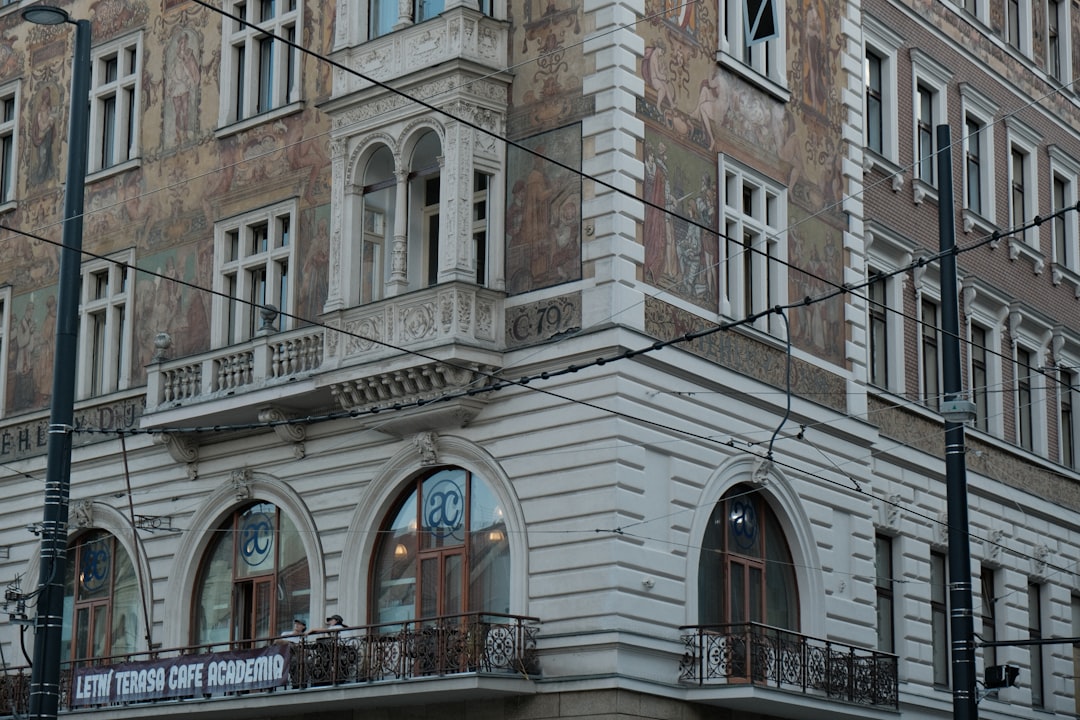
2. House at the Minute (Dům U Minuty) — Old Town Square
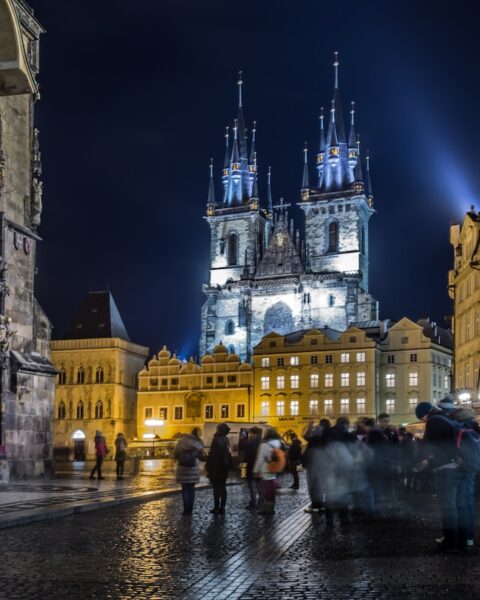
Kafka lived here as a child from 1889 to 1896 — the corner building immediately to the left of the Old Town Hall, with the famous sgraffito facade of biblical and mythological scenes. Kafka would have walked past the Astronomical Clock daily. The building is not open to the public.
3. Kinský Palace — Old Town Square 12
Site of the German-language grammar school Kafka attended (Deutsches Staatsgymnasium) from 1893 to 1901. Today the palace houses part of the National Gallery. His father Hermann’s fancy goods shop was also here — Kafka Snob is now next door (yes, that name is intentional).
4. Franz Kafka Society Bookshop — Široká 14 (Josefov)
A small, serious bookshop dedicated to Kafka and Prague-German literature. Books in Czech, German, English, French. The staff know their material. This is the bookshop, not the museum — the museum is on the Malá Strana side of the river (worth skipping if you’re time-constrained).
5. Old Jewish Cemetery — Josefov
Kafka isn’t buried here (he’s in the New Jewish Cemetery, see stop 8), but his ancestors and the world he grew up in are. The tightly packed 12,000 medieval headstones, sunken into the earth over centuries, are among Prague’s most powerful sights. Combined Jewish Museum ticket (~500 CZK) covers this and six other Jewish Quarter sites — 3 hours minimum.
6. Café Louvre — Národní 22
Kafka was a regular. So were Einstein and Karel Čapek. The café operates today essentially as it did in the 1900s — full breakfasts, Central European coffee house atmosphere, billiard tables upstairs. Grab a coffee and read.
7. Golden Lane (Zlatá ulička) — Prague Castle
House No. 22 is where Kafka’s sister Ottla rented a small workspace, and Kafka wrote there for several months in 1916-1917 — including much of A Country Doctor. The house is now part of the Prague Castle tour; you can walk through it. Small, cramped, atmospheric — helps understand the physical scale of Kafka’s world.
8. New Jewish Cemetery — Vinohrady (Metro Želivského, Line A)
Kafka’s grave. Section 21, row 14, plot 33. Simple family stone shared with his parents (who outlived him). Pilgrims leave pebbles on the stone in the Jewish tradition. Cemetery office at entrance provides free map.
Places to skip
- Franz Kafka Museum (Malá Strana) — expensive (300+ CZK), thin content, dramatic dark lighting compensates for lack of actual Kafka material. Skip unless you’re a completist.
- The rotating Kafka head sculpture at Národní — worth 3 minutes as a photograph. Not a meaningful stop.
- The peeing statues at Kafka Museum entrance — not by Kafka; not about Kafka; not particularly good.
- Any restaurant named “Kafka” or “The Trial” — tourist traps.
Where to read Kafka in Prague
Nothing dispels the tourist-attraction feel of Kafka’s Prague like actually reading him in the city. Recommendations:
- Café Louvre (see stop 6) — historic, quiet corner tables.
- Café Slavia — across from the National Theatre, riverside, less touristy than Café Louvre.
- The gardens of Palace Ledebour or the Vrtba Garden — baroque hillside gardens in Malá Strana, quiet, close to the castle.
- Kampa Park benches by the river — Kafka walked here often.
What to read before or during the trip
- “The Metamorphosis” (Bantam edition, tr. Susan Bernofsky) — start here if you haven’t read Kafka.
- “The Trial” — set in a Prague that reads like Prague.
- “The Castle” — his last novel; the K-in-the-village atmosphere maps onto walking Kutná Hora or Karlovy Vary.
- “Letter to His Father” — short, devastating, the autobiographical key to everything else.
- “Kafka: The Decisive Years” by Reiner Stach — the definitive modern biography (three volumes; middle one is most Prague-heavy).
Combining with other stops
The Kafka walking tour combines naturally with the Jewish Quarter visit (many stops overlap). Extend into Prague Castle for stop 7. See our 3-day Prague itinerary for how to fit it into a full trip.
FAQ
Where did Kafka live in Prague?
Nearly a dozen apartments in the Old Town and Josefov between 1883 and his death in 1924. The most significant addresses are Franz Kafka Square (birth), the House at the Minute (childhood), and the Oppelt House on the Old Town Square (mid-life).
Is the Franz Kafka Museum worth visiting?
Not particularly. The museum’s aesthetic — dark rooms, projections, dramatic music — masks a thin exhibition. The plaques and buildings around town are more meaningful.
Where is Kafka buried?
New Jewish Cemetery in Vinohrady (Prague 3), section 21. Metro Želivského on line A.
Did Kafka speak Czech?
Yes — he was trilingual (Czech, German, Yiddish) but wrote almost exclusively in German. His social milieu was the Prague German-Jewish community that mostly vanished during and after WWII.