 Kristina Vankova
China has entered the fray of international discord by openly criticizing former U.S. President Donald Trump’s recent tariff threats towards Europe. This development unfolds amid a separate but contentious matter involving Greenland, leaving many to speculate on the motivations behind Trump’s protectionist rhetoric.
International Reactions to Tariff Threats
In recent weeks, Trump’s administration had hinted at imposing significant trade tariffs on European nations. These threats appear linked to strategic disagreements over Greenland, which had been a point of contention between the U.S. and Denmark. Trump’s interest in acquiring Greenland for its geopolitical significance and resource wealth was rebuffed by Denmark, leading to strained relations.
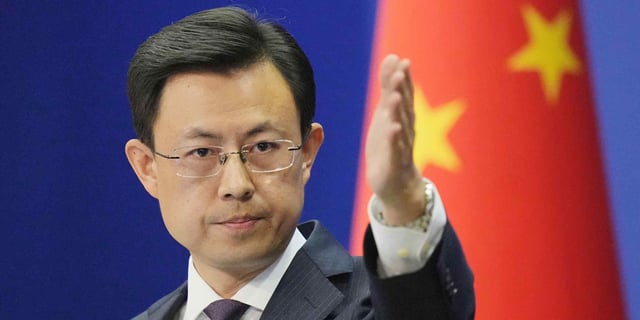
The Chinese government has taken a firm stance against this approach, criticizing the potential disruption to international trade. China’s Ministry of Foreign Affairs released a statement deeming the threats “unconstructive” and harmful to the stability of global economic relations. Beijing’s commentary reflects a wider international concern about the implications of such unilateral trade measures.
Economic Implications
Trump’s tariff threats pose potential challenges not only to Europe but to the global market. The imposition of tariffs could lead to increased costs for European exporters, which might be passed down to consumers, disrupting established trade partnerships and supply chains. Additionally, this could set a precedent for similar actions by other nations, potentially leading to a tit-for-tat trade war that would affect the world economy.
The European Union, a formidable economic bloc, has indicated its readiness to retaliate should the tariffs be enacted. EU officials have stated that they would respond decisively to any punitive measures, emphasizing the importance of fair trade principles. This could trigger a new wave of economic tension reminiscent of past trade disputes between the U.S. and its European allies.
Impact on U.S.-China Relations
China’s reaction is particularly noteworthy given its own complex trade relationship with the United States. During Trump’s presidency, the U.S. and China were engaged in a prolonged trade war characterized by tariffs and counter-tariffs. The current situation serves as a reminder of the fragile nature of international trade agreements and the intricate web of geopolitical interests at play.
Beijing’s opposition highlights a broader international consensus that favors multilateral dialogue over unilateral action. Though China and the EU have their differences, especially concerning technology transfer and market access, they align in their condemnation of trade disruptions that could affect global economic stability.
The Greenland Angle
The background to this situation involves Greenland, an autonomous territory within the Kingdom of Denmark. Trump’s proposition to purchase Greenland was met with incredulity and formal rejection, sparking diplomatic tension. The U.S. sees Greenland as a strategic asset due to its location and abundant natural resources, including rare earth minerals crucial for high-tech manufacturing.
Denmark’s firm refusal, backed by strong public and political support, underscored the sovereignty and dignity of smaller nations in the face of larger powers. This has bolstered Denmark’s standing in Europe, as other EU countries perceive the need to stand united against external pressures that compromise territorial integrity and independence.
China’s interest in Greenland is well-documented, with previous investments in mining projects and infrastructure. Thus, the U.S.-Denmark disagreement provides China with a strategic opportunity to position itself as a stabilizing force in a region becoming increasingly relevant to global trade and environmental considerations.
The ongoing geopolitical dance around Greenland symbolizes a larger fight for influence in the Arctic, where melting ice caps are opening new shipping routes and untapped resources. This competition for influence involves not only the U.S. and China but also Russia and Arctic nations themselves, each vying for strategic advantage.
As the situation develops, the world watches closely, aware that these early moves could set the tone for future diplomatic and trade engagements. The challenge remains to balance national interests with the need for international cooperation in addressing common challenges, from climate change to economic inequality.
In summary, the fallout from Trump’s tariff threats is far-reaching, drawing reactions from nations across the globe. Amidst it all, the Greenland issue serves as a poignant example of how geopolitical ambitions can reverberate across international relations, with significant implications for global trade and diplomacy.