 Vanda Svobodova
Introduction
In a dramatic escalation of regional tensions, Israel has carried out its first-ever airstrike on Beirut, the capital of Lebanon. This unprecedented military action has sent shockwaves across the Middle East and brought apprehension worldwide about the potential repercussions. The airstrike, executed amid rising hostilities, marks a significant turn in Israel-Lebanon relations and has been met with a flurry of international reactions.
The Airstrike Incident
Details of the Attack
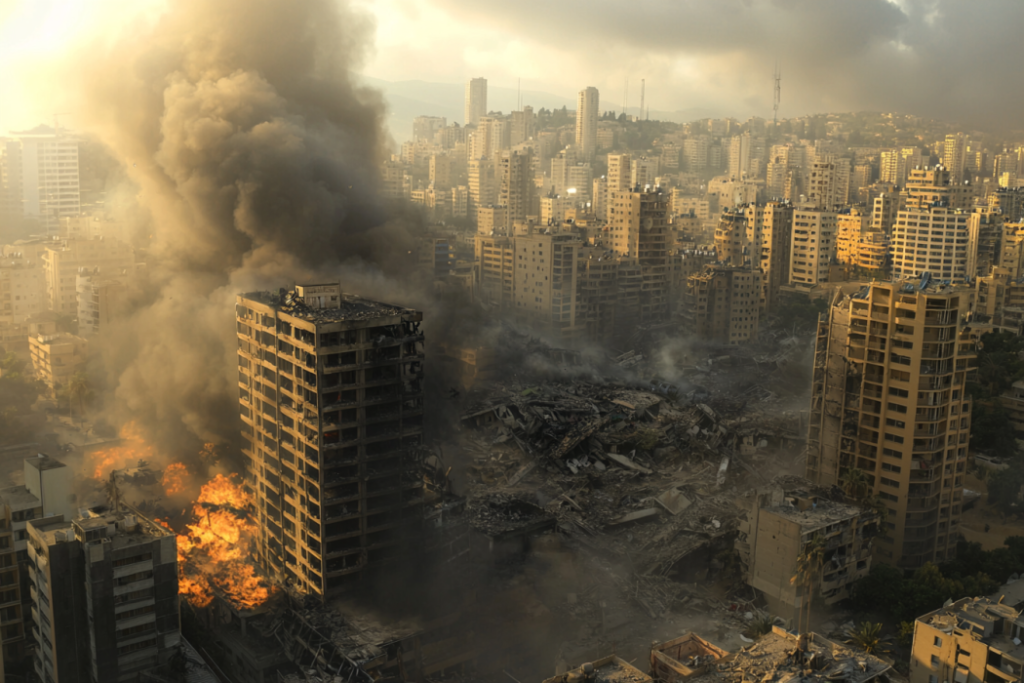
In the early hours of the morning, Beirut residents were jolted from their sleep by a series of loud explosions. According to local reports, Israeli warplanes launched a targeted airstrike on what was identified as a strategic location within the city. The specific targets and the precise nature of the operations remain undisclosed, but preliminary information suggests that sites affiliated with militant groups were the primary focus.
Eyewitnesses recount seeing a severe fireball lighting up the sky, followed by plumes of thick, black smoke. The sound of sirens filled the air as emergency services rushed to the scene. Civil defense teams and paramedics have been working tirelessly to manage the aftermath, and initial reports indicate significant damage to infrastructure and a considerable number of casualties, although exact figures are yet to be confirmed.

Israel’s Justification
The Israeli Defense Forces (IDF) have confirmed the airstrike, stating that it was a preemptive measure in response to credible intelligence about imminent threats posed by militant groups operating within Beirut. According to an IDF spokesperson, the aggressive action was deemed necessary to safeguard national security and prevent potential attacks on Israeli soil.
“We have irrefutable evidence that terrorist organizations were planning large-scale operations against our citizens. This airstrike was carried out meticulously to neutralize the threat and ensure the safety of our people,” the spokesperson said.
Lebanon’s Response
In a swift reaction, Lebanese officials have strongly condemned the Israeli airstrike, labeling it an act of aggression and a violation of Lebanon’s sovereignty. Lebanese Prime Minister issued a statement denouncing the attack and vowing to take the matter to international forums.
“This unprovoked assault on our capital is a blatant violation of international law and an act of war. The Lebanese government will take every possible measure to hold Israel accountable for this heinous act,” said the Prime Minister in a televised address.

International Reactions
Global Condemnation
The international community has been quick to react, with various nations and organizations expressing concern and condemnation over the escalation. The United Nations Security Council is expected to convene an emergency session to discuss the situation and explore potential resolutions to de-escalate the ongoing hostilities.
Statements from Key Players
– **United States**: A White House spokesperson urged both parties to exercise restraint and emphasized the need for a peaceful resolution through diplomacy. “The situation in Lebanon is delicate, and further military actions could destabilize the region even more. We call on both Israel and Lebanon to take steps toward de-escalation,” the statement read.
– **European Union**: The EU criticized the airstrike, calling it a disproportionate use of force. An EU representative remarked “While Israel has a right to defend itself, actions that jeopardize civilian lives and breach international law are unacceptable.”
– **Russia and China**: Both nations have called for an immediate cessation of hostilities, warning that continued conflict could have serious implications for Middle Eastern stability and global security.
Historical Context
Long-Standing Tensions
Israel and Lebanon share a tumultuous history marked by multiple conflicts and military engagements. The two countries have been at odds for decades, primarily over issues related to border disputes, militant activities, and political alliances. The 2006 Lebanon War, during which Israel conducted a significant military campaign against Hezbollah, a powerful militant group based in Lebanon, is one of the most notable conflicts in this longstanding strife.
Recent Developments
The recent airstrike follows a period of escalating tensions, with several reported skirmishes and cross-border incidents. Both nations have accused each other of provocations and hostile actions in recent months, leading to a volatile situation ripe for conflict.

Impact on Civilians
Displacement and Casualties
One of the most immediate effects of the airstrike is the humanitarian crisis it has sparked. The targeted areas in Beirut were home to densely populated civilian neighborhoods, and the airstrike has reportedly resulted in numerous casualties. Hospitals, already under strain due to the ongoing economic crisis in Lebanon, are struggling to cope with the influx of injured people.
Human rights organizations have raised alarms over the dire situation, calling for international aid to support relief efforts in Beirut. “The civilian population is bearing the brunt of this conflict. We need coordinated international efforts to provide medical aid, shelter, and food to the affected communities,” said a representative from a leading humanitarian group.
Economic Ramifications
The airstrike and ensuing instability are likely to have severe economic consequences for Lebanon, a country already grappling with an economic downturn. Damage to critical infrastructure, including power grids and transportation networks, may further cripple the nation’s economy and hinder recovery efforts.
Looking Ahead
Potential for Escalation
The airstrike on Beirut has significantly raised the stakes, and the possibility of further military confrontations cannot be ruled out. Analysts warn that unless both parties take immediate steps toward de-escalation, the region could be on the brink of another prolonged conflict, with devastating consequences for all involved.
Paths to Peace
Despite the grim outlook, there remains a sliver of hope for diplomatic solutions. International mediators are expected to increase their efforts to broker peace talks between Israel and Lebanon. The upcoming U.N. Security Council session will be crucial in setting the tone for future negotiations.
The unprecedented Israeli airstrike on Beirut marks a critical juncture in the already strained Israel-Lebanon relations. As the world watches with bated breath, the actions taken by both countries and the international community in the coming days will be pivotal in determining whether the Middle East can avoid another destructive conflict or succumb to the chaos of war.