 Kristina Vankova
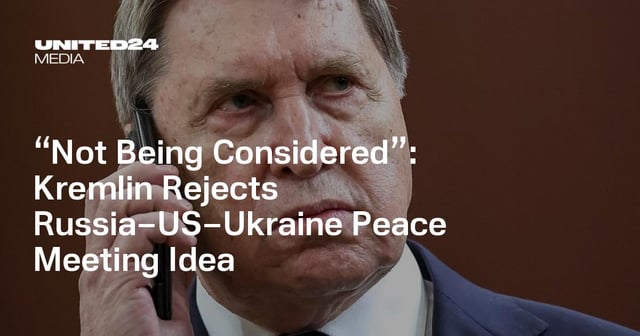
The Kremlin has recently made clear its stance on the possibility of peace talks involving the United States and Ukraine, dismissing any current proposals as off the table. This pronouncement underscores the ongoing complexities in diplomatic relations amid rising tensions between Russia and Western nations. Russian officials emphasized that the focus remains on their strategic objectives, leaving little room for negotiations that might be perceived as concessions.
Russia’s Strategic Focus
Russia has consistently articulated its priorities in the region, prioritizing its national interests above international pressure. Kremlin spokesperson Dmitry Peskov reiterated that Moscow is not actively considering any multilateral peace initiatives involving the United States and Ukraine at this juncture. This stance mirrors the broader Russian geopolitical strategy, which favors a more controlled and predictable engagement with external partners.
According to analysts, Russia’s decision to sideline these discussions illustrates its commitment to maintaining influence in regions it considers essential to its security framework. The Kremlin’s dismissive approach also reflects underlying skepticism about the intentions behind Western diplomatic overtures, which are often viewed through a lens of suspicion in Moscow.
The Role of International Diplomacy
In recent months, international efforts to mediate tensions between Russia and Ukraine have largely been stymied by incompatible goals and mutual distrust. Diplomatic efforts spearheaded by Western nations have tried to broker peace by advocating for dialogue, yet these have met with limited success. The U.S., in particular, has been vocal about finding a peaceful resolution to the ongoing crisis, but progress has been hindered by Russia’s firm stance.
The situation remains a diplomatic conundrum, with experts pointing out that the lack of engagement from Russia could further exacerbate the conflict. The international community continues to stress the importance of dialogue as a means to solve disputes, promoting an approach that prioritizes negotiation over escalation.
Implications for Ukraine
For Ukraine, the Kremlin’s latest pronouncement is yet another indication of the challenging path ahead. The country finds itself caught in a geopolitical crossfire, having to navigate the treacherous waters of Russian influence while seeking support from Western allies. Ukrainian officials have consistently expressed a willingness to engage in peace talks under terms favorable to national sovereignty and territorial integrity.
However, the Kremlin’s reluctance to engage raises concerns about the potential prolongation of the conflict, which continues to have far-reaching implications for the region. Analysts warn that without a shift in diplomatic strategy, the situation risks becoming a drawn-out stalemate, with adverse effects on both regional stability and international security.
The coming months will be critical in determining whether diplomacy can find a foothold in the current standoff, or if entrenched positions will lead to further isolation and conflict. As both sides weigh their options, the world watches closely, hoping for a peaceful resolution that aligns with the broader interests of global peace and stability.