 Kristina Vankova
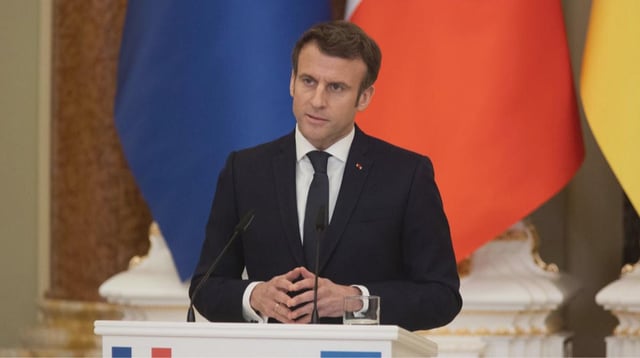
In recent statements, French President Emmanuel Macron has audaciously suggested that the United States is attempting to undermine Europe’s global influence. This bold claim has sparked significant discussions about the intricate dynamics between Transatlantic allies, as well as the potential implications for global politics.
The Allegation and Its Context
According to Macron, the United States’ foreign policies seem to suggest an agenda towards limiting Europe’s power and influence on the world stage. These assertions arrive amidst already growing concerns over the state of the European Union and its geopolitical maneuvers. Macron’s comments can be seen as a call for European countries to scrutinize their relationship with the U.S., ensuring it is one of mutual respect and balanced influence.
The French leader believes that U.S. strategies may be intentionally causing a divide within Europe, thereby restricting the continent’s geopolitical capability. This accusation places a spotlight on the importance of unity within the European Union, and questions the role that the EU should play alongside its American counterparts.
Historical Ties and Transformations
The post-World War II era witnessed the emergence of a strong transatlantic alliance, primarily steered by the cooperative efforts of the United States and various European countries. This partnership was aimed at achieving economic stability and thwarting common threats during the Cold War. However, the context of global politics has considerably evolved since then.
Macron’s remarks suggest a shift in how European leaders perceive their longstanding allies. These sentiments echo growing voices within Europe advocating for autonomy in defense and economic strategies. The evolving international landscape has necessitated a re-evaluation of roles and allegiances, with the EU seeking to bolster its influence independently.
Economic Considerations and Military Matters
The economic interdependence between the U.S. and Europe is well-documented, but Macron has hinted that this relationship might be leveraged by the United States to its own benefit, potentially at Europe’s expense. This economic tug-of-war raises questions about fairness in trade agreements and policies, suggesting that Europe could potentially be at a disadvantage.
Moreover, military collaborations through NATO further complicate the scenario. While NATO has been a cornerstone of collective defense in Europe, Macron’s comments stir debate over the extent to which European nations should depend on U.S.-led military initiatives.
The notion of Europe’s self-reliance in defense strategies has gained traction, yet remains contentious. Macron’s stance may invigorate discussions about enhancing European military capabilities independent of U.S. support, potentially leading to a shift in global defense paradigms.
Possible Pathways Forward
- Promoting Stronger European Unity: Macron’s statements could galvanize efforts to fortify EU unity, making it a more formidable global force.
- Reassessing Trade Agreements: Ensuring fair and equitable terms in economic partnerships may be a crucial step for safeguarding European interests.
- Investing in Defense Capabilities: Europe’s potential shift towards independent defense mechanisms could transform its geopolitical standing.
While Macron’s comments have stirred the pot, they underscore the ongoing shifts in global alliances and power dynamics. The future of Transatlantic relations may rely heavily on diplomacy, strategic negotiations, and a reassessment of shared goals and values.
Ultimately, Macron’s assertions invite a critical analysis of strategic partnerships, assessing not only the balance of power but also the integrity and sustainability of international relations. This evolving discourse will continue to shape Europe’s quest for robust and equitable global positioning.