 Kristina Vankova
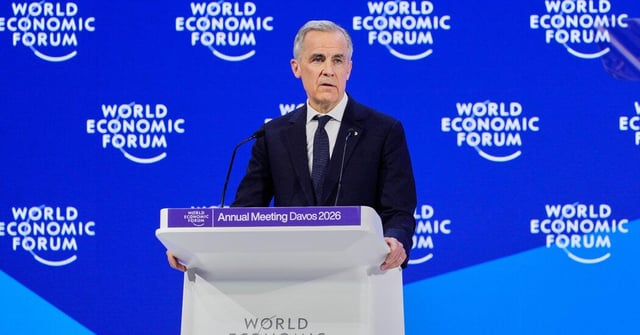
In an electrifying address at the World Economic Forum in Davos, Mark Carney, the former Governor of the Bank of Canada and the Bank of England, painted a portrait of resilience and adaptability underscoring Canada’s unique position within the global economy. With the backdrop of mounting challenges facing the United States, Carney’s speech eloquently highlighted how Canada could thrive amidst its neighbor’s economic turbulence by leveraging its strengths and pursuing strategic innovations.
Canada’s Economic Fortitude
Carney’s speech was rooted in a straightforward but impactful premise: Canada, with its robust banking system and diversified economy, is well-equipped to navigate through the economic uncertainty dogging its southern neighbor. As the U.S. grapples with economic disparities and fluctuating policies, Carney noted that Canada’s stability is not only a beacon of strength but a critical driver in maintaining balance in a constantly shifting global landscape.
Throughout his address, Carney detailed how Canada’s strong fiscal framework and prudent banking regulations have safeguarded the country against financial crises in the past. He emphasized that these elements serve as pillars of sustainability amidst external disruptions. Carney’s confidence in Canada’s economic model was palpable, signaling to investors and policymakers alike that preparedness and adaptability are paramount.
Advancements in Innovation and Technology
Beyond fiscal prudence, Carney lauded Canada for its pioneering advancements in technology and innovation, which have positioned it as a leader on the world stage. Investment in sectors such as clean technology and digital innovation underscores Canada’s commitment to a forward-thinking economy that embraces change while staying rooted in sustainability.
Innovation was at the heart of Carney’s vision for Canada’s economic resilience. The emphasis on technological advancement and environmental responsibility has not only spurred economic growth but also attracted talented individuals from around the globe, further enriching the national landscape. Carney asserted that, by harnessing these innovations, Canada could better mitigate risks associated with external economic pressures.
International Collaboration and Trade
Carney’s remarks also highlighted the importance of international collaboration and trade agreements in amplifying Canada’s economic resilience. In times where protectionist policies are gaining traction globally, Canada continues to champion free trade and open markets. These efforts, according to Carney, not only bolster the Canadian economy but also contribute to global stability and prosperity.
Furthermore, Canada’s active role in multilateral agreements and its commitment to fostering strong international ties are crucial for economic growth and resilience. By encouraging diversified trade partnerships and reducing reliance on any single market, Canada reinforces its economic sovereignty while navigating global economic uncertainties.
In concluding his speech, Carney reflected on the essence of Canadian resilience: the capacity to transform potential challenges into opportunities through innovation, collaboration, and prudent economic governance. His narrative carried an optimistic tone, suggesting that with the right strategy and vision, Canada could continue to ride the waves of global change as a model of economic stability and growth.