Karolina Sedlackova
In the bustling heart of Tokyo, a city known for its meticulous order and advanced technology, a harrowing event unfolded that would test the very limits of human ingenuity and preparedness. On a seemingly ordinary day, Japan Airlines flight 516 found itself in the throes of a catastrophic collision at Tokyo’s Haneda airport. The world watched in horror as the aircraft erupted into a fireball upon striking a Japan Coast Guard Dash 8 plane during its landing. The incident, which tragically claimed the lives of five of the six crew members on the Coast Guard plane, miraculously saw all 379 passengers and crew onboard the Airbus A350 survive. This event was not just a tale of survival but a testament to the relentless pursuit of safety and the indomitable human spirit.
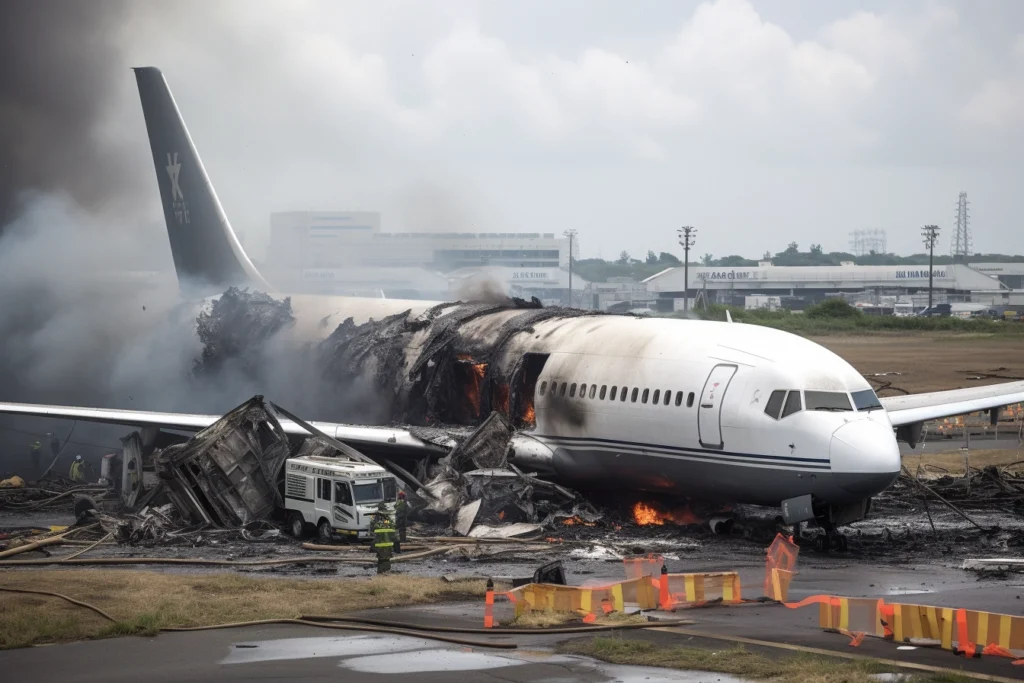
The aftermath of the collision was a scene of chaos and despair, with smoke billowing into the sky and the wreckage of once mighty machines scattered across the runway. Yet, amidst this devastation, a story of hope and resilience began to emerge. The successful evacuation of every passenger and crew member from the Japan Airlines flight was no stroke of luck but the result of years of meticulous planning, rigorous training, and an unwavering commitment to safety.
At the heart of this miraculous escape was Japan Airlines’ profound safety culture, a legacy born from one of the darkest moments in its history. Nearly four decades ago, JAL flight 123 from Tokyo to Osaka met a tragic fate, crashing and claiming the lives of 520 out of 524 onboard. This event, the deadliest single-aircraft accident in aviation history, was a turning point for the airline. It sparked a cultural shift within the company, transforming it into an organization where safety is not just a priority but a way of life.
In the wake of the 1985 disaster, Japan Airlines embarked on a relentless quest to ensure that such a tragedy would never occur again. They scrutinized every aspect of their operations, from the technicalities of aircraft maintenance to the nuances of crew training. The airline created a space in their corporate headquarters displaying parts of the wreckage and stories of the crew and passengers, a solemn reminder of the stakes at hand.
The airline’s commitment to safety was evident in every facet of its operations. They adhered to international safety standards, often going above and beyond to ensure the well-being of their passengers and crew. Their rigorous training programs for pilots and cabin crew were designed to prepare them for the unthinkable, ingraining procedures and responses so deeply that they became second nature.
On that fateful day at Haneda airport, this commitment was put to the ultimate test. As the aircraft came to a standstill, engulfed in flames and smoke, the crew sprang into action. Within seconds, escape chutes were inflated, and passengers were ushered off the plane. The evacuation, a chaotic and terrifying ordeal, was executed with precision and speed, a direct result of the countless hours of training and preparation.
The pilots, crew, and passengers of Japan Airlines flight 516 demonstrated extraordinary courage and composure in the face of unimaginable danger. Their actions were a testament to the human capacity for resilience and the power of preparation. As the world watched, they turned a potential tragedy into a story of survival, a reminder that even in our darkest moments, hope can prevail.
The incident at Haneda airport was a stark reminder of the inherent risks of aviation and the importance of constant vigilance and improvement. It was a call to action for airlines and regulators worldwide to examine their practices, learn from this event, and strive for even higher safety standards. For Japan Airlines, it was a validation of their unwavering commitment to safety, a commitment that undoubtedly saved 379 lives.
As we reflect on this event, we are reminded of the fragility of life and the incredible power of human ingenuity and spirit. The story of Japan Airlines flight 516 is not just one of survival but a powerful narrative about the importance of preparation, the pursuit of excellence, and the indomitable will to protect and preserve life at all costs. It is a story that will be remembered and studied for years to come, a beacon of hope and a testament to the incredible things we can achieve when we refuse to accept anything less than the best.