 Kristina Vankova
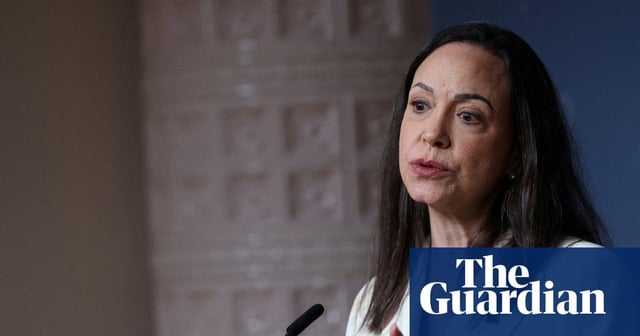
In a surprising turn of events, the Nobel Institute has for the first time publicly declined a proposition involving the prestigious Nobel Peace Prize. The offer was proposed by Maria Corina Machado, a prominent Venezuelan political figure, who suggested that the Peace Prize be shared between herself and former U.S. President Donald Trump. The institute, known for its strict adherence to protocol and its historically tight-lipped approach to candidate considerations, revealed its decision, fueling discussions worldwide.
Background of the Proposal
Maria Corina Machado is well-recognized for her pivotal role within Venezuelan politics, notably as an Opposition Leader battling the questionable governance in her home country. Her call to share the esteemed accolade with Donald Trump caught observers and officials by surprise, raising many eyebrows regarding the motivations and implications of such a proposal. Machado’s camp argued that Trump’s foreign policy decisions, especially in Latin America, were in alignment with her own resistance against authoritarianism.
The pitch was seen as unorthodox, considering the Nobel Peace Prize’s long-standing traditions and the rarity with which joint nominations are awarded. Moreover, both individuals have polarized public opinion worldwide, making the suggestion even more controversial. The proposed bid posited the notion that their combined efforts brought attention to human rights and democratic governance.
Nobel Institute’s Rigorous Criteria
The Nobel Peace Prize, one of the most recognized accolades globally, follows a meticulous and often secretive process when determining its recipients. Explicit in its mission, the award aims to honor individuals or groups who have made significant contributions to peace and harmony. As such, the institute’s transparency in this incident marks a rare deviation from its typical discretion.
The Selection Process
Nominees for the Nobel Peace Prize can be submitted by a variety of eligible nominators, including national politicians, academics, and previous laureates. Once proposals are received, they undergo thorough review by the Norwegian Nobel Committee, whose members delve into each nominee’s merits and relevance. Traditionally, the committee keeps discussions and decisions confidential for fifty years, adding weight to the significance of their public response.
- Nominee vetting involves historical and current evaluation of achievements.
- The committee aims to reflect Alfred Nobel’s intent to recognize those who “shall have done the most or the best work for fraternity between nations.”
- Deliberations are cloaked in secrecy, preserving the award’s integrity and gravitas.
Implications and Reactions
The Nobel Institute’s decision has sparked widespread discourse, with reactions mixed both locally and internationally. Supporters of Machado argue that she stands as a beacon for justice and democracy in Venezuela, herself a victim of political suppression. Meanwhile, Trump’s advocates highlight his historic talks with North Korean leaders and alleged stabilization efforts in volatile regions as qualifications.
Critics, however, voice concerns over both candidates’ contentious reputations with various policies and decisions during their tenures exacerbating societal divisions rather than fostering unity. Among these dissenting voices, apprehensions abound regarding the politicization of the Nobel Peace Prize through such nominations.
On the other side of the debate, some analysts see this situation as a unique moment to reflect on the dynamic political landscapes both Machado and Trump operate within. The incident further underscores how global opinion and prevailing political climates influence institutional responses to peace and recognition.
In declining Machado’s proposal, the Nobel Institute reaffirms its commitment to impartiality and its foundational emphasis on truth and reconciliation — an essence they believe must be preserved for lasting peace. As the discussions continue to unfold, the spotlight remains on how influential figures contribute to shaping a more harmonious international narrative, one starkly visible through the prism of the Nobel Peace Prize.