 Kristina Vankova
The geopolitical landscape experienced heightened tensions as Russia issued a stark nuclear warning in the wake of former U.S. President Donald Trump’s latest pronouncements regarding the ongoing conflict in Ukraine. The situation underscores the intricate and fragile nature of international diplomacy, spotlighting the profound implications that political statements and actions can have on global peace and stability.
Trump’s Proposal Stirring International Debate
Former President Donald Trump recently proposed a bold and controversial solution to the conflict in Ukraine, emphasizing increased support for the nation in its struggle against Russian aggression. Trump’s remarks, typically characterized by their brazen and direct nature, have reignited discussions around international aid and military involvement.
The proposal aims to fortify Ukraine with significant military and financial assistance to help defend against Russian advances. While his stance resonates with certain political factions advocating for a robust American foreign policy, it has also prompted concerns about escalating the conflict and drawing the United States deeply into a potential confrontation with Russia.
Russia’s Stern Warning
In response to Trump’s vocal support for Ukraine, the Russian government quickly issued a chilling reminder of its nuclear capabilities. Moscow’s veiled threat highlighted the potential for catastrophic consequences should the United States and its allies decide to intensify their involvement in the conflict. This statement marks yet another chapter in the complex history of U.S.-Russia relations, which have oscillated between cooperation and confrontation over decades.
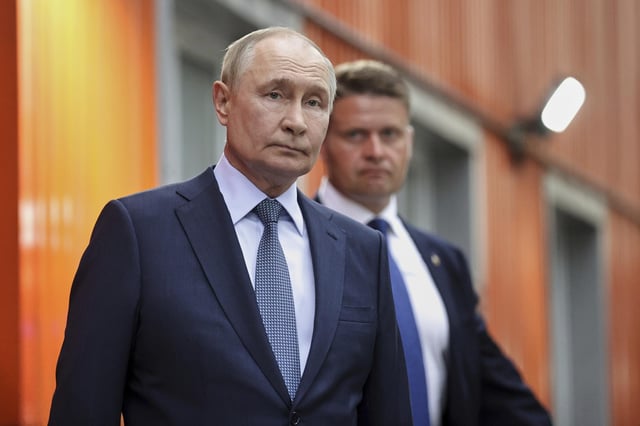
Russia’s nuclear warning serves as both a deterrent and a signal of the Kremlin’s unease over increasing Western intervention in its sphere of influence. It underscores President Vladimir Putin’s resolve to maintain strategic dominance in Eastern Europe while showcasing Kremlin’s willingness to use its nuclear arsenal as leverage in geopolitical negotiations.
Historical Context of Nuclear Tensions
The specter of nuclear conflict is not new in the annals of U.S.-Russian relations. The Cold War era was punctuated by numerous instances of brinkmanship, where both superpowers engaged in a delicate dance aimed at maintaining a balance of power. These historical echoes continue to reverberate, reminding the world of the importance of diplomatic channels in resolving critical disputes without resorting to military escalation.
Global Reactions and Diplomatic Channels
The international community has reacted with a mix of concern and calls for restraint following the latest developments. European nations, many of which share borders with Russia or Ukraine, are particularly alarmed, given the potential for conflict to spill over into their territories, threatening regional stability.
- World leaders have urged both Russia and the United States to engage in dialogue aimed at de-escalating tensions, emphasizing the importance of finding peaceful solutions to complex geopolitical issues.
- The United Nations has also reiterated its commitment to mediating between conflicting parties to safeguard global security.
- NATO, meanwhile, has reaffirmed its support for Ukraine, emphasizing the alliance’s commitment to defending sovereign nations against aggression.
Diplomatic efforts are underway to address the underlying causes of the conflict, with discussions revolving around potential sanctions against Russia, economic and military aid to Ukraine, and broader strategies to prevent a full-blown crisis. The stakes are incredibly high, with any misstep potentially leading to dire consequences on a global scale.
The Role of Global Organizations
In these trying times, international organizations such as the United Nations and NATO are poised to play vital roles in facilitating dialogue and conflict resolution. While the immediate focus is on preventing further escalation in Ukraine, long-term solutions require a nuanced understanding of regional dynamics and the interests of both local and global players.
It is imperative that these organizations use their influence to promote peace, security, and the rule of law, fostering an environment where diplomatic negotiations take precedence over military might. This approach is the only sustainable path to addressing the core issues fueling the conflict and ensuring a stable future for the region.
As the world watches closely, the events unfolding between Russia, Ukraine, and the United States serve as a poignant reminder of the far-reaching consequences of geopolitical strategies and the need for caution in the rhetoric surrounding international relations. The delicate balance of power necessitates careful maneuvering to avert disaster and pave the way for peace.
In conclusion, the current escalation in tensions following Trump’s proposal and Russia’s nuclear warning epitomizes the precarious nature of global politics. As diplomatic channels buzz with activity and nations rally for a peaceful resolution, the importance of dialogue, cooperation, and strategic foresight remains more critical than ever. The international community holds its breath, hoping for a peaceful resolution that avoids the horrors of nuclear confrontation and paves the way for a more stable and cooperative world order.