 Kristina Vankova
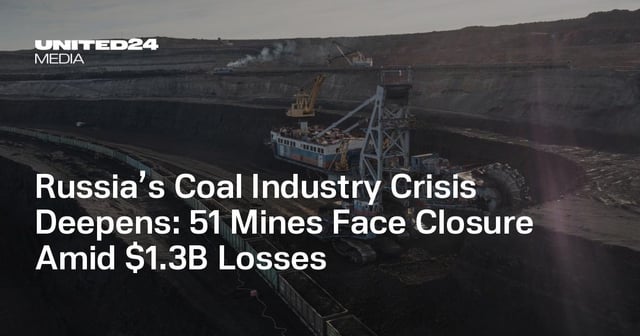
The coal industry in Russia finds itself at a critical juncture as financial losses mount, leading to widespread mine closures. Recently, the country has announced the shutdown of 51 coal mines across its territories, reflecting deep-rooted challenges that the sector is grappling with. As the global energy landscape shifts, Russia’s coal industry struggles to adapt, facing a combination of domestic and international pressures that threaten its viability.
Economic Strain and Declining Demand
Economic pressures on Russia’s coal industry have been building for years. The global decline in demand for coal, driven by environmental concerns and the rise of renewable energy sources, has significantly impacted coal producers worldwide. Russia, a major coal exporter, has felt the pinch as key markets move away from fossil fuels in favor of cleaner alternatives.
Domestically, the Russian government’s push for diversification of the energy sector has not favored coal. Investments in natural gas and renewables have taken precedence, leaving coal operations financially stranded. The result is an industry that struggles with maintaining profitability amid operational challenges and dwindling revenue streams.
Impact on Communities and the Labor Force
The closures are not just numbers on a balance sheet; they represent a profound impact on Russian communities reliant on the coal industry. The shuttering of mines affects thousands of workers who depend on the industry for their livelihood. In many regions, coal mining is a significant economic driver, and its decline can lead to widespread unemployment and economic downturns.
Efforts to transition the workforce and communities reliant on coal into new areas of the economy are underway but face numerous obstacles. Reskilling programs and government-backed initiatives aim to mitigate the social impact, yet the scale of the current crisis presents formidable challenges.
The Global Context and Environmental Pressures
Internationally, Russia’s coal industry is feeling the heat from environmental advocacy and climate agreements. The global commitment to reduce carbon emissions has led many countries to phase out coal as an energy source. This trend is compounded by competitive pressures from countries like China and India, which are also reducing their reliance on coal and investing heavily in renewable energy.
Russia’s position as a leading coal supplier to countries like China is increasingly tenuous as these major markets prioritize cleaner energy solutions. This shift requires Russian coal producers to reevaluate their strategies, focusing on sustainability and cleaner technologies to remain competitive on the global stage.
While environmental concerns mount, the debate within Russia over the future of its coal industry continues. Balancing economic interests with environmental responsibilities remains a complex issue, requiring coordinated efforts from industry stakeholders and policymakers.
The wave of coal mine closures marks a significant turning point for Russia’s energy sector, illustrating the broader challenges of transitioning in a rapidly changing global landscape. As the industry grapples with these changes, the outcome will be pivotal not only for Russia’s economy but also for its role in the global energy market.