 Kristina Vankova
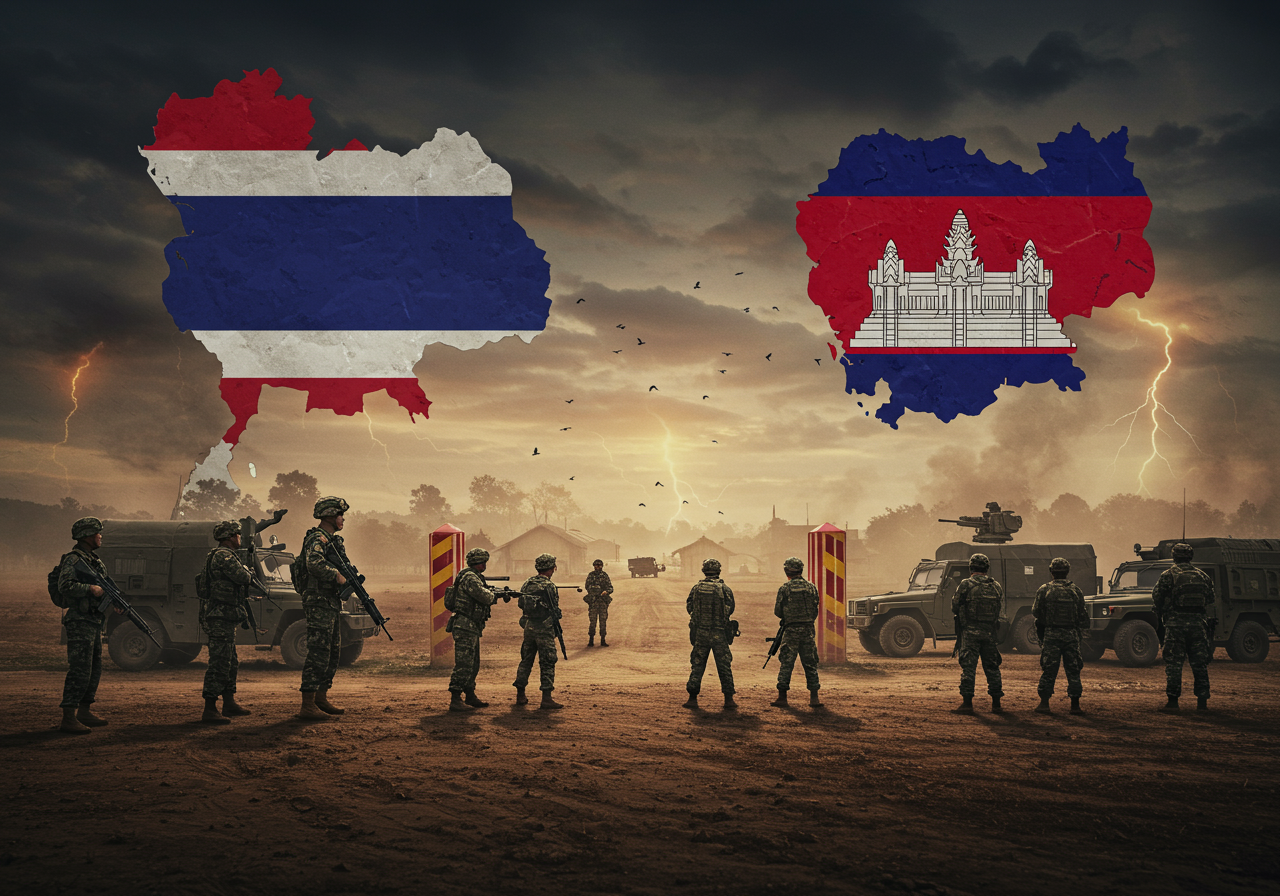
Amid growing geopolitical tensions in Southeast Asia, the once-stable relationship between Thailand and Cambodia has recently experienced a tumultuous shift. An escalation in armed conflict along their shared border has not only claimed civilian lives but also triggered a political upheaval in Cambodia that saw its Prime Minister ousted from power.
Hostilities at the Border
The border dispute between Thailand and Cambodia has long been a source of tension. The primary catalyst for the renewed skirmishes was the sovereignty dispute over the Preah Vihear Temple, a UNESCO World Heritage site. Although an International Court of Justice (ICJ) ruling in 1962 awarded the temple to Cambodia, both nations have periodically contested the surrounding land area, leading to intermittent military confrontations over the decades.
Recent clashes have resulted in fatalities and injuries on both sides, worsening the situation. While initial reports confirmed military casualties, it soon became evident that civilians, living in proximity to the conflict zones, were also falling victim to the violence. Local communities have been subjected to artillery fire, leading to a tragic loss of life, displacement, and destruction of property.
Impact on Civilians
The humanitarian impact of this conflict is profound. Villages along the Thai-Cambodian border have seen families uprooted from their homes, seeking safety away from the line of fire. National and international organizations are scrambling to provide aid, but resources have been strained by the sudden influx of refugees. Basic necessities like food, clean water, and medical assistance have become critical needs.
Affected families lament the loss of their homes and livelihoods. Agricultural lands have been severely impacted, threatening food security. The continuous threat of conflict has led to school closures, depriving children of education and a semblance of normalcy in their daily lives.
Political Upheaval in Cambodia
The conflict has had repercussions far beyond the immediate border areas, significantly affecting Cambodia’s political landscape. Reports indicate that a controversial phone call, in which the Cambodian Prime Minister was purportedly warned by Thai counterparts, led to widespread unrest within the Cambodian political arena. Accusations of mishandling the sensitive situation and failing to protect national interests fueled discontent among the ruling party’s ranks.
This wave of political unrest culminated in a swift parliamentary vote that resulted in the Prime Minister’s dismissal. The leadership vacancy has created a power vacuum in Phnom Penh, with numerous factions vying for control amidst the backdrop of growing national instability.
Regional and International Reactions
Neighboring countries and international bodies have expressed grave concerns over the deteriorating situation. ASEAN, of which both Thailand and Cambodia are members, has called for an immediate cessation of hostilities and urged dialogue to address the underlying issues. The UN has also stepped in, offering to mediate peace talks and send observers to the region.
Global powers with strategic interests in Southeast Asia are monitoring the situation closely, mindful of the broader implications that prolonged instability may have on trade routes and regional security alliances.
Search for a Diplomatic Solution
Efforts to broker peace are already underway, with diplomats from both nations engaging in talks under ASEAN auspices. The aim is to find a peaceful resolution to the border dispute while ensuring that measures are in place to prevent future hostilities. However, deep-rooted historical grievances make negotiations challenging, requiring concessions and patience from both sides.
Both Thailand and Cambodia have expressed a desire to avoid further violence, though mistrust remains a significant barrier. Observers are hopeful that a combination of diplomatic pressure and on-the-ground realities will encourage both parties to reach a mutually acceptable agreement.
The Role of Media and Public Opinion
The conflict and the ensuing political crisis in Cambodia have captured the attention of media outlets across the globe. Coverage has varied, with some focusing on the human cost of the conflict, while others analyze the geopolitical ramifications and power dynamics within ASEAN. Public opinion, particularly in Cambodia, has been sharply divided, with some citizens supporting the ousting of the Prime Minister, while others fear the instability that such a change could bring.
Social media has played a pivotal role in shaping perceptions. As residents along the border share firsthand accounts of the conflict’s impact, they bring a human face to the crisis, potentially influencing policy decisions and international support.
Outlook for Peace and Stability
The path to peace remains fraught with obstacles, but both nations recognize the necessity of resolving their differences through dialogue rather than warfare. The immediate priority is to ensure a ceasefire holds, allowing displaced persons to return home and humanitarian aid to reach those in need.
Experts suggest that a comprehensive border treaty, backed by international guarantees, could offer a lasting solution. Such an agreement would not only address territorial disputes but also include mechanisms for conflict resolution and economic cooperation, thus fostering long-term stability and prosperity in the region.
As both Thailand and Cambodia navigate this tumultuous period, the international community continues to watch closely, ready to assist in brokering peace and supporting reconstruction efforts. Achieving a resolution could serve as an enduring testament to the efficacy of diplomatic negotiation in resolving complex international disputes.