 Kristina Vankova
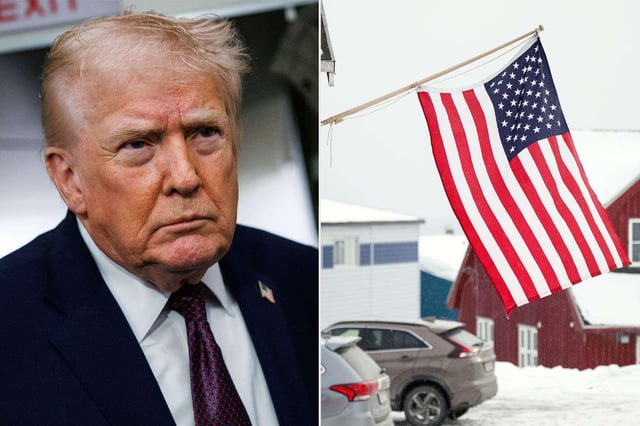
In a surprising move that has left political commentators and international analysts alike pondering its significance, former U.S. President Donald Trump has expressed a renewed interest in acquiring Greenland. Known for his bold and often unorthodox strategies, Trump’s acknowledgment of the icy island’s potential acquisition highlights not only his fascination with real estate but also hints at deeper geopolitical intentions.
A Real Estate Perspective on Greenland
Greenland, the world’s largest island, has long been a site of strategic interest due to its rich natural resources and geographical position. Trump has cited Greenland’s abundance of untapped minerals as a primary motivator for his interest. The island is believed to hold significant reserves of minerals such as rare earth elements, critical for the high-tech and defense industries globally.
From a real estate perspective, Greenland represents an unparalleled opportunity. Encompassing vast expanses of untouched land, it could offer unique advantages as climate change continues to open up new shipping lanes and opportunities in the Arctic. Through acquisition, the U.S. could secure a strategic foothold in the region, potentially reshaping global trade routes and resource allocation.
Geopolitical Implications
Greenland’s location between North America and Europe makes it of considerable strategic interest, further intensified by its proximity to the Arctic Circle. This region is increasingly regarded as a frontier of economic and military competition among global superpowers, including the United States, Russia, and China.
The island nation’s potential acquisition by the United States might reaffirm America’s dominance in the Arctic, thus countering Russian and Chinese advancements. Trump’s interest, therefore, transcends beyond mere territorial expansion; it could potentially reinforce U.S. national security by ensuring control over important military outposts and surveillance capabilities in the region.
International Reactions
The prospect of the U.S. purchasing Greenland has been met with varied reactions on the global stage. Denmark, the governing authority of Greenland, has dismissed the notion as absurd, with top officials insisting that Greenland is not for sale. This denial was echoed by Greenland’s own government, emphasizing their autonomy and unwillingness to negotiate such a deal.
Nonetheless, the discussion has sparked debates about national sovereignty and the ethics of territorial acquisition in the modern age. Critics argue that such moves disregard the will and agency of Greenland’s indigenous populations, while supporters contend that U.S. involvement could lead to unprecedented economic growth and development on the island.
Economic Opportunities and Challenges
Despite political rebuffs, the economic potential of Greenland remains undeniable. Rising global temperatures have begun to expose more of the island’s mineral wealth, making extraction increasingly feasible. Coupled with expected increases in marine traffic through newly accessible Arctic routes, Greenland holds potential as a future economic hub.
The challenges, however, are significant. The harsh climate presents logistical and infrastructural barriers that would require substantial investment to overcome. Furthermore, sustainable development initiatives would need careful planning to protect the island’s unique ecosystems, all while ensuring that native populations benefit from economic activities without unintended cultural or social disruption.
To many, Trump’s renewed interest in Greenland might seem outlandish, an extension of his real estate ambition. Yet, beneath the surface lies a complex mesh of economic opportunity and geopolitical strategy. As the topic continues to unfold, international communities are watchful, seeking clarity on how this development might reshape the Arctic region—economically, politically, and environmentally.