 Kristina Vankova
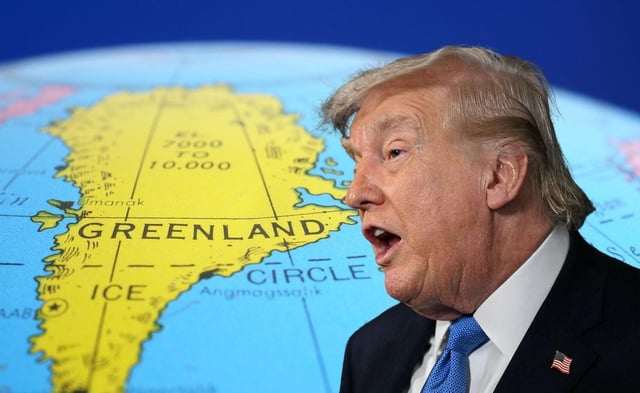
In a move that has reverberated across the geopolitical landscape, former President Donald Trump has raised alarms concerning Greenland’s continued alignment with Denmark, following a period of heightened speculation and diplomatic discussion. This development adds another layer to the complex international relations involving the United States, Denmark, and Greenland, which holds a unique position both geographically and politically.
Historical Context of Greenland’s Sovereignty
Greenland, the world’s largest island, has a history that intertwines with Denmark’s colonial past. Though it gained autonomy in 1979 and further self-governing powers in 2009, Greenland remains a crucial part of the Kingdom of Denmark. Its strategic location between North America and Europe has always made it a point of interest for global powers.
In recent years, Greenland has sought to expand its role on the international stage while maintaining ties with Denmark. Its vast natural resources and potential shipping routes due to melting ice caps have added to its strategic value. This backdrop makes Trump’s recent remarks particularly significant, as they underscore the island’s geopolitical importance.
Trump’s Perspective on Greenland
Trump has been vocal about Greenland’s strategic potential in the past. Notably, during his presidency, he proposed the idea of purchasing the island, highlighting its importance to U.S. security interests. Although the proposal was met with skepticism and humor internationally, it underscored the serious nature of Greenland in strategic discussions.
His latest comments suggest continued U.S. interest in Greenland’s future and hint at concerns about the island maintaining a strong connection to Denmark. Trump referred to the situation as a “big problem,” reflecting a perspective that American interests might be better secured through a different status for Greenland, potentially more aligned with U.S. influence.
The Strategic Significance of Greenland
Greenland’s location makes it a pivotal site for global strategic interests. As climate change opens new sea lanes and exposes untapped mineral wealth, major powers are keenly observing Greenland. For the U.S., having a foothold in Greenland offers military advantages, particularly for missile defense and as a bastion against Russian and Chinese expansion in the Arctic.
The island’s burgeoning independence movement presents another dimension. While Greenland seeks to develop its economy and infrastructure, it faces the challenge of balancing indigenous governance with international interests. Denmark’s stewardship has thus far been a stable factor, but the rising aspirations for independence could alter the regional balance of power.
Implications for U.S.-Denmark Relations
Trump’s remarks have potential ramifications for the relationship between the U.S. and Denmark. Historically, the two countries have shared a strong alliance through NATO and other international bodies. However, differences over Greenland could test these bonds, especially if U.S. actions or rhetoric are perceived to challenge Denmark’s sovereignty over the island.
- Geopolitical Tensions: Any shift in Greenland’s status could lead to increased tensions not only between the United States and Denmark but also within the broader context of Arctic diplomacy.
- Resource Development: As international interest in Greenland’s natural resources grows, competing claims and developmental partnerships could complicate diplomatic efforts.
- Military Considerations: The strategic positioning of military assets in the Arctic region remains a contentious issue, with both NATO and non-NATO states watching developments closely.
The complexities of Greenland’s strategic position require careful negotiation and understanding. While Trump’s remarks might be perceived as merely opinionated commentary, they underline an ongoing dialogue about sovereignty, influence, and the future of Arctic policy.
As Greenland continues to navigate its path toward greater autonomy, the international community watches with anticipation. The unfolding narrative will likely involve careful balancing of national interests, international diplomacy, and the aspirations of the Greenlandic people, setting the stage for a new era in Arctic geopolitics.