


Who Drinks the Most Beer in the World?
Introduction
Beer, one of the world’s oldest and most beloved beverages, has played a key role in human culture for thousands of years. Today, global beer consumption exceeds 185 million kiloliters annually, an amount equivalent to over 74,000 Olympic-sized swimming pools. This staggering volume raises a fascinating question: Which country drinks the most beer in the world? In this article, we’ll explore global beer consumption trends, examine the countries leading in beer drinking, and discuss the factors influencing these patterns, including detailed data on beer consumption by country.

Global Beer Consumption Overview
The global beer market is enormous, projected to reach $690 billion in 2023 and expected to grow to $996 billion by 2033, according to Future Market Insights. This growth is driven by increasing demand in emerging markets and technological advancements in brewing processes.
Global consumption of beer rose significantly in 2021 compared to the previous year, with notable contributions from regions like Asia.
The World Health Organization (WHO) monitors global beer consumption as part of its efforts to understand global alcohol consumption patterns. Their data provides valuable insights into which countries consume the most beer, enabling a comparison of drinking habits across different nations.
Top Beer-Consuming Countries by Volume
When looking at the sheer volume of beer consumed, China holds the top spot as the largest beer consuming country, being the largest beer consumer for 19 consecutive years. Given China’s vast population and a brewing tradition that dates back to 7000 BC, this isn’t surprising. The United States follows in second place, with Germany, Japan, and the United Kingdom rounding out the top five.
However, total consumption doesn’t account for population size. To get a clearer picture of national beer habits, we must consider per capita consumption.
Per Capita Beer Consumption: The True Measure
When examining beer consumption per capita, European nations dominate the rankings. The undisputed leader is the Czech Republic, which has held the top spot for 30 consecutive years. In 2022, the average Czech consumed a staggering 188.5 liters of beer annually — nearly twice the amount of the second-placed country. This highlights how different countries drink beer, showcasing cultural influences and historical traditions related to beer consumption.
Here’s a list of the top 10 countries by per capita beer consumption:
- Czech Republic: 188.5 liters
- Austria: 98.7 liters
- Lithuania: 96.3 liters
- Romania: 95.6 liters
- Poland: 94.1 liters
- Estonia: 91.4 liters
- Germany: 90.4 liters
- Spain: 88.5 liters
- Namibia: 85.7 liters
- Croatia: 82.4 liters
Interestingly, despite Asia leading in total beer consumption, European countries dominate the per capita rankings. Nine out of the top ten beer consumers per capita are European nations, with Namibia being the only non-European country to make the list.

The Czech Republic: A Beer-Loving Nation
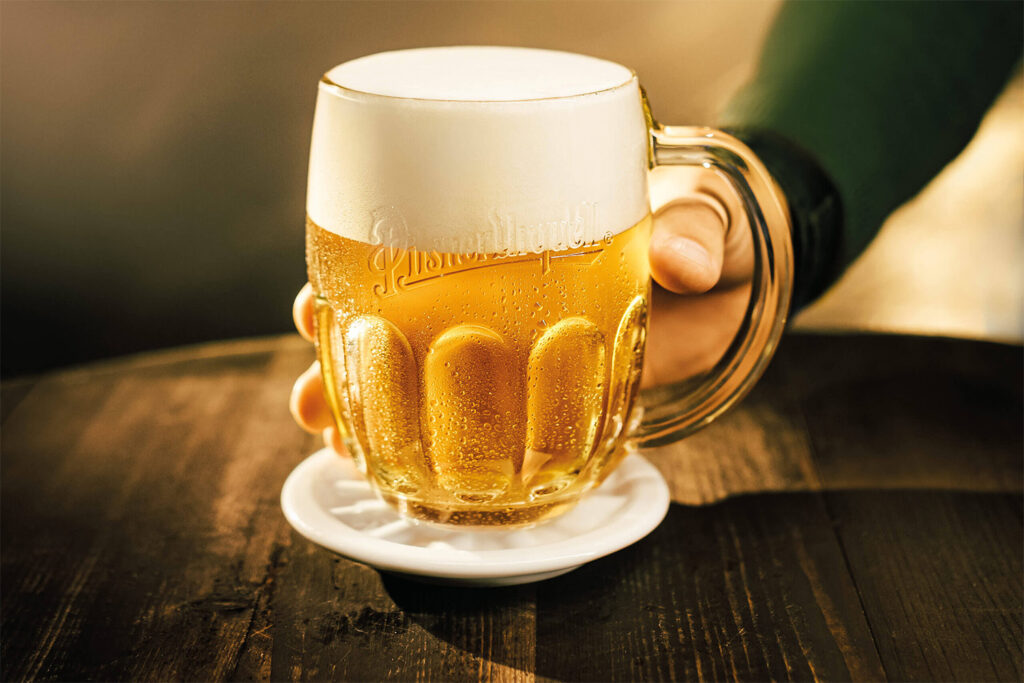
The Czech Republic’s dominance in beer consumption is remarkable. In 2021, the average Czech drank over 184 liters of beer, and this number rose to 188.5 liters in 2022. To put that into perspective, that’s roughly 376 pints or 500 bottles of beer per person annually!
Several factors contribute to this beer-loving culture:
- Cultural significance: Beer has been an integral part of Czech culture for over a thousand years.
- Affordability: Beer is often cheaper than bottled water in the Czech Republic, making it accessible to everyone.
- Quality and variety: The Czech Republic is known for its high-quality beer, including the world-famous pilsner, which originated in the city of Pilsen.
- Social norms: Drinking beer is a social activity that accompanies meals and gatherings in Czech society.
Factors Influencing Beer Consumption
There are several reasons why beer consumption varies across different countries:
- Cultural and demographic factors: In some countries, beer plays a significant cultural role, with local breweries and festivals celebrating the drink. The age distribution of a population also affects drinking habits.
- Economic factors: The cost of beer relative to other alcoholic drinks can impact consumption. For instance, in Ireland, beer is often cheaper than wine, contributing to the country’s high beer consumption.
- Climate: Warmer climates may lead to increased consumption of refreshing beverages like beer.
- Availability and marketing: Countries with a strong brewing industry and effective marketing campaigns often see higher beer consumption.
- Government policies: Regulations regarding alcohol sales and consumption also significantly influence drinking habits.
- Fermentation process: The fermentation process, which transforms sugars into alcohol with the help of yeast, plays a crucial role in beer brewing. The distinction between lagers and ales, depending on the yeast and temperature used during this fermentation, adds complexity and variety to beer, impacting consumer preferences and consumption patterns.
Regional Patterns in Beer Consumption
While Europe leads in per capita consumption, other regions exhibit unique beer consumption trends:
- Asia: Though Asia ranks lower in per capita consumption, it holds a 31% share of the global beer market, making it the largest beer-consuming region, primarily due to its large populations in countries like China and India.
- Americas: Both North and South America have strong beer-drinking cultures. The United States ranks 24th in per capita consumption with 72.89 liters annually, while countries like Brazil and Mexico continue to grow in beer consumption. Central and South America rank in third place globally, with a 6.2% increase over the previous year due to rising consumption in Brazil and Mexico.
- Africa: Namibia ranks 9th in global per capita beer consumption, highlighting the presence of beer culture in Africa despite the continent not being typically associated with high consumption levels.
The Future of Global Beer Consumption
The global beer market is set to continue its growth, with several factors driving this trend:
- Emerging markets: As incomes rise in developing countries, beer consumption is expected to increase. Countries that drink the most beer overall and per capita provide insights into future trends in beer consumption.
- Craft beer revolution: The growing popularity of craft breweries has introduced new flavors and styles, attracting more consumers.
- Technological advancements: Innovations like faster fermentation processes are driving efficiency in beer production, potentially lowering costs.
- Changing preferences: There is growing demand for low-alcohol and non-alcoholic beers, expanding market possibilities.
Conclusion
While China leads the world in total beer consumption, the Czech Republic takes the crown when it comes to per capita consumption, with the average Czech drinking an astounding 188.5 liters of beer each year. European nations continue to dominate the global beer consumption landscape.
Global beer consumption patterns are influenced by a range of factors, from cultural significance to economic conditions. As the global beer market evolves, it will be interesting to see how consumption patterns shift in the coming years.
Whether you’re toasting in Prague or Beijing, it’s clear that beer remains a beloved beverage worldwide, connecting people across different cultures and traditions.