 Kristina Vankova
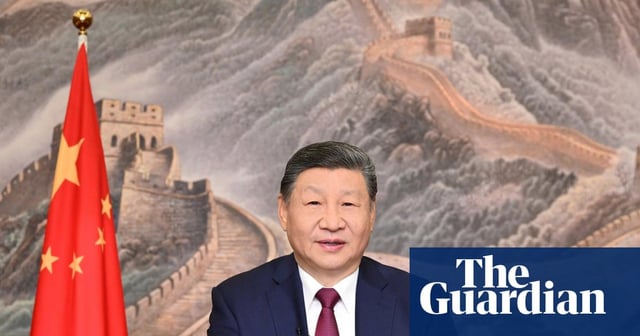
In a significant declaration that reverberates through the geopolitical corridors of power, China’s President Xi Jinping has reiterated his unwavering ambition for the reunification of Taiwan with mainland China. This statement underscores the persistent narrative that Taiwan is an inseparable facet of Chinese sovereignty, a notion at the heart of Beijing’s long-term strategic vision.
The Historical Context
The division between China and Taiwan dates back to 1949, at the conclusion of the Chinese Civil War. The defeat of the Nationalists by the Communist forces led to the retreat of Chiang Kai-shek and the establishment of the Republic of China on the island of Taiwan. Over the decades, Taiwan has evolved into a democratic society, distinct in its governance and political identity. However, Beijing has consistently viewed the self-ruled territory as a breakaway province that must eventually be brought under its control.
Xi Jinping’s continual reiteration of the reunification goal is rooted in this historical context, drawing on a blend of nationalism and the strategic agenda of the Chinese Communist Party (CCP). The concept of “One China” remains a cornerstone of Chinese policy, aiming to reinforce China’s sovereignty claims on a global stage.
Xi’s Vision for Reunification
In his recent remarks, Xi Jinping emphasized the urgency of resolving the Taiwan issue as part of China’s national rejuvenation. The rhetoric employed reflects a mixture of diplomatic assurance and forewarning; Beijing’s approach is typically characterized by a “peaceful reunification” agenda, albeit backed by the implicit threat of military intervention should Taiwan seek formal independence.
This vision encompasses a strategic integration of economic, cultural, and infrastructural elements designed to draw Taiwan closer. China’s policy leverages both economic enticements and diplomatic pressures on nations to eschew formal recognition of Taiwan as anything but part of China.
Regional and Global Reactions
Globally, the Taiwanese issue remains a delicate element of international relations. While many countries, influenced by China’s economic sway, officially adhere to the One China policy, they maintain unofficial exchanges with Taiwan. Recent strategic partnerships, especially in defense and technology with Western powers, have further isolated China on this issue, complicating Xi’s agenda.
The United States, a key player in this matter, upholds a policy of “strategic ambiguity” regarding its potential response to a cross-strait confrontation. This stance is designed to deter both unilateral actions by Beijing and a formal declaration of independence by Taiwan.
Implications for Global Stability
The push for unification under Xi’s leadership is not merely a regional concern but a global one. The Taiwan Strait is a critical juncture of international maritime routes, and any escalation of tensions could have far-reaching implications for global trade and security. The prospect of conflict poses a risky gambit, with potential military action likely to draw in allied forces and result in significant economic and human costs.
Moreover, Taiwan’s position as a global leader in semiconductor manufacturing ties its stability directly to the technological ambitions of many Western nations. Ensuring the tranquility of this supply chain is a priority that intersects with the geopolitical struggle for technological dominance.
As Xi Jinping affirms his dedication to reunification, the intricate balance of ensuring regional stability while addressing nationalistic aspirations illustrates the complexities of modern geopolitics. While the future remains uncertain, the path forward will undoubtedly require cautious diplomacy and strategic foresight to avoid escalation and foster a sustainable resolution to the cross-strait relations.