 Jan Nettig
Czech Easter (Velikonoce) is celebrated over four days culminating in Easter Monday — a folk holiday featuring the pomlázka (braided willow whip), hand-decorated eggs (kraslice), and a unique custom in which men gently whip women in exchange for painted eggs, shots of slivovice, or ribbons for the whip. The traditions blend pre-Christian Slavic spring rituals with Christian symbolism.
The Czech Easter calendar
| Day | Czech name | Meaning |
|---|---|---|
| Palm Sunday | Květná neděle | Blessing of pussy-willow branches (Czechs use willow instead of palm) |
| Green Thursday | Zelený čtvrtek | Traditionally green foods eaten (spinach, chives, cabbage) for health |
| Good Friday | Velký pátek | Public holiday since 2016; legends say hidden treasures reveal themselves |
| White Saturday | Bílá sobota | Traditional egg decoration and mazanec sweet bread baking |
| Easter Sunday | Boží hod velikonoční | Family gathering; roast lamb or beránek (lamb-shaped cake) |
| Easter Monday | Velikonoční pondělí | Public holiday; pomlázka tradition |
The pomlázka: Czech Easter’s most-asked-about tradition
The pomlázka is a whip braided from fresh, pliable willow branches, used by men and boys on Easter Monday to gently strike women and girls. The word derives from pomladit — “to make younger.” According to pre-Christian tradition, the fresh willow transfers vitality, fertility, and beauty to the person struck. Women are expected to reward the striker with a decorated egg, a shot of slivovice (plum brandy), or a ribbon to tie on the whip.
The custom is ceremonial and light, not violent — well-behaved boys visit relatives and neighbours to recite an Easter carol (koleda) before the ritual. In some rural regions the tradition remains vigorous; in cities it is now mostly practised within families with young children. Feminist criticism has grown in recent decades, and many women now decline participation.
Kraslice: the decorated eggs
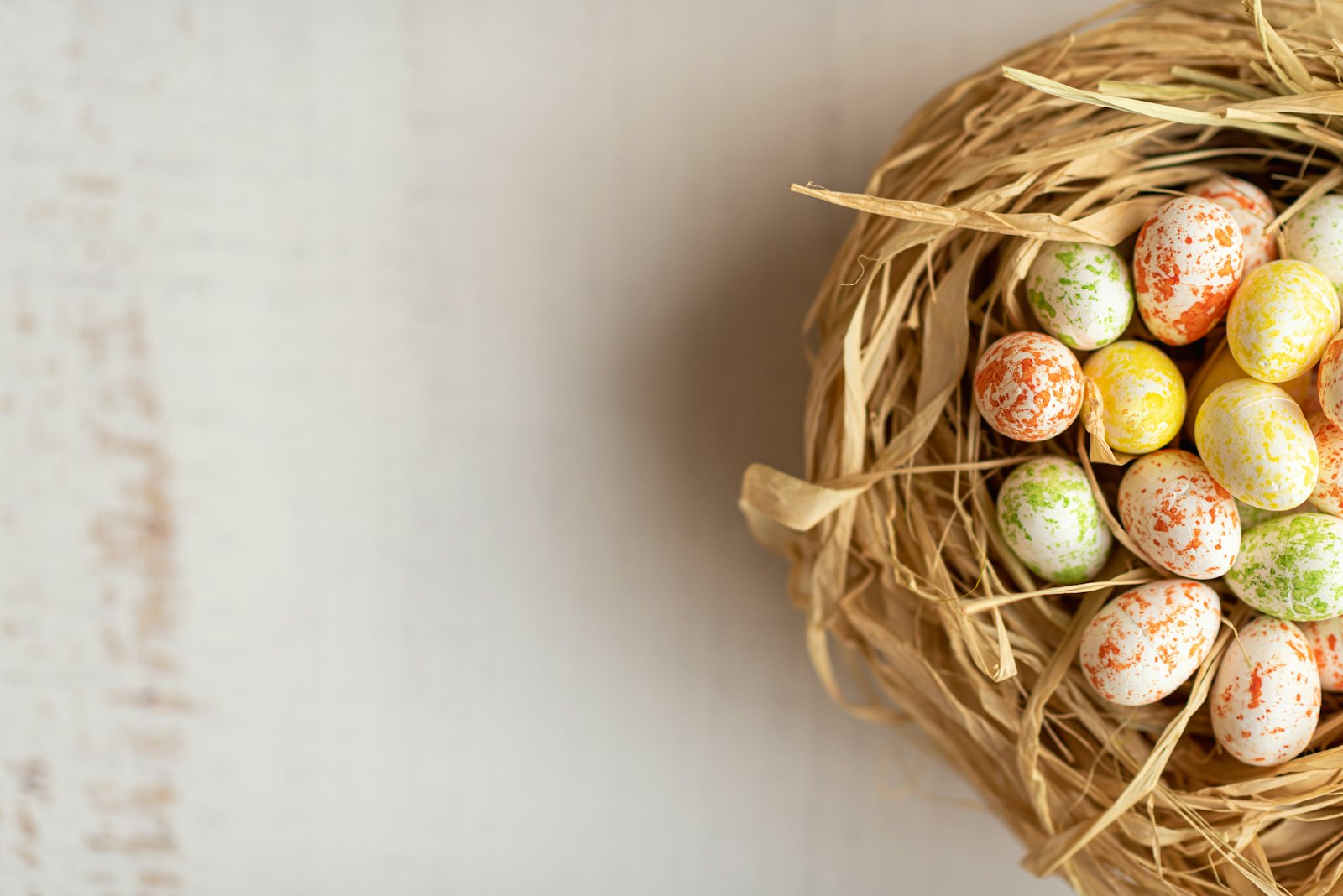
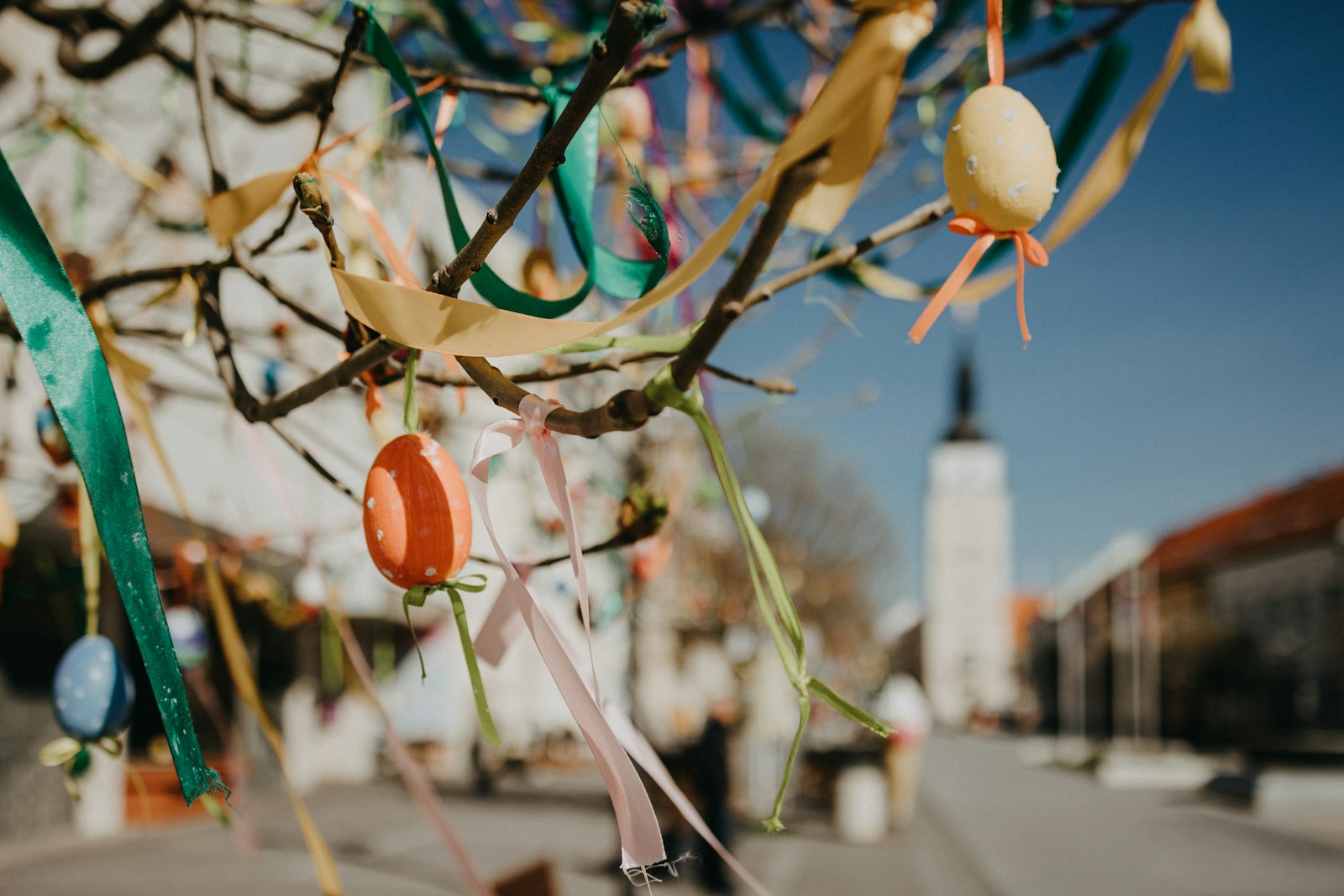
Kraslice are hand-decorated Czech Easter eggs, traditionally hollowed and painted using wax-resist (batik), scratched patterns, straw appliqué, or dyed with onion skins. Each region has its own decorative tradition — Moravian kraslice tend toward densely patterned geometry, while Bohemian eggs often feature floral motifs.
Easter foods
- Mazanec — a sweet, brioche-like bread with raisins and almonds, marked with a cross before baking.
- Beránek — a lamb-shaped sponge cake, always dusted with powdered sugar and often with a red ribbon around its neck.
- Nádivka — a stuffing made from stale bread, eggs, nettle greens, and smoked ham, baked in a large tray.
- Roast lamb or kid — the traditional Easter Sunday centrepiece.
Where to see the traditions
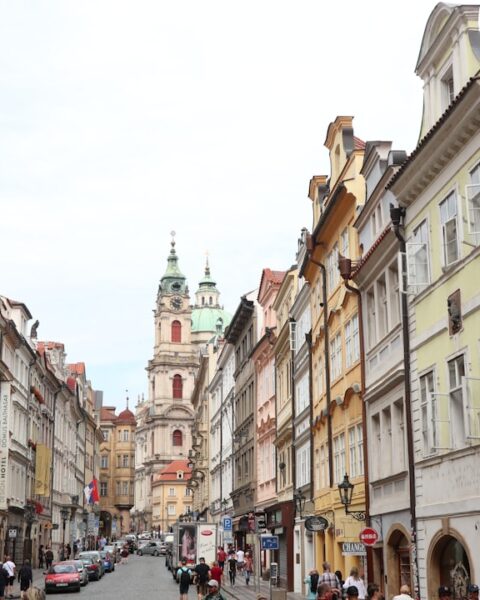
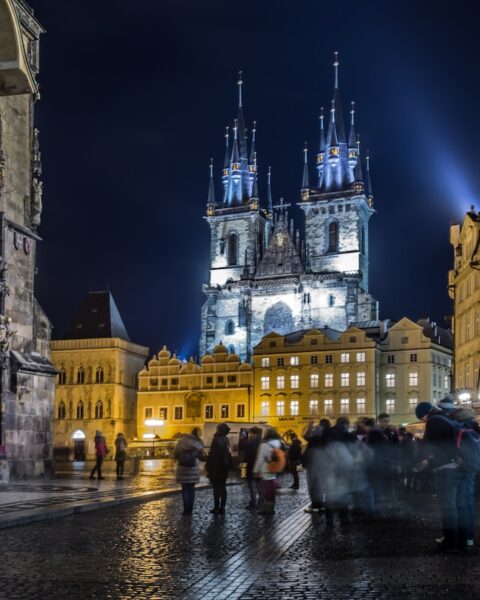
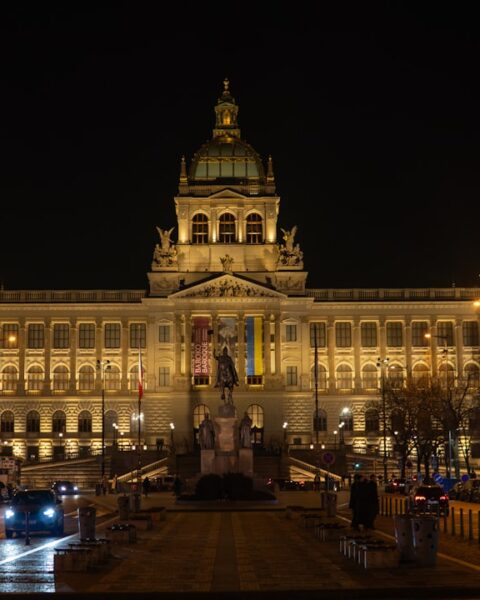
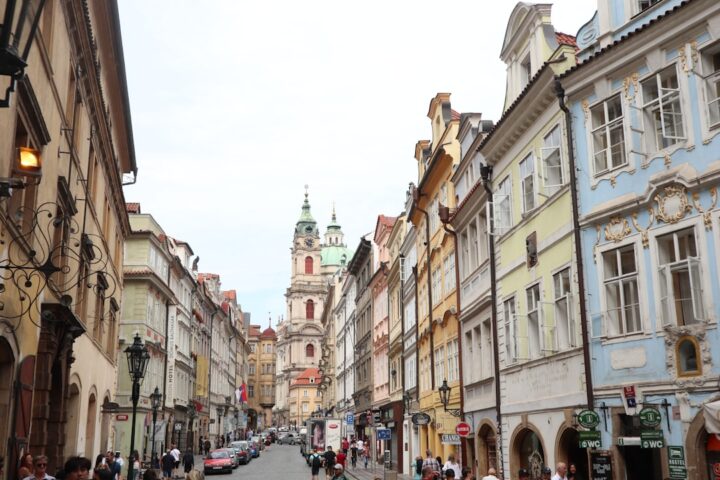
- Prague’s Old Town Square and Wenceslas Square host large Easter markets from Palm Sunday through Easter Monday — traditional crafts, kraslice, wooden pomlázky, mazanec, and warm honey mead.
- Rožnov pod Radhoštěm (Wallachian Open-Air Museum) runs the country’s most authentic Easter reconstruction.
- Moravian villages — particularly around Uherské Hradiště, Vlčnov, and Strážnice — preserve the most vivid pomlázka rounds.
Frequently asked questions
Is the pomlázka tradition still practised?
Yes, but mostly within families and in villages. Urban participation has declined and public criticism has grown. Most modern Czechs treat it as a light-hearted family ritual, not a serious folk practice.
Is Easter Monday a public holiday in the Czech Republic?
Yes. Good Friday has been a public holiday since 2016, and Easter Monday has always been one. See our Czech public holidays guide.
Can tourists visit Easter markets?
Absolutely — Prague’s Easter markets are among the best in Europe and free to enter. They typically run for two weeks and rival the Christmas markets in atmosphere.
What if a woman doesn’t want to participate?
She should simply decline. The tradition is voluntary and increasingly optional in modern Czech culture, especially in cities. Some households have shifted to a lighter symbolic touch or replaced the ritual with egg-hunting for children.
Bring Czech Easter home
- “Recipes from an Old Town Bohemian Kitchen” — includes mazanec and beránek recipes.
- Escali Primo digital kitchen scale — Czech baking is weight-based.
- Silicone baking mats
- Rick Steves Prague guidebook — includes Easter markets coverage.