 Kristina Vankova
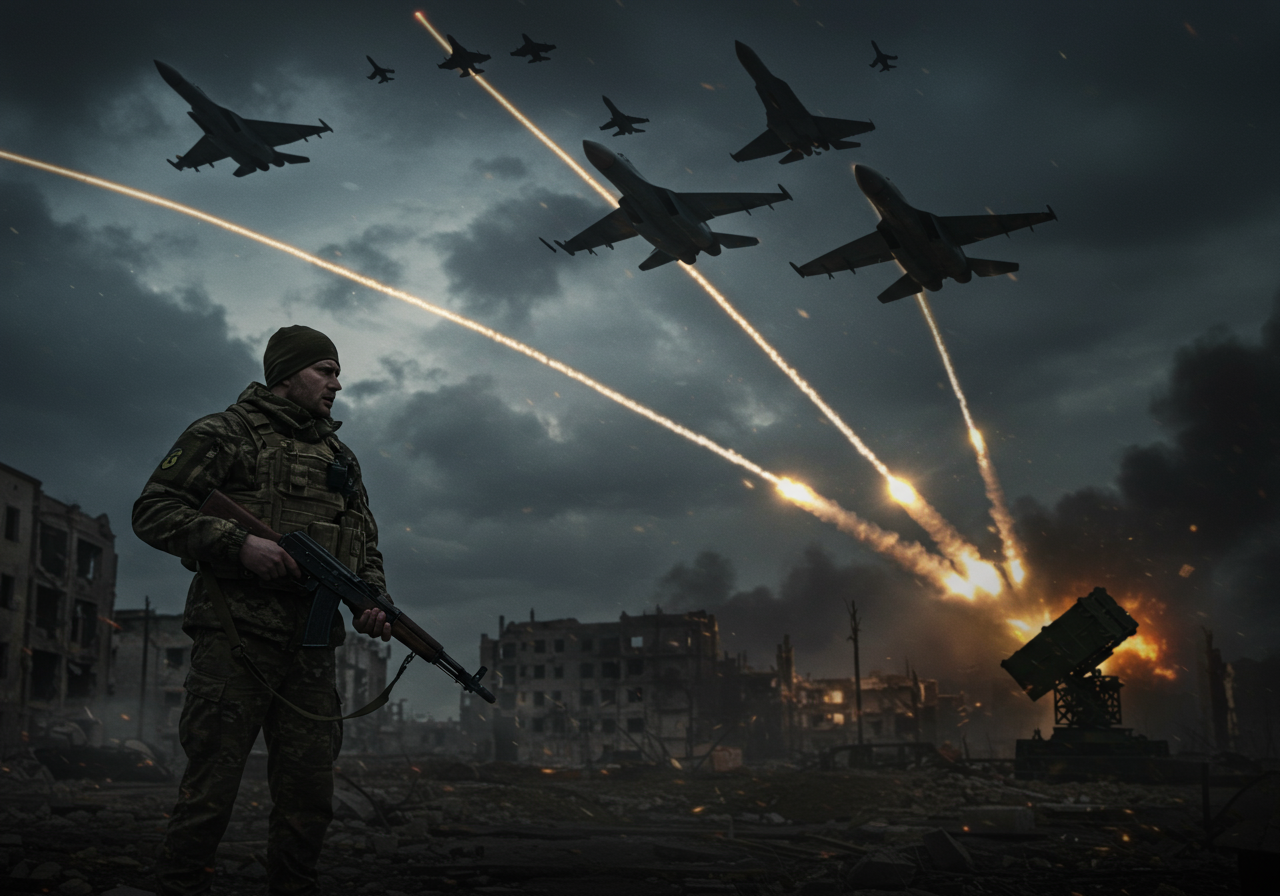
In recent months, Ukraine has faced mounting challenges in its defense strategies against increasing Russian aerial activity. The skies above the Eastern European nation have become a battleground as Ukrainian forces attempt to counteract Russian aerial dominance. This growing concern comes at a time when technological advancements, as well as strategic maneuvers by the Russian military, are increasingly tipping the scales in favor of Moscow.
The current crisis underscores a significant element of modern warfare: the importance of air superiority. While Ukraine has admirably defended its terrain on the ground with a brave and motivated force, the struggle to achieve, or at least neutralize, Russian aerial superiority remains a critical issue.
Upsurging Aerial Threats
Recent intelligence reports indicate a marked increase in Russian drone activities and airstrikes, which have caused substantial damage to Ukrainian infrastructure. These operations are part of what experts consider to be a strategic initiative aimed at debilitating Ukraine’s defense capabilities. The increased use of drones, one of the key technological tools in modern warfare, highlights Russia’s commitment to maintaining a dominant aerial posture.
Russia’s air campaign is not just limited to traditional airstrikes; it also significantly involves electronic warfare capabilities. Through disruptive technologies, Russia has been able to jam communications, interfere with navigation systems, and unleash cyber assaults designed to impair Ukrainian military operations.
Challenges in Defense
Ukraine, recognizing the relentless aerial assault, has invested heavily in anti-aircraft systems and surface-to-air missiles. However, the sheer volume and sophistication of Russian attacks present persistent challenges. Despite efforts to bolster defenses, the fluctuating nature of modern warfare, characterized by fast-paced technological advancements, means Kiev continues to struggle with maintaining effective aerial defense strategies.
The inadequacy of Ukraine’s air defense systems is compounded by Russia’s deployment of advanced aircraft armed with sophisticated weaponry. Fighters and bombers, equipped with state-of-the-art avionics and warfare technologies, further widen the capability gap between the two nations.
International Support and Aid
Recognizing the strategic difficulties faced by Ukraine, several international allies have stepped in, offering technical and financial aid. NATO members, in particular, have furnished training programs and supplied advanced weapons systems aimed at strengthening Ukraine’s defensive posture. Despite ongoing international support, there is a prevailing sentiment among security experts that more needs to be done quickly. The aid provided does not immediately close the latent technological gap exacerbated by years of Russian military advancements.
Moreover, international support brings a complex set of geopolitical implications. Each decision to assist Ukraine militarily needs to balance existing international diplomatic relations, which can sometimes delay critical military support pivotal in the short timescales of military conflicts.
Adaptive Strategies
In light of these challenges, Ukraine is adapting its strategies. Military tacticians are revisiting doctrines to emphasize mobility and decentralization, which could theoretically reduce the impact of aerial threats. By avoiding concentration, forces on the ground can potentially mitigate some risks associated with airstrikes and drone attacks.
Furthermore, Ukrainian forces are increasingly reliant on intelligence and surveillance to identify and intercept potential aerial threats before they cause significant damage. The importance of intelligence cannot be understated, as it helps in repositioning personnel and equipment quickly to reduce casualties and asset losses.
Drones are also being used by Ukrainian forces not only for reconnaissance but also in combat roles, providing much-needed flexibility in operations and potentially reversing some of the impact of Russian air superiority.
The Human Element
Behind every military strategy and technological challenge lies the human element, which is equally trying. The personnel on the frontlines who operate under constant threat face immense pressure. Psychological warfare waged by advanced air campaigns adds an extra dimension of stress for soldiers and civilians alike. The stakes are high, with every decision having potentially devastating consequences.
Ukrainian soldiers continue to display resilience, leveraging their experience in ground conflicts to adapt to the new demands placed by aerial threats. The training provided by international allies also injects new tactics and morale into the ranks, though the burden remains heavy.
A Continuing Struggle
As the conflict persists, the skies remain a highly contested domain. The unrelenting nature of Russian aerial activity not only dictates engagement strategies but also shapes the broader context of international diplomacy regarding the region. Ukraine’s ongoing efforts to counteract Russian aerial dominance form just one facet of a multifaceted conflict deeply embedded in historical and geopolitical complexities.
In conclusion, while Ukrainian forces strive to adapt amid adversities, the question remains as to how effectively it can overcome the aerial disadvantage it currently faces. The outcome of this aspect of the conflict will likely have lasting implications on future military engagements in similar contexts globally.
These ongoing developments demand constant attention and action from the international community. While the support of allies is invaluable, creating lasting peace and stability in the region will require a multi-pronged approach that addresses both military and geopolitical factors comprehensively. For now, though, Ukraine’s skies are marred by a formidable challenge that requires both innovative solutions and international collaboration to change the current dynamics.